


Introduction:
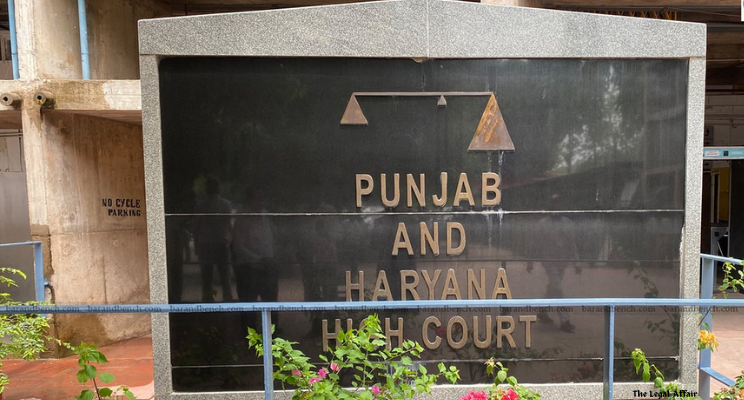
In a recent decision, the Punjab & Haryana High Court granted bail to a mother and son accused of fraud, spotlighting potential police misconduct in what the court viewed as a questionable detainment process. The case revolves around a civil dispute over leased properties that allegedly escalated into a criminal matter under police pressure. Justice Sanjay Vashisth expressed concerns over possible undue harassment of the accused, noting that the role of police officials and a senior relative of the complainant in the case warranted further investigation. The High Court emphasized that the sudden timing of the case, compounded by the complainant’s absence from the country, raised troubling questions about the legitimacy of the accusations and the motives behind the arrests.
Background:
The petitioner in this case is Meena Rani, the proprietor of M/s Manmohan Enterprises, along with her son, who were both detained after an FIR was lodged against them on October 24, alleging serious fraud offences under various sections of the IPC. The conflict began when Meena Rani leased two godowns from Tejinder Kaur in Ludhiana through an initial lease deed dated November 20, 2019, and an additional lease deed executed on May 29, 2023. While the first lease deed is undisputed, the complainant challenges the authenticity of the second one.
The petitioner approached the High Court claiming that the police pressured her to surrender the original copy of the second lease deed, refusing to issue a formal notice despite multiple requests. With the complainant reportedly related to a senior police official, the petitioner argued that this case exemplifies the misuse of police powers to settle a civil dispute as a criminal case. The court postponed the hearing date to October 31, mindful of Diwali, a significant festival when the presence of the accused at their home was important for family reasons.
Arguments:
Petitioner’s Arguments:
The petitioner’s counsel, Mr Lajwant Singh Virk, argued that the police had mischaracterized a civil property dispute as a criminal case in retaliation against the detained mother-son duo. He emphasized that the FIR’s timing, as well as the complainant’s absence from the country, suggested that the case was driven by ulterior motives. The petitioner contended that the complainant is related to a serving Assistant Inspector General (AIG), who allegedly influenced the police to register the complaint. According to the petitioner, the police had previously coerced them to hand over the second lease deed without issuing any formal demand notice, thus violating due process.
Furthermore, the petitioner’s counsel underscored the non-urgent nature of the complaint, emphasizing that it arose only after the complainant departed for the United States. The petitioner also highlighted that the complainant’s grievances had been known to the police since April and May 2024, yet no action was taken until several months later, raising questions about the sincerity and timing of the FIR.
Respondent’s Arguments:
Representing the state, Dr Dharminder Singh Lamba, Deputy Advocate General (DAG), contended that the police acted within their authority, responding to a legitimate complaint by the complainant regarding alleged fraud. He noted that the FIR was lodged on the complainant’s instructions, supported by allegations of forgery and deception. According to the DAG, the case against the petitioner included serious charges under multiple sections of the IPC, necessitating immediate police action.
The DAG also emphasized that the complainant, Tejinder Kaur, had formally accused the petitioner of dishonesty regarding the additional lease deed, which she disputed. He argued that the absence of the complainant from India did not preclude her from initiating the FIR and that the police were merely following standard procedure in investigating these allegations.
Court’s Analysis and Judgment:
- Concerns Over Police Conduct:
Justice Sanjay Vashisth’s ruling raised significant concerns regarding the police’s handling of the case. He questioned why, despite having the complainant’s accusations since April and May 2024, the police had not acted promptly when she was still in the country. The judge observed that no satisfactory explanation was provided by either Dr Lamba or Mr Gurdial Singh, the Station House Officer (SHO), who appeared in court. Justice Vashisth highlighted the unusual delay and sudden urgency shown by the police, which coincided with the complainant’s absence, suggesting possible interference in what might otherwise have been a straightforward civil dispute.
- Examination of the FIR and Allegations:
Upon examining the FIR, Justice Vashisth noted that the core issue revolved around two lease agreements for properties leased by the petitioner from the complainant, Tejinder Kaur. While the first lease deed executed in 2019 was undisputed, the second deed from May 2023 was contested by Kaur, who alleged that it was forged. However, the Court acknowledged that the petitioner’s possession of the premises was based on the initial lease agreement, which was lawful and verifiable, raising doubts about the validity of framing it as a criminal issue.
- Protection of Legal Rights:
Justice Vashisth also addressed the petitioner’s claim that police were exerting undue pressure to obtain the original second lease deed without issuing a formal notice. This refusal, he observed, ran counter to legal norms and contributed to the appearance of bias in favour of the complainant. The judge underscored that any dispute over the lease deeds should have been pursued through civil litigation rather than criminal proceedings, especially given that no concrete evidence substantiated the allegations of forgery.
- Decision on Bail:
In light of these factors, the High Court granted bail to the detained mother and son, recognizing that their continued detention would be unjust given the context of the case. Justice Vashisth noted that, based on the petitioner’s evidence, the allegations of police bias and harassment appeared probable, suggesting that the mother-son duo had been subjected to undue hardship. The Court directed that the duo be released on bail, affirming that their detention lacked clear legal justification.
- Further Inquiry and Monitoring:
To address potential misconduct by police officials, Justice Vashisth instructed the Director General of Police, Punjab, to initiate an independent investigation into the police’s role in this case. This inquiry aims to assess the extent of police involvement, particularly any undue influence exerted by the complainant’s family connections within the police. The Court further scheduled a review hearing for November 25, where it expects a detailed report on the findings of this inquiry. This move seeks to ensure accountability and transparency, sending a clear message against any misuse of authority.
Conclusion:
This case illustrates the importance of distinguishing between civil and criminal matters and guarding against the misuse of law enforcement in personal disputes. By granting bail, the Punjab & Haryana High Court underscored that civil conflicts, especially those involving property disputes, should not be transformed into criminal matters through police intervention. Justice Vashisth’s judgment also emphasized that police actions should adhere to due process, maintaining transparency and fairness. The decision to order an independent investigation into police conduct reflects a commitment to protecting citizens from potential harassment and upholding justice.