


Introduction:
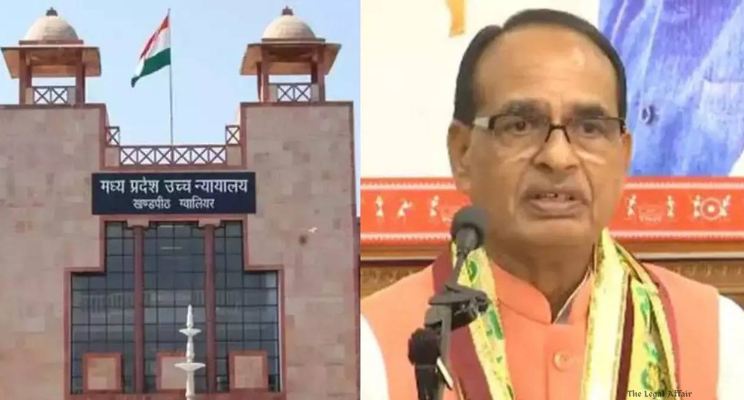
In a pivotal ruling, the Madhya Pradesh High Court recently dismissed a plea by Union Minister Shivraj Singh Chouhan and two others, who sought to quash a criminal defamation complaint filed by senior advocate and Member of Parliament Vivek Tankha. The case originated from alleged defamatory remarks made in 2021 regarding court proceedings on Panchayat elections. Justice Sanjay Dwivedi of the Jabalpur Bench ruled that only a trial court can determine the validity of defamation allegations under Section 499 of the Indian Penal Code (IPC), emphasizing that this assessment requires evidence to be examined in a full trial.
The High Court reiterated that it was premature to dismiss Tankha’s complaint on the grounds of inadmissibility of evidence, particularly when issues of good faith and public interest, as outlined in the Fifth Exception to Section 499 IPC, must be evaluated as facts in court. This decision highlights the High Court’s stance on ensuring a complete evidentiary review before dismissing allegations of defamation, underscoring the importance of due legal process.
Background:
The case began when Vivek Tankha, who represented a party in a Supreme Court case related to Panchayat elections and OBC reservations, alleged that Shivraj Singh Chouhan and others made defamatory statements against him in media outlets. These statements purportedly accused Tankha of being opposed to OBC reservations, sparking a wave of public criticism against him. Tankha claimed that these statements were part of a deliberate and false campaign aimed at damaging his reputation, suggesting that Chouhan and his associates used print and visual media to “scandalize” judicial proceedings in a manner that misrepresented his stance on the OBC reservation issue.
After these remarks were circulated in the media, Tankha served a notice to Chouhan and the other accused, seeking clarification on whether they indeed made the statements. However, the accused allegedly failed to respond. As a result, Tankha filed a defamation complaint, alleging that the statements caused reputational harm and sought criminal prosecution against Chouhan and his associates. The defendants approached the High Court to quash the complaint, arguing that the allegations lacked credible evidence and were grounded solely in hearsay media reports.
Arguments:
Petitioners’ Arguments:
Representing Shivraj Singh Chouhan and the co-accused, Senior Advocate Surendra Singh and his team argued that the defamation complaint was based on inadmissible media reports and lacked the necessary legal substantiation for criminal defamation. The petitioners contended that the complaint relied on newspaper articles and televised media statements, which they claimed were hearsay and could not legally stand as evidence of defamation without testimony from the journalists or media personnel responsible for the publications.
The petitioners further argued that the dispute should be considered a civil matter rather than criminal, suggesting that Tankha, at most, could pursue compensation for any alleged harm to his reputation but that a criminal defamation charge was inappropriate. The defence highlighted that Tankha’s list of witnesses did not include any journalist or media figure who could corroborate that the petitioners made the statements in question. They claimed that the Magistrate’s decision to proceed was unfounded, as it was based on inadmissible evidence, and thus, the case warranted dismissal.
Respondent’s Arguments:
The respondent, represented by Senior Advocate Kapil Sibal, contended that the evidence presented with the complaint was sufficient to warrant the trial court’s cognizance of the matter. Tankha’s counsel argued that the statements in question were damaging and that the evidence’s admissibility would be a matter for the trial to decide. Sibal asserted that this was not a case lacking evidence, as the complaint was accompanied by ample material suggesting that the accused had publicly propagated defamatory statements intended to harm Tankha’s reputation.
Moreover, Tankha’s counsel argued that the absence of journalists in the initial list of witnesses did not preclude their addition at a later stage of the trial. This flexibility, he argued, was inherent in the legal process, allowing the court to summon relevant witnesses as needed to fully ascertain the facts. Sibal emphasized that issues of good faith and public interest, as outlined in Section 499 IPC, require careful examination, which can only be achieved through a full trial.
The respondent further argued that the Magistrate had acted within his authority in taking cognizance of the complaint, as it was grounded in sufficient prima facie evidence of defamation. This evidence, the respondent contended, warranted a trial to assess its weight and credibility.
Court’s Analysis and Judgment:
- Importance of Trial in Determining Defamation Claims:
In dismissing the petitioners’ plea, Justice Sanjay Dwivedi underscored that determining the presence of defamation requires a full evidentiary process, which cannot be circumvented at the initial stages based on allegations of inadmissibility. He emphasized that while taking cognizance, the Magistrate need only assess whether there exists enough material to justify proceeding to trial. Justice Dwivedi clarified that it was not the Magistrate’s responsibility to determine at this stage whether the evidence was sufficient for conviction, as that assessment can only occur once all evidence has been thoroughly examined in trial proceedings.
The High Court referenced the Supreme Court’s observations in the landmark Subramanian Swamy v. Union of India (2016) case, which highlighted that defamation under Section 499 IPC centres on the harm caused to a person’s reputation, with “mens rea” or criminal intent being a prerequisite. Citing this case, the court noted that the evidence presented by the complainant, at minimum, supported the allegation that Tankha’s reputation may have been harmed by the statements attributed to the accused.
- Application of Section 499 IPC and Fifth Exception:
The court considered the Fifth Exception to Section 499 IPC, which outlines that defamation charges must be evaluated based on whether the allegedly defamatory statements were made in good faith and served a public good. Justice Dwivedi stated that these elements—good faith and public good—are questions of fact that require evidence and witness testimonies, which can only be adequately addressed in a trial. He reasoned that dismissing the case before trial would deny the complainant an opportunity to prove his claims, which was not warranted based on the evidence presented.
- Dismissing Arguments on Inadmissibility of Evidence:
In response to the petitioners’ claim that the defamation allegations were based on inadmissible evidence, the High Court rejected the notion that media reports were insufficient grounds for taking cognizance. Justice Dwivedi noted that the initial absence of journalists or media personnel in the witness list did not render the evidence inadmissible. The court highlighted that, procedurally, witnesses could be summoned at later stages, allowing for a complete evaluation of the facts and evidence. Therefore, the trial court retained the authority to summon additional witnesses if necessary to substantiate the claims.
- Refusal to Quash the Defamation Complaint
Ultimately, the High Court found no basis to quash the defamation complaint. It held that there was enough prima facie evidence supporting Tankha’s claims, justifying the trial court’s decision to proceed. Justice Dwivedi concluded that dismissing the complaint would be inappropriate given the stage of the proceedings and the need to verify the facts and merits through a thorough trial process.
Conclusion:
The Madhya Pradesh High Court’s ruling emphasizes the importance of allowing defamation cases to proceed to trial, especially when there is prima facie evidence warranting further examination. Justice Sanjay Dwivedi’s decision underscores the necessity of a full evidentiary review, stressing that issues of public good, good faith, and harm to reputation are factual questions that must be tested through the trial process. By dismissing the plea to quash the complaint, the High Court has reinforced that legal due process is essential in defamation cases, as premature dismissal could deny the complainant the opportunity to substantiate their claims.