


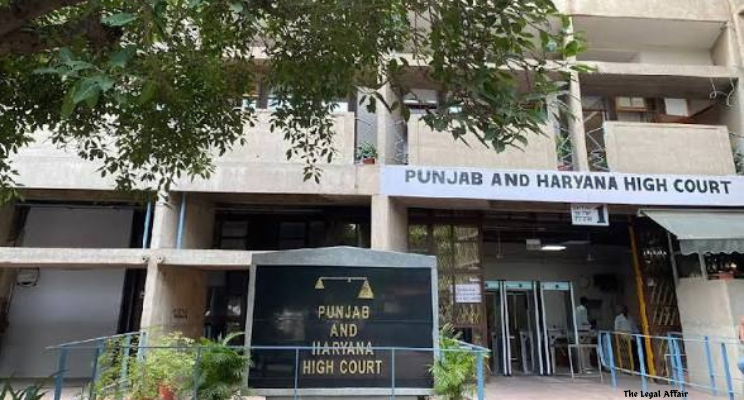
Introduction:
The Punjab and Haryana High Court has granted regular bail to a man accused of repeatedly circulating child sexual exploitation and abuse material (CSEAM) through social media, while directing the investigating agency to ensure that he undergoes a psychiatric examination to identify whether any underlying psychological or psychiatric condition may have a bearing on the alleged conduct.
Justice Sanjay Vashisth observed that allegations involving the circulation of sexual abuse material depicting children must be treated with utmost seriousness. At the same time, the Court emphasised the importance of examining whether any psychological or psychiatric factors may contribute to such behaviour. It reasoned that identifying the possible causes of the alleged conduct could assist not only in providing appropriate medical intervention, but also in developing measures to prevent its recurrence and protect potential victims.
The petitioner, represented by Advocate Kamal Chaudhary, had approached the High Court seeking regular bail in a case registered under Section 67-B of the Information Technology Act, 2000. The prosecution alleged that material involving minors had repeatedly been circulated through an Instagram account associated with the petitioner’s mobile number and email address. The FIR was registered on February 4, 2026, at Police Station Cyber Crime, following information received from the Online Crime against Women and Children (OCWC) wing of the Indian Cyber Crime Coordination Centre (I4C), functioning under the Ministry of Home Affairs.
The investigation originated from a proactive monitoring exercise undertaken by the I4C to identify individuals allegedly involved in creating or circulating child sexual exploitation material. A monitoring tool used by the agency identified potential content creators in Haryana. The information subsequently led to the registration of the FIR and investigation into the social media account allegedly linked to the petitioner.
According to the prosecution, 17 tipline reports were associated with the petitioner’s Instagram account. These reports allegedly indicated repeated transmission of material involving minors to other users. The State relied upon these reports, which were appended to its status report before the High Court, as part of the material supporting the allegations.
An important aspect of the proceedings was the absence of any clear indication in the State’s status report that the petitioner had been examined by a qualified psychiatric specialist during the investigation. The Court considered this omission significant because of the nature and repetitive character of the alleged conduct. It observed that if an underlying condition existed, it required appropriate medical assessment and intervention rather than allowing the accused to remain incarcerated indefinitely without examining that possibility.
The Court therefore approached the matter from two related perspectives. First, it considered whether continued custody was necessary in view of the period already spent in detention, the absence of any other criminal case and the likely time required for the trial. Second, it considered whether a psychiatric assessment could help the investigating agency understand the alleged behaviour and identify appropriate measures to prevent further victimisation.
The decision does not dilute the seriousness of offences involving child sexual exploitation material. Rather, it highlights the importance of combining the criminal justice response with appropriate medical assessment where circumstances warrant it. The Court ultimately granted regular bail, subject to a condition that the petitioner must not threaten or influence any prosecution witness. It also directed that the psychiatric examination be arranged without delay, if it had not already been conducted.
The ruling is significant because it recognises that investigation into alleged online sexual exploitation must address not only the collection of digital evidence and determination of criminal responsibility, but also any relevant medical factors that may assist in preventing similar conduct in the future.
Arguments of the Parties:
The petitioner sought regular bail in the FIR registered under Section 67-B of the Information Technology Act, 2000. His counsel, Advocate Kamal Chaudhary, appeared on his behalf before the High Court. The principal circumstances ultimately considered by the Court included the petitioner’s period of custody, the absence of any other criminal case against him and the likelihood that the trial would take considerable time to conclude.
The petitioner had been in custody since February 16, 2026. By the time the matter was considered, he had undergone approximately eight months and 23 days of actual custody. The Court also noted that no other criminal case had been registered against him. These circumstances formed part of the overall assessment of whether continued detention was necessary while the criminal proceedings remained pending.
The defence’s detailed submissions on the merits of the allegations, the evidentiary value of the 17 tipline reports or the precise grounds on which bail was sought are not set out in the supplied case summary. It would therefore be inappropriate to attribute any additional factual or legal arguments to the petitioner beyond those reflected in the Court’s consideration of custody and the circumstances of the case.
The State, represented by Deputy Advocate General Gaura Bansal, Haryana, opposed the petition on the basis of the allegations emerging from the investigation. The prosecution relied on the information received from the OCWC wing of the I4C, which had identified potential CSEAM content creators in Haryana through proactive monitoring.
The State’s status report referred to 17 tipline reports linked to an Instagram account registered using the petitioner’s mobile number and email address. According to the prosecution, the account had allegedly been used to send material involving minors repeatedly to other users. The State placed these reports before the Court as supporting material in the investigation.
The allegations were serious because they concerned the circulation of material depicting the sexual exploitation and abuse of children. The prosecution case was not presented as an isolated instance of online activity; rather, the 17 reports were relied upon to indicate repeated circulation through the account allegedly associated with the petitioner.
The State’s status report, however, did not clarify whether the petitioner had undergone an examination by a qualified psychiatrist or other appropriate specialist to determine whether any psychological or psychiatric condition might have a bearing on the alleged behaviour. This omission became an important consideration in the High Court’s order.
The Court was therefore required to consider the prosecution material while also examining the need for continued detention and the possibility of medical assessment. The competing considerations were not limited to the seriousness of the allegations. They also included the period of custody already undergone, the anticipated duration of the trial, the petitioner’s criminal antecedents as disclosed in the record and the potential relevance of psychiatric evaluation.
The State’s reliance on the tipline reports provided the basis for considering the allegations seriously. At the same time, the absence of information about a specialist examination led the Court to issue a separate direction to the investigating officer. The psychiatric assessment was intended to identify any relevant condition and enable appropriate medical recommendations, without treating the existence of such a condition as established in advance.
Court’s Judgment:
Justice Sanjay Vashisth granted regular bail to the petitioner but coupled the relief with a direction requiring the investigating officer to arrange a psychiatric examination. The Court’s reasoning reflected the need to address the seriousness of the alleged offences while also considering the constitutional and practical implications of prolonged pre-trial detention.
The Court began by acknowledging the gravity of allegations involving the circulation of child sexual exploitation and abuse material. It described such conduct, if established, as wholly unacceptable in a civilised society. The circulation of material depicting the sexual abuse of children is not an ordinary online offence. It can perpetuate the exploitation of children, expose victims to repeated violations of their privacy and dignity, and contribute to further demand for abusive material.
The Court nevertheless emphasised that an effective response to such conduct should not be confined to incarceration alone. It considered it important to examine whether psychological or psychiatric factors could be contributing to the alleged behaviour. The Court’s observation was that unless the reasons behind such conduct were properly examined, the investigating agency might not be able to address the possibility of recurrence effectively. Preventing further victimisation, in its view, required attention to the causes that might underlie repeated behaviour.
This consideration assumed particular importance because the prosecution alleged repeated circulation of CSEAM through the petitioner’s social media account. The State had placed 17 tipline reports before the Court, suggesting that the alleged conduct was not limited to a single instance. The repetitive nature of the allegations prompted the Bench to consider whether a medical assessment could provide useful information for the investigation and for identifying appropriate intervention.
The Court examined the State’s status report and noticed that it did not indicate whether the petitioner had been examined by a qualified specialist during the investigation. It considered this omission significant in view of the nature and alleged repetition of the conduct.
The Bench observed that if any psychological or psychiatric condition was found to exist, the appropriate response would include medical attention and assessment. It would not be sufficient simply to allow the petitioner to remain in custody indefinitely without examining that aspect. The direction was therefore intended to ensure that the investigation did not overlook a potentially relevant medical dimension.
Accordingly, the Court directed that, if the examination had not already taken place, the investigating officer must ensure that the petitioner was examined without delay by a qualified psychiatrist or another appropriate specialist. The purpose of the examination was to identify any condition that might have a bearing on the alleged conduct and to enable recommendations for suitable medical intervention.
The Court also explained the preventive significance of such an assessment. Understanding whether an underlying condition existed could assist in devising measures to reduce the possibility of similar conduct in the future. The Bench indicated that this approach could have relevance beyond the individual case, including in cases involving other persons accused of comparable conduct.
Importantly, the Court did not hold that the petitioner suffered from any psychiatric disorder, nor did it suggest that a medical condition would excuse or automatically reduce criminal responsibility for the alleged offences. The direction was for an assessment to determine whether any relevant condition existed. The existence, nature and legal significance of any such condition would have to be considered on the basis of appropriate medical findings and the applicable law.
The psychiatric examination was therefore a supplementary investigative and preventive measure. It was not a substitute for the criminal investigation, an assessment of the digital evidence or the trial court’s responsibility to determine whether the prosecution could establish the charges. Nor did the Court treat the allegations as proven merely because the tipline reports had been placed on record.
The Bench then turned to the question of regular bail. It noted that the FIR had been registered on February 4, 2026, and that the petitioner had been in custody since February 16, 2026. By the time of the bail proceedings, he had undergone approximately eight months and 23 days of actual incarceration.
The Court also took note of the fact that no other criminal case had been registered against the petitioner. This was a relevant circumstance in assessing his continued detention. The absence of another criminal case did not determine the merits of the allegations in the present FIR, but it formed part of the overall picture considered by the Court while deciding whether further custody was necessary.
Another significant factor was the likely duration of the trial. The Court observed that the proceedings were likely to take considerable time. In such circumstances, it questioned the utility of keeping the petitioner in custody indefinitely when the trial was not expected to conclude in the near future.
The grant of bail did not amount to a finding that the allegations were false or that the petitioner was entitled to an acquittal. Bail concerns the necessity of detention pending trial, whereas the question of guilt must be decided after the evidence is examined in accordance with law. The Court’s assessment was directed towards determining whether continued incarceration was justified at that stage of the proceedings.
The nature of the allegations remained an important consideration. The Court expressly recognised that allegations involving the circulation of CSEAM must be viewed with utmost seriousness. However, seriousness alone did not remove the need to consider the actual period of custody, the absence of other criminal cases and the expected time required for the trial.
Balancing these circumstances, the High Court concluded that keeping the petitioner in custody indefinitely would serve no useful purpose for the prosecution. It therefore granted regular bail, subject to the condition that the petitioner must not threaten or influence any prosecution witness.
This condition was significant in preserving the fairness of the ongoing proceedings. Release on bail does not give an accused unrestricted freedom to interfere with the investigation or trial. The prohibition against threatening or influencing witnesses is intended to protect the integrity of the evidence and ensure that those participating in the prosecution can do so without pressure.
The Court also took an institutional step by directing that a copy of its order be sent to the Home Secretaries of the States of Punjab and Haryana and the Union Territory of Chandigarh. The purpose was to bring its suggestion regarding psychiatric examination of persons accused of similar conduct to the attention of the concerned authorities for consideration.
This direction reflects the broader concern expressed in the judgment: cases involving repeated circulation of child sexual exploitation material require a response that is both legally effective and attentive to prevention. Investigation must identify the persons responsible and collect the necessary evidence, while appropriate medical assessment may help identify conditions requiring intervention. The Court’s observations indicate that addressing possible contributing factors can form part of a wider effort to prevent further victimisation.
At the same time, the direction should not be understood as establishing a presumption that every person accused of circulating such material has a psychiatric condition. The Court directed an examination because the State’s report did not clarify whether one had been conducted and because of the repetitive nature of the allegations in this particular case. Any medical conclusion must follow a qualified professional assessment rather than assumption.
The order also does not determine the petitioner’s guilt under Section 67-B of the Information Technology Act. That provision addresses specified forms of electronic publication or transmission of material depicting children in sexually explicit acts or conduct, including the circumstances set out in the statutory text. Whether the prosecution can establish the necessary ingredients in the present case remains a matter for the criminal proceedings. The 17 tipline reports and the alleged connection between the Instagram account and the petitioner are matters to be tested in accordance with law.
The decision thus brings together two distinct aspects of criminal justice. The first is the need to ensure that an accused is not kept in pre-trial custody indefinitely when the circumstances do not justify continued detention and the trial is likely to take considerable time. The second is the importance of investigating the possible causes of repeated harmful conduct where a qualified medical assessment may assist in preventing future offences.
Ultimately, the Punjab and Haryana High Court granted regular bail to the petitioner after considering his period of incarceration, the absence of any other criminal case and the anticipated duration of the trial. It directed the investigating officer to arrange a psychiatric examination without delay, if one had not already been conducted, and prohibited the petitioner from threatening or influencing prosecution witnesses. It further directed that copies of the order be sent to the Home Secretaries of Punjab, Haryana and Chandigarh for consideration of the suggestion concerning psychiatric assessment in similar cases.
The ruling does not lessen the seriousness of child sexual exploitation offences. Instead, it highlights that protecting children requires more than responding to alleged wrongdoing after it occurs. Effective investigation, accountability under criminal law, appropriate medical intervention where indicated and preventive measures must work together to reduce the risk of further harm. The Court’s approach recognises that understanding the possible factors behind repeated conduct may be relevant to prevention, while leaving the question of criminal responsibility to be determined through the trial.