


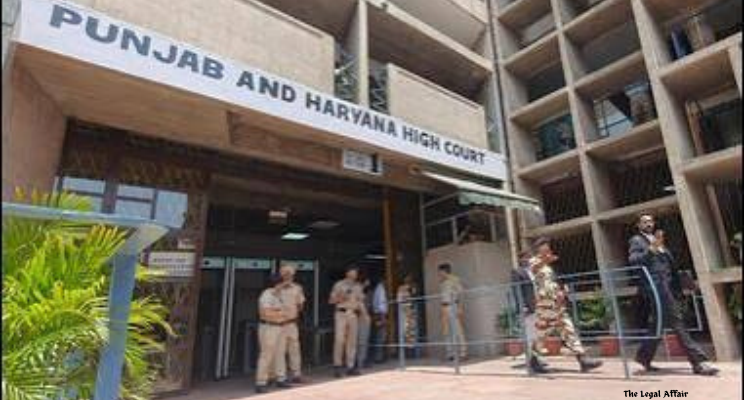
Introduction:
The Punjab and Haryana High Court has refused to grant regular bail to a man accused of orchestrating a grenade attack on a police post in Ludhiana from Dubai, allegedly acting on the instructions of a Pakistan-based handler associated with the Inter-Services Intelligence (ISI). The Court held that the allegations concerned national security and sovereignty, and that the material collected during the investigation prima facie indicated the petitioner’s involvement in the conspiracy.
Justice Shalini Singh Nagpal observed that the prosecution’s apprehension that the petitioner might abscond or become involved in further anti-national activities if released on bail had a foundational basis in the facts of the case. The Court also noted that sufficient material had been collected by the investigating agency to prima facie connect the petitioner with the alleged offence.
The case arose from an FIR registered on April 1, 2025, by the State Operation Cell, Amritsar. The FIR invoked Section 61(2) of the Bharatiya Nyaya Sanhita, 2023 (BNS), which deals with criminal conspiracy, along with Sections 3, 4 and 5 of the explosives law.
According to the prosecution, the police received secret information that the petitioner, who was originally from Uttar Pradesh but was residing in Dubai, was allegedly conspiring to target government infrastructure in Punjab and other States through terror-related attacks. The conspiracy was stated to have been carried out on the instructions of a Pakistan-based individual allegedly acting at the behest of the ISI.
The investigation took a significant turn when the petitioner’s cousin was apprehended near Amritsar on the same day the FIR was registered. He was allegedly found carrying a hand grenade inside a kit bag. According to the prosecution, the cousin disclosed that he had collected the explosive device on the petitioner’s instructions and was supposed to use it to attack Police Post Basti Jodhewal in Ludhiana. The alleged payment for carrying out the attack was ₹50,000.
The petitioner was subsequently arrested at Mumbai airport after a Look Out Circular had been issued against him by the Punjab Police. During the investigation, he allegedly disclosed that a Pakistan-based person identified as “Malik”, who was working at the behest of the ISI, had contacted him through social media and instructed him to arrange the attack.
The prosecution further alleged that the petitioner involved his cousin in the plan and shared a YouTube video explaining how to use a hand grenade. The investigating agency also relied upon digital material recovered from the co-accused’s mobile phone, which allegedly established communication between the two and showed the exchange of grenade-related photographs, training videos and voice messages.
The petitioner sought regular bail, disputing the prosecution’s allegations and questioning the reliability of the evidence. His counsel argued that he had been falsely implicated on the basis of the disclosure statement of the co-accused, that no recovery had been made from him and that he was outside India when the alleged incident occurred.
The High Court, however, found that the prosecution’s case was supported by material beyond the disclosure statement of the co-accused. Considering the seriousness of the allegations, the digital evidence and the possibility of the petitioner evading trial, the Court concluded that he was not entitled to regular bail.
Arguments of the Parties:
The petitioner sought regular bail on the ground that his implication in the alleged grenade attack conspiracy was based on unreliable material and that the prosecution had failed to establish any direct involvement on his part.
His counsel argued that the petitioner had been falsely implicated primarily on the basis of the disclosure statement made by his cousin, who was arrested near Amritsar with a hand grenade. The defence questioned the evidentiary value of such a statement and contended that the allegations against the petitioner could not be accepted merely because a co-accused had attributed responsibility to him.
Another important submission concerned the absence of any recovery from the petitioner. According to the defence, no hand grenade, explosive material or other incriminating article had been recovered from his possession. The petitioner was admittedly residing outside India, and the defence relied on this circumstance to challenge the prosecution’s allegation that he had directly participated in the execution of the alleged attack.
The defence also raised an objection concerning the petitioner’s own disclosure statement. It was argued that the statement had been recorded in Punjabi, even though the petitioner was originally from Uttar Pradesh and did not understand the language. According to the petitioner, this circumstance indicated that the statement was fabricated and could not safely be relied upon against him.
The defence further relied on the petitioner’s period of custody. He had remained in custody since August 24, 2025, and the bail plea raised the question of whether continued detention was justified while the criminal proceedings remained pending.
The petitioner’s submissions, therefore, challenged both the reliability of the prosecution’s evidence and the necessity of continued incarceration. The defence maintained that the absence of recovery, the alleged dependence on the co-accused’s disclosure statement and the disputed circumstances surrounding the petitioner’s own statement weakened the prosecution’s case at the bail stage.
The State strongly opposed the bail application and argued that the petitioner was not a passive or remotely connected individual but was allegedly the person who had arranged and coordinated the proposed grenade attack.
According to the prosecution, the petitioner was in regular contact with his cousin through mobile communication. The State relied on the digital material found in the co-accused’s phone, which allegedly showed direct communication between them in connection with the planned attack.
The prosecution specifically pointed to photographs of hand grenades and training videos allegedly shared by the petitioner. It also relied upon voice messages exchanged between the two, which were stated to support the allegation that the petitioner was guiding the co-accused in carrying out the attack.
The State further submitted that the co-accused had sent the petitioner the location in Amritsar from where he had collected the grenade. This communication was relied upon to demonstrate that the petitioner was aware of the movement and collection of the explosive device.
The prosecution also emphasised the alleged involvement of a Pakistan-based handler identified as Malik. It contended that the petitioner had been contacted through social media and instructed to arrange an attack on government infrastructure. The petitioner had allegedly recruited his cousin to execute the plan and promised him ₹50,000 for targeting Police Post Basti Jodhewal.
The State argued that the allegations were not limited to an isolated criminal act but involved a conspiracy allegedly directed against police infrastructure and national security. It further expressed apprehension that the petitioner, who had been residing in Dubai and was arrested at Mumbai airport pursuant to a Look Out Circular, might abscond if released on bail.
According to the prosecution, his alleged connections and the nature of the activity attributed to him created a genuine risk of his becoming involved in further anti-national activities. The State accordingly maintained that the gravity of the offence, the material collected during the investigation and the possibility of the petitioner evading trial justified continued detention.
Court’s Judgment:
The Punjab and Haryana High Court dismissed the petition seeking regular bail, holding that the seriousness of the allegations and the material collected by the investigating agency did not justify the petitioner’s release at that stage.
Justice Shalini Singh Nagpal observed that the alleged offences were directed against the security and sovereignty of the nation. The Court found that the prosecution’s apprehension regarding the possibility of the petitioner absconding or becoming involved in similar activities was supported by the circumstances emerging from the investigation.
The Bench also emphasised that the material collected by the investigating agency prima facie indicated the petitioner’s involvement in the alleged conspiracy.
Allegations involved national security and sovereignty
The Court attached considerable importance to the nature of the allegations. The prosecution’s case was that the petitioner had coordinated a grenade attack on a police post in Ludhiana at the direction of a Pakistan-based handler allegedly associated with the ISI.
The alleged target was Police Post Basti Jodhewal, a government security establishment. The prosecution further claimed that the conspiracy was part of a broader plan to target government infrastructure in Punjab and other States.
The Court observed:
“Offences like the present one are targeted at the security and sovereignty of the nation. Apprehension of the prosecution that petitioner can abscond and again indulge in anti-national activities once released on bail, has foundational basis in the facts of the case. Sufficient material has been collected by the Investigating agency, prima-facie showing his involvement in the offence.”
This observation reflects the Court’s assessment that the bail application could not be considered merely by looking at the petitioner’s period of custody or the absence of physical recovery from him. The allegations concerned a planned attack involving explosives, and the prosecution claimed that the petitioner had played a coordinating role.
The Court considered the alleged involvement of a foreign-based handler, the recruitment of the petitioner’s cousin and the proposed attack on a police establishment as relevant circumstances while assessing the risks associated with granting bail.
The gravity of the allegations was therefore an important factor in determining whether the petitioner should be released pending trial.
Digital evidence prima facie connected the petitioner with the conspiracy
A significant aspect of the Court’s reasoning was the digital material referred to in the prosecution’s status report.
The petitioner had argued that his implication was based on the disclosure statement of the co-accused and that no incriminating material had been recovered from him. However, the High Court noted that the investigating agency had collected material from the co-accused’s mobile phone which allegedly demonstrated direct communication between the two.
According to the status report, the co-accused’s phone contained material indicating that the petitioner had shared photographs of hand grenades and videos providing training in their use.
The Court recorded that the petitioner:
“used to share photographs of hand grenade and videos of training in hand grenade”.
The mobile phone also contained voice messages allegedly sent by the petitioner. In addition, the co-accused had shared with him the location in Amritsar from where the grenade was collected.
The significance of this material lay in its alleged connection with the specific steps taken to execute the proposed attack. The prosecution was not relying solely on an allegation that the petitioner knew the co-accused. Instead, it claimed that the communications demonstrated coordination concerning the explosive device, its collection and its intended use.
At the bail stage, the Court considered this digital material sufficient to prima facie support the prosecution’s allegation of involvement.
The Court did not finally determine the authenticity, admissibility or ultimate evidentiary value of the electronic material. Those matters remain subject to examination during the criminal proceedings. However, for deciding the bail application, the material was relevant to assessing whether the prosecution’s allegations had a factual foundation.
Absence of recovery from the petitioner was not sufficient to justify bail
The defence had strongly relied on the fact that no explosive material or other incriminating article had been recovered from the petitioner’s possession.
It also argued that the petitioner was outside India when the alleged conspiracy was being carried out. However, the prosecution’s case attributed to him the role of planning and coordinating the attack, rather than physically carrying the grenade to the proposed target.
The cousin was allegedly apprehended with the hand grenade, while the petitioner was accused of arranging the attack and guiding the co-accused through digital communications.
In considering the bail plea, the Court examined the prosecution’s material as a whole. The absence of a physical recovery from the petitioner did not, by itself, eliminate the prima facie case arising from the alleged communications, photographs, videos and voice messages.
The nature of the alleged role was therefore relevant. A person accused of coordinating a conspiracy may not necessarily be found carrying the weapon or explosive device at the time of apprehension.
The Court’s refusal to grant bail does not amount to a final finding that the petitioner committed the offence. It indicates only that the material placed before the Court, when considered at the bail stage, was sufficient to justify continued detention in view of the allegations and surrounding circumstances.
Possibility of absconding and further anti-national activities
Another important consideration was the prosecution’s apprehension that the petitioner might abscond if released on bail.
The petitioner was originally from Uttar Pradesh but had been residing in Dubai. He was arrested at Mumbai airport pursuant to a Look Out Circular issued by the Punjab Police.
The prosecution relied upon these circumstances to argue that there was a real possibility of the petitioner evading the trial. It also expressed concern that he might again become involved in activities threatening national security if released.
The High Court found that these apprehensions had a foundational basis in the facts of the case. The Bench did not treat the possibility of absconding as a speculative concern detached from the record. Instead, it considered the petitioner’s circumstances alongside the nature of the alleged conspiracy and the material indicating his involvement.
The Court’s observation highlights that the possibility of an accused evading trial is an important consideration while deciding bail, particularly where the prosecution presents circumstances suggesting that the accused may not remain available to face the proceedings.
The alleged connection with a Pakistan-based handler and the petitioner’s previous residence in Dubai were considered in the overall factual context. The Court concluded that the prosecution’s concerns could not be ignored while exercising discretion in the petitioner’s favour.
Length of custody alone does not determine entitlement to bail
The petitioner had been in custody since August 24, 2025. The duration of his incarceration was therefore placed before the Court as a relevant consideration in support of his release.
The High Court acknowledged the period of custody but clarified that the length of detention alone could not determine the outcome of a bail application.
The Court observed:
“Discretion is required to be exercised by the Court, considering the nature of allegations against the petitioner, the evidence collected by the prosecution agency, his position, means and standing, the possibility of his evading the trial and tampering with evidence, as also the larger interest of the society.”
This observation sets out the broader considerations that must guide the exercise of judicial discretion in bail matters.
The period of custody is undoubtedly relevant, but it must be assessed alongside the seriousness of the allegations, the material collected during the investigation, the circumstances of the accused and the possibility of interference with the trial.
The Court’s approach recognises that bail decisions require an overall assessment rather than reliance on a single factor. A lengthy period of custody may support a plea for release in an appropriate case, but it does not automatically create an entitlement to bail irrespective of the nature of the accusations and the risks involved.
In the present matter, the Court found that the seriousness of the alleged conspiracy, the digital evidence and the prosecution’s apprehension concerning the petitioner’s possible absconding outweighed the argument based solely on the period of incarceration.
Prima facie assessment does not determine guilt
The Court’s decision was confined to the question of regular bail. Its observations regarding the petitioner’s alleged involvement were made on the basis of the material placed before it at this stage.
The finding that sufficient material prima facie connected the petitioner with the offence does not amount to a final determination of guilt. The prosecution will still be required to establish its case in accordance with law during trial, and the petitioner will have the opportunity to challenge the evidence and raise all legally available defences.
The Court’s assessment was limited to deciding whether the circumstances justified releasing the petitioner while the criminal proceedings remained pending.
The distinction between a prima facie assessment at the bail stage and a final determination after trial is essential. Refusal of bail does not establish that the accused is guilty, just as the grant of bail does not establish innocence.
The High Court’s observations were therefore intended only to explain why the petitioner did not satisfy the requirements for release on bail in the circumstances presented.
Final decision
After considering the allegations, the material collected by the investigating agency, the digital communications allegedly connecting the petitioner with the co-accused and the possibility of the petitioner evading trial, the Punjab and Haryana High Court concluded that no case for regular bail had been made out.
Justice Shalini Singh Nagpal accordingly dismissed the bail petition.
The Court’s decision places emphasis on the need to assess bail applications in serious offences by considering not only the period of custody but also the nature of the alleged activity, the available prima facie evidence, the circumstances of the accused and the wider interests of society.
The ruling also demonstrates that allegations involving planned attacks on police establishments and threats to national security may require particularly careful scrutiny when the Court evaluates the risks associated with releasing an accused person.
The High Court clarified that its observations were confined to the adjudication of the bail application and would not be treated as an expression of opinion on the merits of the case. The question of the petitioner’s guilt or innocence will remain open for determination in the criminal proceedings.