


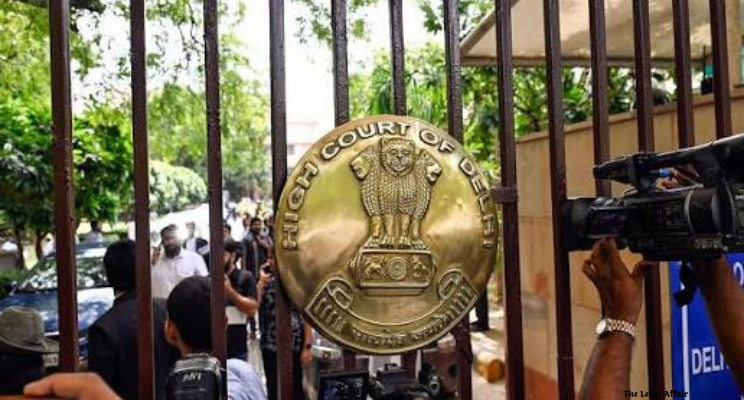
Introduction:
The Delhi High Court has reaffirmed that a disciplinary authority cannot mechanically accept the advice of the Union Public Service Commission (UPSC) while imposing a penalty on a government employee. Where an employee submits a representation challenging the UPSC’s advice, the disciplinary authority is legally required to consider the objections raised and record its own findings before taking a final decision. Merely stating that the representation lacks merit, without addressing its substance, does not satisfy the statutory requirement.
A Division Bench comprising Justice Prathiba M. Singh and Justice Vikas Mahajan made these observations while dismissing a petition filed by the Delhi Police Commissioner challenging an order of the Central Administrative Tribunal (CAT). The Tribunal had set aside the penalty imposed on retired police inspector H.S. Saini, which involved withholding 20 per cent of his monthly pension for a period of five years. It had also directed restoration of his pension along with arrears and interest.
The dispute arose from departmental proceedings initiated against Saini in connection with allegations that he had deliberately misdirected an investigation, favoured the accused and prepared incorrect official records. The allegations were serious in nature and concerned the manner in which he had discharged his responsibilities as a police officer.
A vigilance inquiry was conducted, but it could not substantiate the allegations. Nevertheless, an FIR was registered against Saini in 2005. Departmental proceedings were subsequently initiated against him on the very day he retired from service. The Inquiry Officer eventually submitted a report holding the charges proved.
Meanwhile, the criminal proceedings took a different course. The police filed a cancellation report in the criminal case, which was accepted by the Chief Metropolitan Magistrate. The Magistrate also dismissed the complainant’s protest petition.
In 2017, the UPSC tendered its advice recommending a reduction in Saini’s pension. Saini was given an opportunity to submit a representation against the Commission’s advice, which he exercised by raising objections before the competent disciplinary authority. However, the authority rejected his representation and imposed the recommended penalty.
Challenging the penalty, Saini approached the CAT. The Tribunal found the decision-making process legally defective, set aside the punishment and directed the restoration of his pension with consequential arrears and interest.
The Delhi Police Commissioner thereafter approached the High Court, questioning the Tribunal’s interference with the disciplinary authority’s decision. The principal legal issue before the Division Bench was whether the disciplinary authority had properly discharged its obligation under Rule 15(4) of the Central Civil Services (Classification, Control and Appeal) Rules, 1965, by considering the employee’s representation against the UPSC’s advice.
Rule 15(4) provides an important procedural safeguard in disciplinary proceedings. Where the UPSC’s advice is obtained, a copy must be forwarded to the charged officer, giving the officer an opportunity to make a written representation or submission against it. The disciplinary authority must then consider that representation and record its findings before proceeding further.
The High Court held that this requirement is substantive and cannot be treated as an empty formality. The disciplinary authority must demonstrate through its decision that the employee’s objections were actually examined and considered. A final penalty order that simply rejects the representation without dealing with the grounds raised reflects non-application of mind and violates the prescribed procedure.
Arguments of the Parties:
The petitioner, represented by the Delhi Police Commissioner, challenged the CAT’s decision setting aside the penalty imposed upon Saini. The petitioner’s challenge concerned the Tribunal’s interference with the disciplinary authority’s decision to withhold 20 per cent of the retired inspector’s monthly pension for five years.
The underlying departmental proceedings concerned allegations that Saini had deliberately diverted the course of an investigation, acted in favour of the accused and prepared incorrect records. The Inquiry Officer had found the charges proved in the departmental inquiry. The disciplinary authority subsequently considered the matter in the context of the UPSC’s advice, which recommended a pension cut.
The petitioner’s challenge sought to sustain the disciplinary action and contest the Tribunal’s decision to invalidate the penalty. The central question was whether the disciplinary authority’s treatment of Saini’s representation was sufficient to satisfy Rule 15(4) of the CCS (CCA) Rules, 1965.
On the other hand, Saini’s case before the Tribunal was that the penalty had been imposed without properly considering his objections to the UPSC’s advice. He had submitted a representation after receiving the Commission’s recommendation, as permitted under Rule 15(4). However, the competent authority rejected the representation by merely describing it as lacking merit, without addressing the specific grounds raised by him.
The retired inspector’s challenge also arose against the background of the criminal proceedings, in which the cancellation report filed by the police had been accepted by the Chief Metropolitan Magistrate and the complainant’s protest petition had been dismissed. Although the departmental inquiry and criminal proceedings were separate, the outcome of the criminal case formed part of the surrounding circumstances of the dispute.
Saini’s principal grievance was therefore not simply that the disciplinary authority had disagreed with his representation. Rather, it was that the authority had failed to demonstrate that it had independently considered the objections before deciding to impose the penalty.
The distinction is important. Rule 15(4) does not necessarily require the disciplinary authority to accept an employee’s objections or reject the UPSC’s recommendation. It requires the authority to consider the representation and record its findings. The employee’s right is to receive genuine consideration of the objections, not an automatic favourable decision.
The dispute thus centred on the quality of the decision-making process. The petitioner sought to defend the disciplinary outcome, while Saini’s challenge was directed at the failure to comply with the procedural obligation imposed by Rule 15(4).
The High Court examined this issue by considering the language of the rule and the actual contents of the penalty order. It had to determine whether the authority’s brief rejection of the representation amounted to the consideration and recording of findings required by the statutory provision.
Court’s Judgment:
The Delhi High Court dismissed the petition filed by the Delhi Police Commissioner and upheld the CAT’s decision setting aside the pension penalty imposed on retired Inspector H.S. Saini. The Division Bench found that the disciplinary authority had failed to comply with the mandatory requirements of Rule 15(4) of the CCS (CCA) Rules, 1965, because it had rejected the employee’s representation without dealing with the objections raised in it.
Rule 15(4) creates a mandatory procedural safeguard
The principal provision examined by the High Court was Rule 15(4) of the Central Civil Services (Classification, Control and Appeal) Rules, 1965.
The rule governs the procedure to be followed when the UPSC’s advice is obtained during disciplinary proceedings. It requires that a copy of the advice be forwarded to the charged officer, thereby providing an opportunity to submit a written representation or objections against the Commission’s recommendation.
The Bench explained that the opportunity given to the employee would serve little purpose if the disciplinary authority could simply receive the representation and reject it without examining its contents.
The Court observed:
“…..a copy of the advice tendered by the UPSC is required to be forwarded to the charged officer thus, affording him an opportunity to make a written representation or submission against the advice of the Commission to the Disciplinary Authority. Once such a representation is made, Rule 15(4) makes it obligatory upon the Disciplinary Authority to ‘consider’ the said representation and ‘record its findings’ before proceeding further in the matter.”
The Court placed particular emphasis on the words “consider” and “record its findings”. These expressions impose a clear obligation upon the disciplinary authority and require more than the mere acknowledgment of an employee’s objections.
The provision establishes a sequence of procedural safeguards. First, the UPSC’s advice must be communicated to the charged officer. Second, the officer must be allowed to make a written representation against that advice. Third, the disciplinary authority must consider the representation. Finally, it must record its findings before proceeding with the matter.
The High Court made it clear that the third and fourth requirements cannot be ignored. Once the employee exercises the right to submit objections, the authority must apply its mind to those objections and reflect the outcome of that consideration in its decision.
The purpose of the provision is to ensure that the disciplinary authority does not treat the UPSC’s advice as a substitute for its own independent assessment. The Commission’s recommendation may be an important part of the decision-making process, but the final responsibility remains with the competent disciplinary authority.
Consideration of representation cannot be an empty formality
The Bench emphasised that the opportunity to submit a representation must have real meaning. A procedural right cannot be reduced to a formality by allowing the employee to submit objections while permitting the authority to disregard them without proper examination.
The Court’s reasoning recognises that the right to make a representation is closely connected with the obligation to consider it. If the disciplinary authority is free to reject every representation through a standard statement that it lacks merit, the safeguard under Rule 15(4) would lose its practical significance.
A genuine consideration requires the authority to examine the grounds raised by the employee and arrive at its own conclusions. The decision need not necessarily accept the employee’s position, but it must demonstrate that the objections were considered before the final penalty was imposed.
The obligation to record findings is equally important. It enables the employee to understand why the objections were rejected and demonstrates that the authority has independently evaluated the matter. It also makes the decision capable of meaningful judicial scrutiny if its legality is subsequently challenged.
In disciplinary matters, the consequences of an adverse decision may continue even after retirement, particularly where the proceedings result in a reduction or withholding of pension. Therefore, compliance with procedural safeguards assumes considerable importance.
The Court’s approach makes clear that the disciplinary authority cannot avoid its responsibility by relying exclusively on the fact that the UPSC has recommended a particular punishment. The authority must exercise its own judgment in accordance with the governing rules.
Penalty order failed to address the employee’s objections
Applying Rule 15(4) to the facts of the case, the High Court examined the manner in which Saini’s representation had been dealt with by the competent authority.
The Court noticed that the penalty order simply described the representation as lacking merit. It did not address the objections raised by Saini or explain why those objections were found unacceptable.
The order, therefore, did not demonstrate that the authority had undertaken the consideration required under the rule. Merely recording that a representation has been examined does not necessarily establish compliance when the decision contains no meaningful findings on the grounds raised.
The Court found that the disciplinary authority had failed to show due application of mind. Its rejection of the representation was not supported by an examination of the employee’s objections, making the decision-making process legally defective.
The defect was not merely about the length of the order or the absence of elaborate reasoning. The real problem was the failure to discharge a mandatory statutory obligation. The authority was required to consider the representation and record its findings, but the penalty order did not reflect that exercise.
The High Court accordingly held that the penalty order suffered from non-application of mind and was contrary to Rule 15(4) of the CCS (CCA) Rules, 1965.
UPSC advice does not replace the disciplinary authority’s independent judgment
An important principle emerging from the decision is that the UPSC’s advice cannot be treated as automatically binding upon the disciplinary authority in a manner that makes the employee’s representation meaningless.
The requirement to communicate the advice and invite objections ensures that the charged officer has an opportunity to respond before the final decision is taken. This procedural arrangement would be ineffective if the authority merely adopted the recommendation without considering the employee’s submissions.
The disciplinary authority must independently evaluate the representation, even where the UPSC has recommended a particular penalty. The Commission’s advice forms part of the material available to the authority, but it does not eliminate the authority’s responsibility to comply with Rule 15(4).
This distinction preserves the role of the disciplinary authority as the decision-making body. It also prevents the decision from becoming a mechanical endorsement of an external recommendation.
The Court’s ruling does not mean that the disciplinary authority must agree with the employee or depart from the UPSC’s advice whenever objections are submitted. Instead, it requires the authority to consider the objections genuinely and record its conclusions. If the grounds are found unpersuasive, the authority may still proceed with the proposed punishment, provided its decision reflects the consideration mandated by law.
Thus, the legal requirement is not a guaranteed favourable outcome for the employee but a fair and reasoned decision-making process.
Tribunal was justified in setting aside the pension penalty
The High Court also considered the CAT’s decision to set aside the penalty and restore Saini’s pension along with arrears and interest.
The Tribunal had found that the disciplinary authority’s treatment of the representation did not satisfy the requirements of Rule 15(4). The High Court agreed with that conclusion, holding that the failure to consider the employee’s objections was sufficient to render the penalty order legally unsustainable.
The fact that the Inquiry Officer had found the departmental charges proved did not remove the obligation to comply with the subsequent procedural requirements governing the final decision. The disciplinary process must be conducted in accordance with the applicable rules at every relevant stage.
Similarly, the UPSC’s recommendation could not cure the defect in the disciplinary authority’s decision-making process. Even where the inquiry report and the Commission’s advice support disciplinary action, the authority must still comply with the statutory requirement to consider the employee’s representation.
The Court therefore found no reason to interfere with the Tribunal’s order.
Criminal proceedings and departmental inquiry remain distinct
The background of the case also involved the closure of the criminal proceedings against Saini. The police had filed a cancellation report in the FIR registered in 2005, which was accepted by the Chief Metropolitan Magistrate. The complainant’s protest petition was also dismissed.
These developments formed part of the factual background, but the High Court’s central determination concerned compliance with Rule 15(4), rather than a general ruling that the outcome of criminal proceedings automatically determines the result of departmental action.
Criminal proceedings and departmental inquiries operate under different legal standards and serve different purposes. The outcome of one does not necessarily determine the outcome of the other. However, the disciplinary authority must still follow the applicable procedural rules when deciding whether a penalty should be imposed.
In the present case, the decisive defect identified by the High Court was the failure to meaningfully consider Saini’s representation against the UPSC’s advice.
Final decision
Concluding that the disciplinary authority had failed to comply with the mandatory requirements of Rule 15(4) of the CCS (CCA) Rules, 1965, the Delhi High Court dismissed the petition filed by the Delhi Police Commissioner.
The Bench upheld the CAT’s decision setting aside the penalty of withholding 20 per cent of Saini’s monthly pension for five years. Consequently, the Tribunal’s direction for restoration of pension along with arrears and interest remained undisturbed.
The judgment reinforces an important principle of service law: disciplinary authorities must exercise independent judgment and cannot treat statutory opportunities of representation as mere procedural formalities. Whenever an employee challenges the UPSC’s advice, the authority must genuinely consider the objections and record its findings before imposing punishment.
The decision also serves as a reminder that even when departmental charges have been found proved, the final disciplinary action must comply with the procedure prescribed by law. A penalty cannot be sustained merely because an inquiry report or an external recommendation supports it. The decision-making authority must demonstrate that it has independently considered the relevant material and followed every mandatory safeguard.