


Introduction:
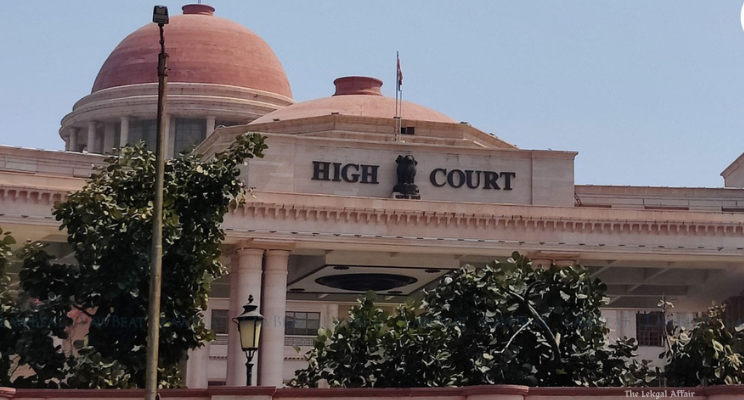
In a significant ruling, the Allahabad High Court, in Gazal Srivastava and 2 Others v. Dhajaram Charitable Trust, New Delhi Thru. Its Chairman Captain Dilavar Singh Sanghwan (Rtd.) and Anr., 2025 LiveLaw (AB) 72, examined the legal principles surrounding property ownership and its attachment for the recovery of corporate debts. The case revolved around a property that was purchased by Shri Ashok Kumar Srivastava and later used for various purposes under Lavanaya Ayurvedic Pvt. Ltd. (Defendant No. 1), a company where the petitioners, including Gazal Srivastava, were Directors. The dispute arose when an ex-parte decree was passed against the company in a suit for recovery of arrears of profit share, rent, and damages. Subsequently, an execution case in Lucknow led to the attachment and auction of certain immovable properties, which the petitioners claimed as their personal assets. The core legal question was whether a private property, not transferred through a registered sale deed, could be deemed a company-owned asset merely because it was mentioned in the balance sheet. Justice Pankaj Bhatia, while adjudicating the writ petitions filed under Article 227, unequivocally held that the absence of a registered sale deed negated the company’s claim over the property, thereby invalidating its auction for debt recovery.
Arguments of Both Sides:
The petitioners contended that the auctioned property was privately owned by them and was never transferred to the company. They argued that Shri Ashok Kumar Srivastava had originally purchased the land and converted it from agricultural to non-agricultural status. Upon his demise, the property was inherited by his legal heirs, and no registered sale deed or transfer deed was executed in favor of the company. They asserted that the property was used for various medical and educational activities under the Lavanaya Ayurvedic Pvt. Ltd. and its associated institutions but never legally became a company asset. The petitioners further highlighted that their ownership rights were disregarded by the execution court, which proceeded with the auction without verifying the title documents. Additionally, they challenged the applicability of Section 93 of the UP Revenue Code, arguing that since the land was no longer agricultural, the provision did not apply. They maintained that there was no loan transaction between the company and the legal heirs that could lead to the presumption of sale under Section 93 of the Code. The petitioners relied on Suraj Lamp and Industries Private Limited vs. State of Haryana and Anr., where the Supreme Court held that property transfer must be effected through a registered sale deed. Furthermore, they invoked the Transfer of Property Act and the Registration Act to reinforce their claim that no legal transfer had occurred.
On the other hand, the decree-holder, appearing in person, contended that the petitioners were Directors of the judgment-debtor company and could not distance themselves from its liabilities. He argued that the execution proceedings had already considered the issue of ownership, and the claim regarding private ownership of the auctioned property was an attempt to evade corporate liabilities. The decree-holder asserted that since the company had included the property in its balance sheet, it should be treated as a corporate asset, making it liable for attachment. He further argued that judicial orders of a competent court could not be challenged under writ jurisdiction, as they did not infringe upon fundamental rights under Article 227. Additionally, he stated that the petitioners had failed to disclose their positions in the company, which amounted to an attempt to mislead the court.
Judgement:
The High Court, after scrutinizing the submissions, held that the fundamental principle of property transfer requires a registered sale deed, and the mere mention of a property in a balance sheet does not establish ownership. Justice Pankaj Bhatia emphasized that ownership of immovable property cannot be presumed without proper legal documentation, particularly in cases involving corporate debts. The Court found that the land was originally purchased by Shri Ashok Kumar Srivastava, and upon his death, it passed to his legal heirs. There was no evidence to show that he had ever transferred the property to the company, either through a sale deed or any other legally recognized mode of transfer. The Court also examined the doctrine of “blending,” which applies to Hindu Undivided Family (HUF) property but is inapplicable to corporate entities. It clarified that while a coparcener may blend personal property into HUF assets, such blending does not equate to an absolute transfer in favor of the company. The Court categorically ruled that a company cannot claim ownership over a private property unless there is a valid conveyance deed executed as per the Transfer of Property Act.
The judgment further addressed the applicability of Section 93 of the UP Revenue Code, which treats certain transfers of possession as sales when used for securing loans. The Court held that this provision did not apply for two reasons: first, the property was no longer agricultural, placing it outside the purview of Chapter IX of the Code; and second, there was no transaction where the petitioners had transferred possession to secure any loan. Consequently, the Court concluded that the execution court erred in treating the land as a company asset and proceeding with its auction. The Court also observed that while petitioners held positions in the company, it did not preclude them from asserting their individual ownership rights. The execution decree, having been passed without verifying ownership records, was deemed unjust and was set aside. However, the Court imposed a cost of ₹50,000 on the petitioners for failing to disclose that they held directorial positions in the company, thereby causing procedural delays.
Ultimately, the High Court ruled in favor of the petitioners, declaring the auction sale invalid and protecting their private property from being attached for the company’s debts. The judgment serves as a reaffirmation of the legal principle that corporate debt recovery cannot infringe upon private property rights unless there is a legally valid transfer.