


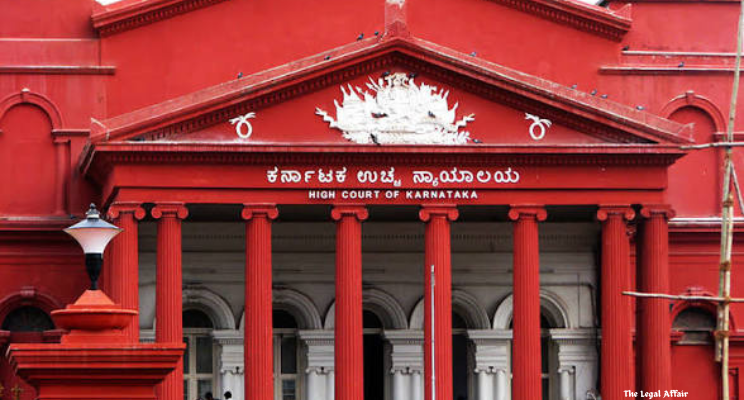
Introduction:
The Karnataka High Court, in Hari Prakash SP & Ors. v. State of Karnataka & Ors., W.P. Nos. 805 of 2014 and 5693 of 2014, considered an important question concerning the maintainability of writ petitions against private, unaided educational institutions. Justice Ashok S. Kinagi dismissed the petitions filed by 89 non-teaching employees associated with PES Pharmacy College and PES Institute of Technology, holding that a dispute concerning payment and fixation of salary between employees and a private unaided educational institution is essentially contractual in nature and, in the absence of a public law element, cannot ordinarily be enforced through a writ of mandamus under Article 226 of the Constitution.
The case arose from a long-standing dispute concerning the salaries payable to the petitioners, who had served in the concerned PES institutions for periods ranging from approximately eight to twenty-seven years. The employees sought directions to the Society and the educational institutions to fix their salaries on par with the pay scales applicable to employees holding corresponding posts in Government educational institutions. They also sought arrears and consequential benefits arising from such fixation.
The petitioners sought to establish that the institutions were not merely private employers operating independently of any regulatory framework. They relied upon the provisions governing the PES University and contended that the institution was subject to regulations framed by authorities such as the University Grants Commission and the All India Council for Technical Education. According to the employees, the regulatory framework created enforceable obligations concerning the payment of salaries to teaching and non-teaching staff.
Particular reliance was placed upon Rule 3(2) of the PES University Rules, 2019, which, according to the petitioners, required the salaries of other employees to be maintained at a level corresponding to the salaries of State Government employees of equivalent rank. On this basis, the petitioners argued that the obligation to pay the prescribed salary was not merely a matter of private contract between employer and employee but flowed from statutory and regulatory provisions.
The litigation had a lengthy procedural history. The petitions had originally been allowed by a Single Judge in 2016. However, that decision was subsequently challenged, and in July 2023 a Division Bench set aside the earlier order and remanded the matter to the Single Judge for fresh consideration. The Division Bench directed that the questions raised before the Court be reconsidered without expressing any opinion on the merits of the dispute.
Upon remand, the principal issue before Justice Ashok S. Kinagi was whether a writ petition under Article 226 could be maintained against a private, unaided and minority educational institution that was not receiving Government financial assistance. The question required the Court to examine the distinction between a body that is “State” or an “instrumentality of the State” under Article 12 and a private body that may nevertheless be subject to certain statutory or regulatory requirements.
The issue was particularly significant because Article 226 confers wider jurisdiction upon High Courts than Article 32. The power under Article 226 is not confined to issuing writs against bodies falling within the definition of “State” under Article 12. Nevertheless, the existence of Article 226 jurisdiction does not mean that every private dispute can be converted into a writ proceeding. Where the dispute is essentially private and contractual, the ordinary civil, labour or statutory remedies generally remain the appropriate avenues.
The petitioners contended that the educational institution’s regulatory obligations created a public element in the dispute. The respondents, however, maintained that the dispute was fundamentally an employment dispute involving payment of salary and that the petitioners had an efficacious alternative remedy under labour law.
The High Court ultimately accepted the respondents’ position. It held that the PES institutions did not qualify as “State” or an instrumentality of the State under Article 12 and that the particular dispute concerning salary was a private contractual dispute. The fact that the institution was regulated by statutory and regulatory bodies was not, by itself, sufficient to transform the employment relationship into a matter of public law.
The Court further observed that the petitioners had already approached the Assistant Labour Commissioner and had an efficacious statutory remedy available to them. In such circumstances, the High Court held that the extraordinary jurisdiction under Article 226 ought not to be invoked for enforcement of a contractual salary claim.
The judgment therefore draws an important distinction between regulation of a private educational institution and the existence of a public law obligation enforceable through a writ. While private educational institutions may be subject to statutory standards, regulatory supervision and educational norms, every dispute arising within such institutions does not automatically acquire a public character.
Arguments of the Parties:
The petitioners, represented by Senior Counsel Sri V. Lakshminarayana, argued that their claim was not merely founded upon an ordinary private employment contract. They contended that the PES institutions were governed by statutory and regulatory requirements which prescribed conditions relating to the service and remuneration of employees.
The petitioners pointed to the regulatory framework of the institution and argued that the university was required to comply with norms framed by the UGC and AICTE. According to them, these regulations imposed obligations concerning the payment of salaries to teaching and non-teaching staff. The employees therefore claimed that the management could not disregard the prescribed pay structure merely by characterizing their employment as private.
A significant part of the petitioners’ argument rested upon Rule 3(2) of the PES University Rules, 2019. They contended that the rule required the salaries of other employees to be fixed on par with State Government employees holding equivalent posts. In their submission, once such a requirement was incorporated into the governing framework of the university, the obligation became statutory or public in character.
The petitioners also relied upon the fact that the institution was a private university established under State legislation. They argued that statutory recognition and incorporation under a State enactment subjected the university to legal obligations that could be enforced through constitutional remedies.
The employees emphasized their lengthy service. Having worked in the institutions for periods extending from eight to twenty-seven years, they contended that they had a legitimate basis for seeking parity in salary with employees performing corresponding functions in Government institutions. Their claim included not only prospective salary fixation but also arrears and consequential benefits.
The petitioners further sought to distinguish the dispute from an ordinary private employment disagreement. Their argument was that the source of their claimed right to salary parity was not merely an agreement between the employees and management but the statutory and regulatory framework applicable to the institution. Consequently, they submitted that the dispute contained a sufficient public law element to attract the jurisdiction of the High Court.
The respondents, including the concerned PES institutions, opposed the maintainability of the writ petitions. Senior Counsel Sri S.N. Murthy argued that the college and university were private, unaided institutions and did not fall within the expression “State” under Article 12.
The respondents submitted that the institutions were not receiving Government grants or financial aid. They argued that they were not discharging the kind of public functions that would justify the exercise of writ jurisdiction in relation to an employment dispute.
According to the respondents, the relationship between the petitioners and the institutions was fundamentally one of employer and employee. The claim for salary fixation, arrears and consequential benefits therefore arose out of the terms and conditions of employment. Such a dispute, they argued, was essentially contractual and could not be transformed into a public law dispute merely because the educational institution was subject to regulatory supervision.
The respondents also contended that the petitioners had an efficacious alternative remedy under the Industrial Disputes Act, 1947. Since the grievance concerned payment of salary and employment conditions, the appropriate remedy was before the competent labour authority or Industrial Tribunal rather than through a constitutional writ petition.
The respondents relied upon the Supreme Court’s decision in T.M.A. Pai Foundation to emphasize the autonomy available to private and minority educational institutions in the administration and management of their affairs. They argued that external regulatory control could not be used to convert every internal employment dispute into a constitutional proceeding.
The respondents further relied upon the Supreme Court’s jurisprudence concerning the distinction between public law and private law remedies. They submitted that Article 226 could be invoked against a private body in appropriate cases where a public duty or public law element was involved, but not where the relief sought was simply enforcement of a private contractual obligation.
The respondents therefore urged the High Court to reject the petitions on the threshold of maintainability without entering into the merits of the employees’ demand for salary parity.
The State and other authorities also supported the respondents’ position on the limited role of writ jurisdiction in such contractual disputes. The State’s position was that the petitioners should pursue whatever statutory remedy was available under labour legislation rather than seek a direct mandamus from the High Court.
The competing submissions thus placed two principles against each other. The petitioners emphasized the statutory and regulatory framework governing the educational institution and contended that those obligations created a public law element. The respondents emphasized the private character of the institution and the contractual nature of the employment relationship.
The Court was consequently required to determine not whether the employees might ultimately have a claim for salary parity, but whether Article 226 was the appropriate legal mechanism for adjudicating and enforcing that claim.
Court’s Judgment:
Justice Ashok S. Kinagi dismissed both writ petitions and held that the claims for salary parity were not maintainable under Article 226 against the private unaided institutions in the circumstances of the case.
The Court began by examining the status of the respondent institution. It found that the concerned university and educational institutions were private entities and did not qualify as “State” or an “instrumentality of the State” within the meaning of Article 12 of the Constitution.
The Court’s conclusion, however, was not based solely upon the fact that the institutions were private. The more important consideration was the nature of the relief sought. The petitioners were seeking payment and fixation of salary. In the Court’s view, that dispute arose from the employment relationship between the parties and was therefore essentially contractual.
The Court expressly characterized the dispute as one lying outside the domain of public law. It observed that the controversy concerning payment of salary between the college or university and its non-teaching staff was “strictly a private contract” between the parties.
This distinction is fundamental to the exercise of writ jurisdiction. Article 226 empowers High Courts to issue writs not merely against bodies falling within Article 12 but also, in appropriate circumstances, against other persons or bodies for enforcement of public duties. However, the existence of a private respondent does not automatically mean that a writ is either available or unavailable. The crucial question is whether the duty sought to be enforced has a public law character.
The Court relied upon the Supreme Court’s jurisprudence concerning the circumstances in which private bodies may become amenable to writ jurisdiction. It particularly referred to Pradeep Kumar Biswas v. Indian Institute of Chemical Biology and St. Mary’s Education Society v. Rajendra Prasad Bhargava.
The Supreme Court’s decisions make clear that the determination of whether an entity is “State” under Article 12 cannot be reduced to a rigid formula. Various factors concerning financial, functional and administrative control may have to be examined. At the same time, statutory regulation alone does not automatically convert a private body into an instrumentality of the State.
Applying these principles, the High Court found that the PES institution’s regulatory environment did not change the fundamentally private nature of the employment dispute.
The petitioners had argued that the institution was bound by UGC and AICTE regulations relating to salaries. The Court did not treat the existence of such regulatory obligations as sufficient to confer writ maintainability upon the salary dispute.
This distinction is important. An educational institution may be regulated in matters concerning academic standards, infrastructure, professional qualifications, admission procedures, staffing requirements and other matters without thereby becoming “State” under Article 12. Regulatory control and constitutional status are distinct legal concepts.
The Court also examined the petitioners’ reliance upon Rule 3(2) of the PES University Rules, 2019. Even assuming that the rule prescribed a particular salary standard, the Court found that the relief sought by the employees remained connected with their private employment relationship.
In other words, the existence of a rule regulating salary did not automatically convert the petitioners’ individual salary claims into public law disputes. The employees could pursue enforcement of any statutory or contractual entitlement before the appropriate forum, but Article 226 was not considered the appropriate mechanism in the circumstances.
The Court reinforced this conclusion by referring to the Supreme Court’s decision in St. Mary’s Education Society v. Rajendra Prasad Bhargava. The Supreme Court has emphasized that a writ against a private educational institution is not maintainable merely because the institution performs an educational activity. The nature of the particular duty sought to be enforced remains critical.
The High Court also considered the decision in BCCI v. Cricket Association of Bihar. The petitioners’ side could potentially rely upon the principle that a body need not necessarily be “State” under Article 12 to fall within the reach of Article 226. The High Court acknowledged that principle but distinguished the BCCI case on facts and legal character.
The Court noted that the majority view in the BCCI judgment treated the Board as amenable to writ jurisdiction despite its status as a non-State body because of the public functions it discharged. The High Court found that the PES University stood on a different footing.
According to the High Court, the respondent institutions were not discharging comparable public functions in the context relevant to the present salary dispute and, importantly, were not receiving grants-in-aid from the Government.
The Court therefore refused to mechanically apply the BCCI principle to the PES institutions. The fact that an entity is involved in an activity having social importance does not necessarily mean that every dispute involving that entity becomes a public law matter.
The High Court also distinguished the decisions in Marwari Balika Vidyalaya and Andi Mukta Sadguru Trust. Those cases involved circumstances where the educational institutions had an element of public duty or were aided institutions, making the enforcement of certain obligations through Article 226 legally permissible.
In contrast, the PES institutions before the Court were private and unaided. The Court therefore concluded that the precedents relied upon by the petitioners did not assist them in establishing maintainability of their particular salary claims.
Another decisive consideration was the availability of an alternative remedy. The Court noted that the petitioners had already approached the Assistant Labour Commissioner.
The existence of an efficacious alternative remedy is not an absolute bar to the exercise of Article 226 jurisdiction in every conceivable situation. High Courts may still intervene in exceptional circumstances, particularly where fundamental rights, natural justice, jurisdictional errors or other serious public law issues arise. Nevertheless, where the dispute is purely contractual and an effective statutory remedy exists, the normal rule is that the constitutional writ jurisdiction should not be used as a substitute for that remedy.
In the present case, the Court found no exceptional public law circumstance requiring intervention. The petitioners’ grievance concerned salary payment arising from their employment with a private institution. Since a labour-law remedy was available, the High Court considered it inappropriate to issue a writ of mandamus.
The Court observed that the scope of interference under Article 226 in contractual matters is very limited. A writ court is not ordinarily constituted to adjudicate private contractual disputes involving disputed questions concerning service conditions, salary entitlement and related monetary claims.
The Court therefore held that the petitioners could not maintain a writ seeking a direction for payment of salary merely by relying upon the regulatory status of the educational institution.
Importantly, the judgment does not mean that private educational institutions are entirely immune from writ jurisdiction. The Court’s reasoning is narrower. Where a private institution performs a public function or is under a legally enforceable public duty, and where the relief sought concerns that public duty, Article 226 may be invoked in an appropriate case.
The critical distinction is between a public law obligation and a private employment obligation. If the dispute falls exclusively within the latter category, the appropriate remedy ordinarily lies before the forum created by civil or labour law.
This distinction explains why the Court relied heavily upon the Supreme Court’s decision in St. Mary’s Education Society. The relevant inquiry is not merely whether an institution is educational or regulated, but whether the particular obligation sought to be enforced possesses a public law character.
The Court also rejected the proposition that statutory regulation automatically makes a private institution “State”. Private bodies can be subject to numerous statutory requirements without becoming constitutional instrumentalities. Regulatory supervision is not equivalent to pervasive State control.
The decision therefore preserves the constitutional distinction between Article 12 and Article 226. An entity may fall outside Article 12 but still be subject to Article 226 in an appropriate case. However, the availability of Article 226 against a private body does not mean that every private contractual dispute can be brought before the High Court.
In the present matter, the Court concluded that the etitioners’ demand for salary parity was fundamentally a mat