


Introduction:
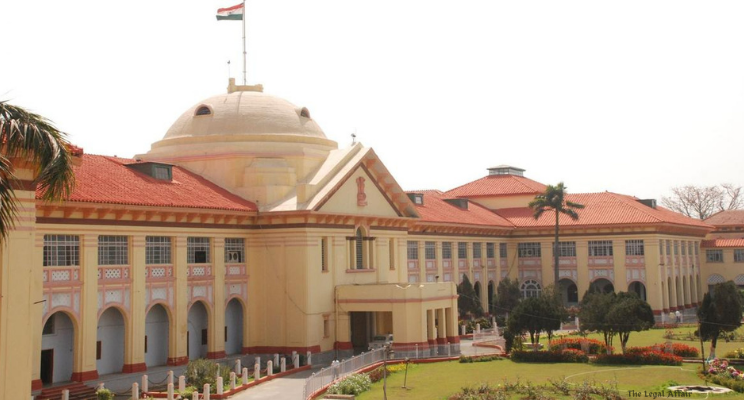
In the matter of State of Bihar & Others v. Dayanand Sinha & Others [Civil Revision Nos. 34, 66, and 112 of 2017], the Patna High Court Bench of Justice Ramesh Chand Malviya faced a significant legal question concerning the scope of Section 5 of the Limitation Act, 1963 in relation to revision petitions under Section 13 of the Bihar Public Works Contracts Disputes Arbitration Act, 2008 (“BPWCDA Act”). The dispute arose in the backdrop of conflicting precedents rendered by coordinate benches of the same Court. On one hand, some benches had ruled that the Limitation Act applies to revisions under the BPWCDA Act, permitting condonation of delay beyond the prescribed limitation period. On the other hand, contrary rulings had held that such condonation was impermissible in light of the scheme of Section 34(3) of the Arbitration and Conciliation Act, 1996 (“ACA”). In view of these conflicting opinions, the Court decided to refer the matter to a larger bench for authoritative adjudication.
The present case involved several revision applications filed against arbitral awards rendered by the Bihar Public Works Contract Disputes Arbitration Tribunal. These revisions were filed after a considerable delay, often exceeding ten months beyond the date of award. The applicants simultaneously filed interlocutory applications seeking condonation of delay under Section 5 of the Limitation Act, 1963. At issue was whether Section 5 of the Limitation Act could be invoked to condone such delay or whether the strict timeline akin to Section 34(3) of the ACA applied.
Arguments of the Applicants:
Learned counsel for the applicants contended that Section 5 of the Limitation Act clearly applies to revisions under Section 13 of the BPWCDA Act. It was argued that the BPWCDA Act itself, under Section 8, declares that its provisions are “in addition to and supplemental to” the ACA. Since Section 5 of the Limitation Act is applicable to proceedings under Section 34(3) of the ACA, the same principle must extend to revisions under Section 13 of the BPWCDA Act.
The applicants placed reliance on a prior decision of a coordinate bench in Civil Revision No. 9 of 2017 dated 05.04.2023. In that case, the Court had explicitly held that Section 5 of the Limitation Act was not excluded by the BPWCDA Act and could therefore be applied to condone delay in filing revisions. Counsel submitted that this precedent clearly governed the present matter and supported their applications for condonation.
It was further submitted that the purpose of Section 5 of the Limitation Act was to ensure that meritorious matters are not shut out at the threshold merely due to technicalities of limitation, provided the applicant can show “sufficient cause” for delay. In a welfare-oriented system of justice, the Court should adopt a liberal approach in condoning delay, particularly in cases where large public projects and government contracts are involved. Denying condonation, the applicants argued, would amount to denial of substantive justice.
Arguments of the Respondents:
Opposing the condonation, counsel for the respondents argued that Section 5 of the Limitation Act has no application to proceedings under Section 13 of the BPWCDA Act. They relied on the decision of another coordinate bench in Civil Revision No. 84 of 2018 dated 15.04.2024, which had taken a contrary view.
The respondents pointed out that Section 34(3) of the ACA expressly prescribes a limitation period of three months for filing challenges to arbitral awards, with a maximum extension of thirty days, beyond which courts have no power to condone delay. Since the BPWCDA Act is expressly supplemental to the ACA, it cannot be interpreted to create a more liberal regime of condonation than what is permitted under the ACA itself.
Further, it was submitted that the legislative intent behind arbitration laws is speedy resolution of disputes. Allowing unlimited condonation of delay through Section 5 of the Limitation Act would defeat this objective and open the floodgates for delayed challenges to arbitral awards, thereby frustrating the purpose of the BPWCDA Act.
The respondents thus urged the Court to hold that Section 5 of the Limitation Act is impliedly excluded in the scheme of Section 13 of the BPWCDA Act, just as it stands excluded under Section 34(3) of the ACA.
Court’s Observations:
Justice Ramesh Chand Malviya began by examining the statutory framework. Section 8 of the BPWCDA Act provides that its provisions are in addition to and supplemental to the ACA. Section 13 of the BPWCDA Act prescribes that a revision application must be filed within three months from the date of the award or interim award, but does not expressly exclude the applicability of the Limitation Act.
The Court analyzed Section 29(2) of the Limitation Act, which provides that where a special law prescribes a period of limitation different from the Limitation Act, the provisions of Sections 4 to 24 of the Limitation Act shall apply unless expressly excluded. Accordingly, the Court considered whether the BPWCDA Act expressly or impliedly excludes the applicability of Section 5 of the Limitation Act.
The Court drew a distinction between Section 34(3) of the ACA and Section 13 of the BPWCDA Act. While Section 34(3) clearly bars any condonation of delay beyond thirty days after the initial three-month period, Section 13 of the BPWCDA Act merely prescribes a three-month period without containing any such exclusionary language. Therefore, unlike Section 34(3), Section 13 does not expressly or impliedly exclude Section 5 of the Limitation Act.
It was further observed that the mere prescription of a mandatory limitation period under a special law does not automatically exclude the applicability of Section 5 of the Limitation Act. For exclusion to apply, the scheme and language of the statute must clearly indicate such an intention. Since the BPWCDA Act does not contain such restrictive language, Section 5 remains applicable.
At the same time, the Court acknowledged the existence of conflicting precedents from coordinate benches. In Civil Revision No. 9 of 2017, Section 5 was held applicable, while in Civil Revision No. 84 of 2018, it was held inapplicable. This conflict created uncertainty in the law and necessitated an authoritative ruling.
Judgment:
After detailed consideration, the Court concluded that Section 5 of the Limitation Act does indeed apply to revision applications filed under Section 13 of the BPWCDA Act. This would enable courts to condone delay beyond the prescribed three-month limitation period if sufficient cause is shown.
However, given the conflicting opinions of coordinate benches, the Court deemed it appropriate to refer the matter to a larger bench for authoritative adjudication. The records were accordingly directed to be placed before the Hon’ble Chief Justice of the Patna High Court for constitution of an appropriate larger bench to finally settle the legal position.
Thus, while holding that Section 5 applies, the Court prudently left the final word to a larger bench in the interest of consistency and judicial discipline.