


Introduction:
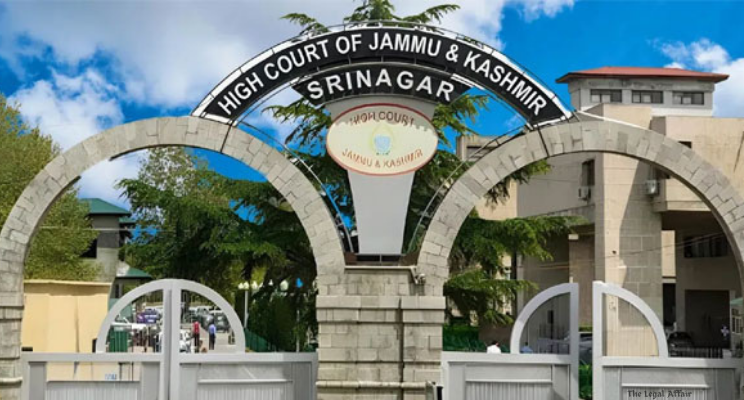
The case of Union Territory of Jammu and Kashmir & Others v. Dr. Bilal Ahmad (WP(C) No. 353/2024) came before the Jammu & Kashmir High Court and revolved around disciplinary proceedings against a government doctor accused of negligence, the validity of an enquiry report, and the legal treatment of the suspension period. The respondent, Dr. Bilal Ahmad, a B-Grade Specialist in Surgery at District Hospital, Anantnag, faced disciplinary action after the death of a patient following gallbladder surgery performed by him on 16 August 2006. The patient died the same evening, and the authorities placed him under suspension on 19 August 2006 alleging negligence. An enquiry was ordered, show-cause notices were issued, and eventually the penalty of “censure” was imposed. Later, the authorities directed that his suspension period would be treated as leave. Dr. Ahmad challenged these orders, and the matter eventually reached the Central Administrative Tribunal (CAT), which quashed the punishment and also set aside the order treating the suspension period as leave. Aggrieved, the Union Territory authorities approached the High Court. The Division Bench comprising Justice Sanjeev Kumar and Justice Sanjay Parihar delivered a nuanced ruling: while upholding the Tribunal’s quashing of the censure order due to procedural irregularities and denial of a fair hearing, the Court reversed the Tribunal’s finding on the treatment of the suspension period. It held that since the doctor was gainfully engaged in private practice during suspension, the period could not be treated as duty, and declaring it as leave was valid. This judgment strikes a careful balance between procedural fairness in disciplinary proceedings and preventing unjust enrichment during suspension.
Arguments of the Petitioners (Union Territory Authorities):
The petitioners, represented by Mr. Waseem Gul, Government Advocate, defended the disciplinary process and the orders issued against the respondent. They argued that the enquiry into the patient’s death was conducted fairly, and after examining the circumstances of the surgery, the Enquiry Committee found the respondent negligent. It was contended that the respondent had displayed overconfidence in attempting to operate upon a high-risk patient and had also failed to ensure proper post-operative care. According to the petitioners, these findings established negligence on the part of the respondent-doctor, and therefore, disciplinary action was warranted.
The petitioners further argued that the punishment imposed—censure—was only a minor penalty under the Civil Services (Classification, Control and Appeal) Rules, 1956. Under Rule 35 of the said Rules, for imposing a minor penalty, the requirement of law is limited to affording an opportunity of hearing to the delinquent employee. They contended that the respondent was issued show-cause notices and was permitted to file his replies, thereby fulfilling the requirement of natural justice. The petitioners asserted that the Tribunal had wrongly concluded that principles of natural justice were violated, as the respondent was given a fair chance to defend himself.
With respect to the suspension period, the petitioners argued that the Tribunal erred in setting aside the order treating the suspension period as leave. It was emphasized that the respondent, being a qualified surgeon, had been gainfully engaged in private practice during the suspension period and had earned income from private patients. Therefore, granting him full salary for the suspension period by treating it as duty would amount to double benefit and unjust enrichment, which is against law and equity. The petitioners stressed that suspension does not confer a right to salary unless the employee is exonerated of charges without blemish, which was not the case here, as negligence was indeed found against him even though the penalty imposed was minor. Thus, they requested the High Court to overturn the Tribunal’s order in toto and uphold the disciplinary authority’s decisions.
Arguments of the Respondent (Dr. Bilal Ahmad):
The respondent, represented by Mr. G.N. Sofi, contended that the disciplinary proceedings conducted against him were fundamentally flawed and violative of natural justice. It was argued that the Enquiry Committee itself was not constituted in accordance with the mandate of the order dated 17 August 2006, which required the inclusion of a Senior Specialist Surgeon from another district to ensure fairness and expert evaluation. The absence of such a senior specialist vitiated the entire enquiry, as the findings lacked the required expertise and impartiality.
The respondent further submitted that the complete enquiry report was never supplied to him. Instead, only the concluding portion containing the findings was provided, depriving him of the opportunity to examine the evidence and reasoning relied upon by the Committee. He argued that this denial of access to the full report rendered his right to make an effective representation meaningless. According to the respondent, Rule 35 of the Civil Services (CCA) Rules, 1956 mandates that even for a minor penalty like censure, the delinquent employee must be given an adequate opportunity of representation, which is impossible without access to all materials forming the basis of the disciplinary authority’s decision.
The respondent also submitted that the punishment of censure was imposed arbitrarily, without due consideration of his defense. He emphasized that surgery is inherently a high-risk medical procedure and that adverse outcomes cannot automatically be equated with negligence. He pointed out that the Enquiry Committee had not properly considered the contributory role of other doctors responsible for post-operative care.
With respect to the suspension period, the respondent argued that the Tribunal had rightly quashed the order treating the period as leave, as the suspension was never justified in the first place. He maintained that since the disciplinary process itself was vitiated by procedural lapses, he was entitled to full salary and service benefits for the period of suspension, which should have been treated as duty.
Court’s Judgment:
The Division Bench of the Jammu & Kashmir High Court delivered a detailed judgment addressing the rival contentions.
Firstly, on the constitution of the Enquiry Committee, the Court observed that the order dated 17 August 2006 specifically required the association of a Senior Specialist Surgeon from another district. This mandate was ignored, and the Committee was constituted without such an expert. The Court held that this was a serious irregularity which undermined the credibility and legality of the enquiry process.
Secondly, on the issue of supplying the enquiry report, the Court found that only the concluding portion of the report had been provided to the respondent, and not the full report with supporting material and reasoning. The Court emphasized that even in cases of minor penalties like censure, Rule 35 requires that the delinquent employee must be afforded a reasonable opportunity to defend himself. An opportunity cannot be considered reasonable or adequate unless the entire material relied upon by the disciplinary authority, including the complete enquiry report, is furnished. By withholding the full report, the respondent was deprived of his statutory and constitutional right to make an effective representation.
Consequently, the Court held that the Tribunal was correct in quashing the penalty of censure imposed on the respondent, as the enquiry process was fundamentally flawed. The Court reiterated the principle that procedural fairness is essential to disciplinary proceedings, regardless of whether the penalty imposed is major or minor.
However, on the issue of the suspension period, the Court disagreed with the Tribunal. It noted that the respondent, being a qualified surgeon, was gainfully engaged in private practice during his suspension. The Court observed that suspension is not meant to provide an employee with both the liberty to earn privately and simultaneously claim full government salary. Allowing such double benefits would amount to unjust enrichment. The Court emphasized that while an employee cannot be forced into destitution during suspension, if he has indeed been earning through private means, then treating the suspension period as duty and granting full salary would be unreasonable.
The Court concluded that treating the suspension period as leave was legally sound and equitable. It protected the respondent from being without any service continuity but prevented him from unfairly benefiting by claiming full government salary despite earnings from private practice.
Accordingly, the High Court partly upheld the Tribunal’s decision. It confirmed the quashing of the order imposing censure but modified the Tribunal’s ruling regarding the suspension period. It declared the order treating the suspension as leave to be valid and sustainable. With these findings, the writ petition was disposed of.
This judgment underscores two important legal principles: first, that procedural fairness, including proper constitution of enquiry committees and furnishing complete reports, is indispensable even in cases involving minor penalties; and second, that suspension periods cannot automatically be treated as duty when employees are engaged in alternative income-generating activities. The ruling strikes a balance between protecting employees’ rights to a fair disciplinary process and ensuring accountability in public service.