


Introduction:
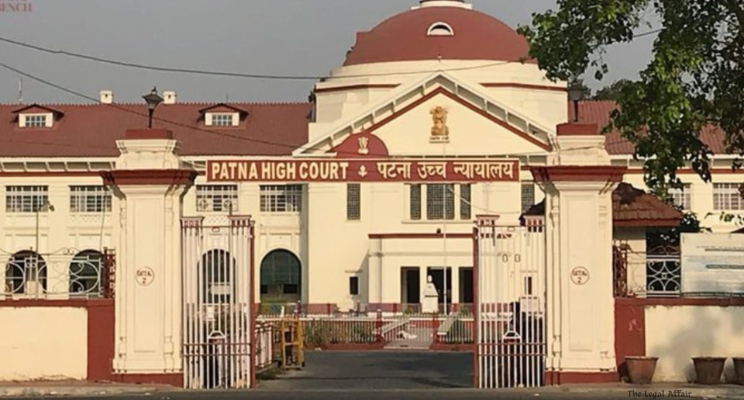
In the significant judgment delivered in Anwar Rashid v. Union of India through National Investigation Agency, the Patna High Court, comprising Justice Rajeev Ranjan Prasad and Justice Sourendra Pandey, reaffirmed the strict statutory bar on bail under the Unlawful Activities (Prevention) Act, 1967 (UAPA), and clearly held that cases involving national security and threats to public safety must not be equated with ordinary criminal prosecutions. The appellant had sought bail on the ground that he had already spent two and a half years in incarceration and that the trial was progressing slowly. However, the Division Bench firmly ruled that “mere incarceration” for such a period cannot outweigh national security concerns, nor does it dilute the mandatory bar under Section 43D(5) of the UAPA, which prohibits bail when accusations appear prima facie true. The case originated from allegations that the appellant was engaged in radical activities, including raising funds for individuals associated with banned organisations, facilitating communication between imprisoned extremists and outside members, forming networks after the ban of SIMI, and planning to create disturbances during the proposed visit of the Prime Minister to Patna.
Arguments of the Appellant:
The appellant, represented by learned counsel Mr. Mujahid Ahmad and Mr. Shams Akhtar, submitted that he had been incarcerated for two and a half years, that the trial was unlikely to be completed soon, and thus the prolonged detention violated his fundamental rights. He argued that the right to liberty under Article 21 of the Constitution must be weighed against delays in the judicial process, especially considering that he had cooperated with the investigation. The defence contended that the evidence relied upon by the National Investigation Agency (NIA) was insufficient to constitute a prima facie case, and that mere association with individuals or possession of certain literature does not automatically convert a citizen into a conspirator or a threat to the nation. They invoked various Supreme Court judgments where prolonged incarceration was held to justify the grant of bail, particularly where the trial was likely to be delayed due to a large number of witnesses or voluminous documents. Counsel emphasised that bail is the rule and jail is the exception, and that the NIA had failed to demonstrate active participation in terrorist activities or funding as alleged. The appellant argued that his alleged affiliation with ‘Wahadat-e-Islami Hind’ was misinterpreted, and that ideological inclination or possession of literature, without overt acts of terrorism, cannot be criminalised. Further, he maintained that the search conducted at his premises had not yielded any explosives, arms, or direct materials connecting him to imminent acts of violence. The appellant also contended that the trial court had not appreciated the lack of concrete evidence and that the High Court should consider his case independently without relying solely upon denial of bail to co-accused.
Arguments of the Respondent/NIA:
On the contrary, the respondents, represented by Dr. K. N. Singh, Mr. Arvind Kumar, Mr. Aayushman, and Mr. Paritosh Parimal, vehemently opposed bail and argued that the case involved a serious conspiracy to destabilise the security of the nation. The NIA asserted that the raid conducted at the appellant’s premises resulted in seizure of materials conclusively indicating deep links with members of banned terrorist organisations, as well as bank statements, communication records, digital evidence, and proof of transmission of funds to imprisoned extremists. It was argued that the appellant was a former member of the banned Students Islamic Movement of India (SIMI), and after the organisation was outlawed, he played a critical role in the formation of ‘Wahadat-e-Islami Hind’, a group alleged to be aligned with extremist ideology. The NIA further stated that the appellant was engaged in collecting funds from various sources and routing them to convicted terror-accused lodged in different jails, thereby serving as an essential intermediary enabling communication between inmates and their outside associates. According to the prosecution, the materials seized, including radical literature, communication logs, financial transactions, and witness statements, were sufficient to prove his ideological involvement and participation in unlawful activities. The respondents argued that the statutory mandate of Section 43D(5) bars the grant of bail when the court finds reasonable grounds for believing that the accusations are prima facie true, and that the High Court must strictly follow this legal limitation. They further maintained that national security cases require heightened caution, as premature release of accused individuals poses a risk to national safety, public order, and ongoing investigations.
Court’s Judgment:
The Patna High Court, after considering the submissions and scanning the case materials, upheld the trial court’s rejection of bail and emphasised that the allegations against the appellant were not only serious but also supported by overwhelming documentary and oral evidence. The Bench noted that the accusations involved raising funds for terrorist activities, supporting members of banned organisations, distributing radical literature, and coordinating with individuals already convicted for extremist acts. The Court held that the statutory restriction under Section 43D(5) UAPA is categorical and must be applied rigorously unless the court finds no reasonable grounds for believing that the accusations are prima facie true. In this case, however, the Bench found substantial material supporting the chargesheet, including bank transactions, incriminating documents, statements of witnesses, and digital evidence linking the appellant to extremist activities. The Court observed that in several orders passed regarding co-accused involved in the same case, bail was repeatedly denied due to the gravity of the allegations and the prima facie evidence presented by the NIA. Referring to the argument of delay, the Court held that the nature of allegations involving national security cannot be equated with general criminal trials. It stated that the mere fact that the appellant had been in custody for two and a half years could not be a valid ground to grant bail when the accusations involved raising funds for terrorism, facilitating communication with convicted extremists, and propagating radical ideologies. The Bench emphasised that national security cases typically involve examination of numerous witnesses, technical evidence, and multiple layers of investigation, which naturally prolong the trial. Nonetheless, the Court directed the trial court to expedite proceedings and attempt to conclude the trial preferably within one year. Ultimately, the High Court held that there were clear and reasonable grounds for believing the accusations to be prima facie true, and therefore bail was lawfully refused. The appeal was thus dismissed, solidifying the principle that individual liberty cannot override national security concerns when a prima facie case exists under UAPA.