


Introduction:
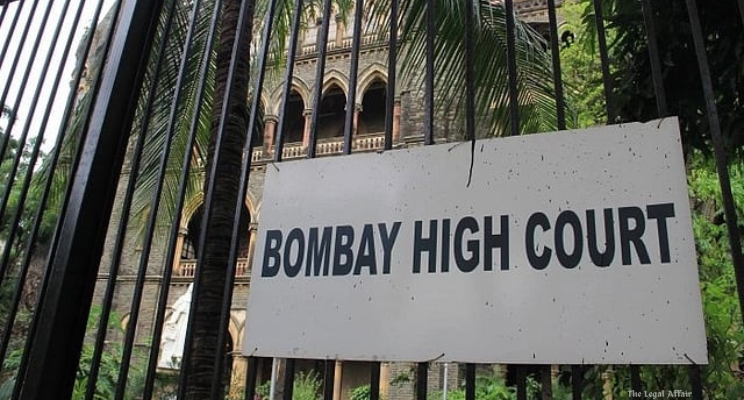
In the case of Mehul Jagdish Trivedi v. Manisha Mehul Trivedi, the Bombay High Court, presided over by Justice Jitendra Jain, addressed a significant issue concerning the misuse of the Presidency-Towns Insolvency Act, 1909, by a husband who sought to be adjudicated insolvent with respect to arrears of ₹22,30,000 arising from a subsisting Family Court maintenance order. The petitioner husband had been directed by the Family Court to pay monthly maintenance of ₹25,000 to his wife, but instead of complying, he approached the Insolvency Court claiming inability to pay and requested a declaration of insolvency on the basis of Sections 9(1)(f) and 14(1)(a) of the Act. The High Court, however, found that the petition was not a bona fide attempt to seek insolvency relief but a strategy to frustrate and indirectly secure a stay of the Family Court’s maintenance order. It held that insolvency proceedings cannot be invoked as an alternate route to suspend or paralyze the execution of a maintenance order, especially when the petitioner has already challenged the order through a Criminal Revision Petition, which is still pending adjudication. The Court thus laid down a clear legal position that insolvency law cannot become a shield for avoiding family law obligations, reiterating that maintenance orders serve a social purpose and must not be undermined by technical proceedings initiated with an ulterior motive.
Arguments of the Petitioner:
The petitioner husband argued that he was financially incapable of paying the accumulated arrears of maintenance and therefore satisfied the statutory requirements for adjudication as an insolvent. He claimed that his monthly earnings were merely ₹12,000–₹15,000 and that the maintenance obligation of ₹25,000 per month, along with arrears totaling ₹22,30,000, placed an insurmountable financial burden on him. He relied heavily on Section 9(1)(f) of the Presidency-Towns Insolvency Act, which deals with “general acts of insolvency,” suggesting that his inability to pay the maintenance debt qualified him for insolvency adjudication. Further, he invoked Section 14(1)(a) of the Act, contending that since the minimum threshold debt to trigger insolvency proceedings was satisfied, the Court ought to declare him insolvent. The petitioner maintained that insolvency law provides him statutory protection and that denying his petition would defeat the purpose of the Act, which is to offer relief to individuals genuinely unable to pay their debts. He therefore asserted that the Court must exercise its discretion in his favor, declare him insolvent, and prevent further coercive action by the Family Court, including recovery and warrant proceedings, until a final decision in the Criminal Revision Petition is rendered.
Arguments of the Respondent Wife:
The respondent wife opposed the petition vigorously, arguing that the husband’s plea was nothing but a calculated misuse of insolvency proceedings to escape his lawful obligation to provide maintenance. She contended that insolvency law cannot be invoked to defeat the execution of a maintenance order passed under family law, and stressed that the petitioner had already challenged the Family Court’s order through a Criminal Revision Petition before the High Court, yet instead of awaiting adjudication, he was improperly attempting to circumvent the order through insolvency proceedings. She further argued that the petitioner’s reliance on Section 9(1)(f) was wholly misplaced because maintenance orders fall within the specific provision of Section 9(2), which requires issuance of an insolvency notice—something the petitioner did not follow. Therefore, she contended that bypassing the mandatory procedure renders the petition unsustainable. Additionally, she submitted that maintenance dues cannot be treated like commercial debts because they relate to social welfare and the basic sustenance of a spouse, and therefore cannot be extinguished through insolvency. The respondent urged the Court to recognize that allowing such petitions would set a dangerous precedent enabling husbands to avoid responsibility by merely filing insolvency cases, leaving dependent spouses financially unprotected. She therefore prayed for dismissal of the petition.
Court’s Judgment:
The Bombay High Court delivered a detailed and reasoned judgment dismissing the husband’s insolvency petition, firmly holding that the Insolvency Act cannot be weaponized to undermine, suspend or frustrate a valid and subsisting Family Court maintenance order. The Court first examined the relevant statutory framework and observed that the word “may” in the Explanation to Section 10 of the Presidency-Towns Insolvency Act conferred discretion upon the Court, meaning that even if the debtor satisfies the threshold criteria, adjudication of insolvency is not automatic. The Court emphasized that the petitioner’s intention was not to seek genuine insolvency relief but to use the process as a device to indirectly obtain a stay on the maintenance order. It noted that the petitioner had already filed a Criminal Revision challenging the maintenance order; therefore, seeking relief under insolvency amounted to an impermissible attempt to get parallel relief that would have the effect of nullifying or diluting the pending challenge. The High Court further held that Section 14(1)(a), which establishes the minimum amount required to file an insolvency petition, does not grant any automatic right to be declared insolvent. The Court also clarified that Section 9(1)(f) deals with acts of insolvency in general, but when the debt arises from a decree or order of a court—which is the case with maintenance—Section 9(2) becomes applicable. Since the wife had not issued any insolvency notice as required under Section 9(2), the petitioner’s reliance on Section 9(1)(f) to circumvent mandatory statutory procedure was held to be unacceptable. Importantly, the Court highlighted that the maintenance order itself was not final because it was under challenge before the High Court; thus, the debt had not crystallized, and the amount payable could undergo modification depending on the outcome of the revision. Therefore, the Insolvency Court could not treat the maintenance arrears as a settled and enforceable debt for the purposes of adjudication. It was also noted that insolvency proceedings cannot be used to neutralize statutory social welfare protections granted under family law, and allowing such petitions would create an avenue for debtors to escape lawful responsibility. Concluding that the petition was an abuse of process aimed at stalling execution of the Family Court’s order, the High Court dismissed the insolvency petition in its entirety and reaffirmed that maintenance orders must be honored unless judicially modified. The Court cautioned that insolvency law cannot permit debtors to shield themselves from obligations rooted in social justice, and granting insolvency relief in such circumstances would undermine both the purpose of the Act and the authority of the Family Court.