


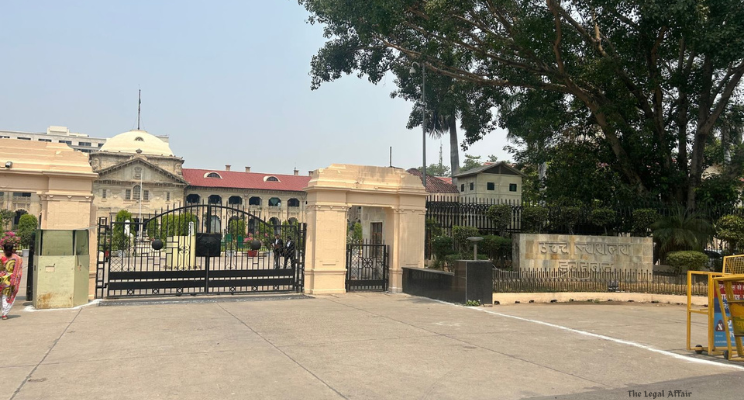
Introduction:
The present matter arose before the Allahabad High Court in a petition filed by the accused-appellants challenging criminal proceedings initiated against them under provisions of the Indian Penal Code (IPC) and the Scheduled Castes and Scheduled Tribes (Prevention of Atrocities) Act. The case stemmed from a prolonged dispute between the appellants and the complainant, Naresh Kumar, which had its origins in an earlier Non-Cognizable Report (NCR) lodged in October 2013.
The bench presided over by Justice Abdul Shahid was called upon to examine the legality of the summoning order passed by the Special Court under the SC/ST Act, as well as the broader issue of whether a complainant can demand that an investigation be conducted by an Investigating Officer (IO) belonging to a specific caste or community.
The controversy began when the appellants initially filed an NCR against the complainant and others for alleged offences of assault and criminal intimidation. A chargesheet was subsequently filed in that case. In what was alleged to be a retaliatory move, the complainant later invoked Section 156(3) of the Code of Criminal Procedure (CrPC), leading to the registration of an FIR against the appellants under various IPC provisions and the SC/ST Act.
However, after a thorough investigation, the police concluded that no offence was made out and submitted a final report in January 2014. Dissatisfied with this outcome, the complainant filed a protest petition, alleging bias on the part of the investigating agency and seeking further investigation, specifically by a police officer belonging to the Scheduled Caste community.
The Special Court treated the protest petition as a complaint, recorded statements, and issued a summoning order against the appellants in 2017. The appellants’ subsequent discharge application was rejected, prompting them to approach the High Court.
Arguments by the Appellants:
The appellants challenged the summoning order and the continuation of criminal proceedings on multiple grounds, asserting that the entire process was an abuse of law and motivated by mala fide intent.
At the outset, it was contended that the FIR lodged against them was a counterblast to the earlier NCR filed by them against the complainant. The appellants argued that the complainant had misused the legal process to harass them after facing criminal action himself.
The appellants emphasized that a detailed investigation had already been conducted by the police, which resulted in a final report clearly stating that no offence was made out. This finding, according to them, was based on objective evaluation of evidence and could not be lightly disregarded.
It was further argued that the protest petition filed by the complainant introduced allegations and narratives that were materially different from those contained in the original complaint. The appellants submitted that the Special Court failed to appreciate these inconsistencies and mechanically proceeded to summon them without proper application of mind.
A significant contention raised by the appellants was regarding the complainant’s demand for a fresh investigation by a police officer belonging to the Scheduled Caste community. The appellants argued that such a demand is wholly untenable in law and strikes at the core of the principle of impartial investigation.
They submitted that the law does not permit any party to dictate the identity, caste, or community of the Investigating Officer. Allowing such demands would set a dangerous precedent, undermining the neutrality and independence of the investigative process.
The appellants also pointed out that the offences alleged under Section 452 IPC (house trespass) and Section 3(1)(x) of the SC/ST Act did not appear to be simultaneously attracted in the facts of the case, thereby raising serious doubts about the validity of the charges.
On these grounds, the appellants sought quashing of the proceedings and setting aside of the summoning order.
Arguments by the Respondent (Complainant):
The complainant, Naresh Kumar, defended the initiation of proceedings and justified his protest petition by alleging that the initial investigation was biased and conducted with the intent to shield the accused.
It was argued that the police officials had failed to conduct a fair and impartial investigation, leading to the submission of a final report that did not reflect the true facts of the case. The complainant contended that the investigation suffered from serious infirmities and required reconsideration.
In this context, the complainant sought a fresh investigation and specifically requested that it be conducted by an officer belonging to the Scheduled Caste community. This request was premised on the belief that an officer from the same community would be more sensitive to the issues involved and less likely to act in a biased manner.
The complainant further argued that the Special Court had rightly exercised its powers in treating the protest petition as a complaint and proceeding to record statements and issue summons. It was submitted that the Court is empowered to take cognizance of offences even in the absence of a police chargesheet, based on the material available before it.
The respondent thus prayed for dismissal of the appellants’ petition and continuation of the proceedings.
Court’s Judgment:
After carefully examining the submissions of both sides and the material on record, the Allahabad High Court granted interim relief to the appellants by staying the criminal proceedings against them.
Justice Abdul Shahid made several important observations while dealing with the matter, addressing both procedural and substantive aspects of the case.
Firstly, the Court noted that the allegations contained in the protest petition and the original complaint were materially different. This discrepancy raised serious concerns about the credibility of the complainant’s case and the basis on which the summoning order was passed.
The Court observed that the Special Court had failed to properly reconcile these differences and had proceeded to summon the appellants without adequate scrutiny. This, according to the High Court, warranted interference.
Secondly, the Court examined the applicability of the offences alleged under Section 452 IPC and Section 3(1)(x) of the SC/ST Act. It prima facie found that these provisions did not appear to be simultaneously attracted in the facts of the case, thereby casting doubt on the validity of the charges.
However, the most significant aspect of the judgment relates to the complainant’s demand for a caste-based Investigating Officer.
The Court categorically rejected this demand, holding that no person has the right to seek a direction that the investigation in a case must be conducted by an officer of his choice or belonging to a specific caste or community.
Justice Shahid termed such a demand as “prima facie contrary to law” and an “abuse of the process of law.” The Court emphasized that the investigative process must remain impartial and free from external influence, and allowing parties to dictate the identity of the Investigating Officer would undermine the rule of law.
The Court further remarked:
“Opposite party no. 2 has not approached the court with clean hands and seeks to have the entire legal process conducted according to his own preferences, which is impermissible in law.”
In light of these observations, the High Court stayed the proceedings against the appellants and listed the matter for further hearing.
Analysis:
This judgment reinforces fundamental principles of criminal jurisprudence, particularly the importance of impartial investigation and the limits of judicial intervention in investigative processes.
The Court’s rejection of caste-based demands for Investigating Officers is a significant reaffirmation of the principle that justice must not only be fair but also appear to be fair. Allowing such demands would risk introducing bias and subjectivity into the investigative process, thereby eroding public confidence in the justice system.
The decision also highlights the need for courts to exercise caution while dealing with protest petitions and summoning orders. Mechanical acceptance of allegations without proper scrutiny can lead to misuse of legal processes and unnecessary harassment of individuals.
Furthermore, the judgment underscores the importance of consistency in allegations and the need for complainants to approach the court with clean hands. Any attempt to manipulate the legal process for personal gain or vendetta is liable to be curtailed.