


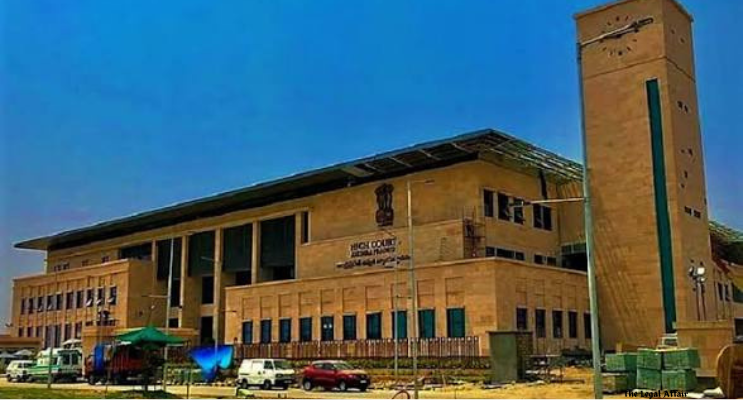
Introduction:
The Andhra Pradesh High Court has quashed the criminal proceedings initiated against Yuvajana Sramika Rythu Congress Party leaders Devineni Avinash, former MLA Monditoka Jagan Mohana Rao and MLC Monditoka Aruna Kumar in connection with the “Annadata Poru” protest rally, holding that vague and omnibus allegations cannot be used to sustain a criminal prosecution. The Court emphasised that the mere invocation of several penal provisions in an FIR does not make out an offence unless the factual allegations disclose the essential ingredients of those offences.
The judgment was delivered by a Single Judge Bench of Justice Y. Lakshmana Rao while considering Criminal Petition Nos. 3423 and 3409 of 2026, filed by the political leaders seeking quashing of the criminal proceedings arising out of the protest. The case concerned a rally and dharna organised under the banner “Annadata Poru” at C.M. Road, Nandigama Town, Andhra Pradesh. The protest had reportedly been organised by the YSR Congress Party in September of the previous year in response to allegations of an acute shortage of urea and purported black-marketing of fertilisers.
The petitioners were arrayed as Accused Nos. 1, 2 and 3 in the FIR. The prosecution alleged that the petitioners, along with other party leaders and workers, had formed an unlawful assembly and conducted the rally without obtaining the requisite permission. At the relevant time, Section 30 of the Police Act, 1861 was stated to be in force, empowering the police authorities to regulate public assemblies and processions in specified circumstances.
According to the prosecution version, the protestors continued with the rally despite warnings issued by police officials, including an Assistant Sub-Inspector. It was alleged that members of the assembly pushed police personnel, obstructed them from performing their official duties and manhandled the de-facto complainant while he was in uniform. The prosecution claimed that the conduct of the protestors disturbed public peace and interfered with the maintenance of law and order.
On the basis of these allegations, the FIR invoked a number of provisions of the Bharatiya Nyaya Sanhita, 2023, including Sections 132, 195(1), 189(3), 223, 285, 292 and 293 read with Section 190. The provisions broadly concerned assault or criminal force against public servants, obstruction of public servants, unlawful assembly and related offences, disobedience of a lawful order, obstruction in public ways and connected forms of liability.
The petitioners approached the High Court contending that the allegations in the FIR were fundamentally deficient. According to them, the prosecution had not attributed any particular overt act to any particular accused. They argued that the FIR merely described the general conduct of the crowd and then proceeded to implicate the political leaders collectively. Such allegations, they contended, could not establish the individual criminal liability of the petitioners.
The central legal question before the High Court was therefore not whether a political rally could ever result in criminal liability, but whether the allegations contained in the FIR were sufficiently specific to disclose the offences alleged against these particular petitioners. The Court examined the FIR and the statutory requirements of the offences invoked before determining whether continuation of the criminal proceedings would serve any legitimate purpose.
The judgment is significant in the context of criminal proceedings arising from political demonstrations and public protests. While the right to assemble and express political grievances is subject to reasonable legal restrictions, participation in a protest does not automatically transform every participant into an accused of assault, obstruction, rioting or unlawful assembly. Criminal liability must remain connected to facts satisfying the ingredients of the offence.
The Court consequently examined whether the FIR contained the necessary foundational facts to establish that the petitioners themselves had committed the alleged acts. It found that the allegations were “inherently vague, omnibus and lacking in specific particulars” and that no specific overt act had been attributed to any of the petitioners.
Arguments of the Parties:
The petitioners challenged the criminal proceedings primarily on the ground that the FIR did not disclose the essential ingredients of the offences alleged against them. Their case was that the prosecution had attempted to convert participation in a political protest into individual criminal liability without identifying what each petitioner had actually done.
Counsel for the petitioners, Veladi Sai Sri Harsha, contended that the FIR did not contain any specific allegation that Devineni Avinash, Monditoka Jagan Mohana Rao or Monditoka Aruna Kumar had assaulted any police officer or used criminal force against any public servant. The allegations regarding pushing police personnel and obstructing them were stated in general terms and were directed against the protestors collectively.
The petitioners argued that criminal prosecution cannot be sustained merely by reproducing the language of penal provisions in the FIR. Where a statute requires a particular act, intention or circumstance as an essential ingredient, the complaint must contain factual assertions from which those ingredients can reasonably be inferred. In their submission, the FIR fell short of that basic requirement.
The petitioners further emphasised the distinction between peaceful or otherwise lawful participation in a political demonstration and participation in an unlawful assembly having a legally prohibited common object. A political rally, they argued, does not become an unlawful assembly merely because it takes place on a public road or because the participants do not immediately disperse after a police warning.
According to the petitioners, the prosecution had not stated that they had assembled with the common object of committing an offence, resisting the execution of law through force, causing mischief, committing criminal trespass or pursuing any other object falling within the statutory definition of an unlawful assembly. In the absence of such foundational facts, the invocation of provisions relating to unlawful assembly and rioting could not be justified.
The petitioners also challenged the allegations relating to obstruction of public servants. They submitted that the FIR did not identify which official act was actually prevented or interrupted by any particular petitioner. Merely stating that police personnel were obstructed during a protest was, according to them, insufficient to satisfy the ingredients of the relevant BNS provisions.
The challenge was also directed against the allegation concerning obstruction in a public way. The petitioners argued that the FIR did not contain specific material demonstrating the nature, extent or consequence of the alleged obstruction. Nor was there any factual foundation connecting the petitioners individually with such obstruction.
A further and independent objection was raised concerning Section 223 of the BNS, which deals with disobedience to an order duly promulgated by a public servant. The petitioners relied upon the procedural safeguard contained in Section 215 of the Bharatiya Nagarik Suraksha Sanhita, 2023. They contended that cognizance of the offence could not be taken merely on the basis of a police report where the statute required a written complaint by the concerned public servant or another competent authority.
The State, represented by the Public Prosecutor, opposed the petitions and supported continuation of the criminal proceedings. The prosecution case was that the rally had been conducted without obtaining the necessary permission despite restrictions applicable to public assemblies. The accused allegedly ignored police directions and warnings and continued with the protest.
The State maintained that the conduct of the protestors had gone beyond mere political expression. According to the prosecution, police personnel attempting to maintain public order had been pushed and obstructed and the complainant, while performing his official duties in uniform, had allegedly been manhandled. Such conduct, the State contended, justified registration of the FIR and investigation into the offences.
The prosecution’s position was essentially that the allegations in the FIR disclosed sufficient material at the investigative stage and that the petitioners should not seek to have the proceedings terminated before the prosecution had an opportunity to establish its case through investigation and trial.
The State also relied on the circumstances surrounding the rally, including the alleged absence of permission and the existence of restrictions governing assemblies. It contended that the conduct attributed to the participants had to be considered in the context of the entire incident rather than in isolation.
The High Court, however, was required to determine whether the FIR, even if taken at face value, contained the foundational facts necessary to constitute the offences invoked against the petitioners. The Court therefore considered the allegations in the FIR alongside the statutory ingredients of each relevant offence.
Court’s Judgment:
Justice Y. Lakshmana Rao allowed the petitions and quashed the proceedings against Accused Nos. 1, 2 and 3. The Court’s reasoning proceeded from a fundamental principle of criminal law: the mere mention of penal provisions in an FIR cannot substitute for the factual allegations necessary to establish the ingredients of those provisions.
The Court found that the FIR did not contain specific allegations identifying any particular act committed by any of the petitioners. The allegation that the protestors had pushed police personnel and obstructed them was found to be general in nature. There was no clear description of who had pushed which police official, who had used criminal force, or which petitioner had committed the alleged assault.
This deficiency assumed particular significance in relation to Section 132 of the BNS. The Court observed that the allegations were conspicuously silent regarding any specific act of assault by the petitioners against the de-facto complainant or any other police official.
The Court made it clear that mere participation in a protest or even refusal to disperse after being warned does not, by itself, amount to assault or criminal force. The statutory offence requires foundational facts demonstrating conduct falling within the provision. In the absence of such facts, the invocation of Section 132 could not be sustained.
The Court’s reasoning protects an important distinction between political participation and criminal conduct. A protest may be subject to restrictions imposed by law, and participants may be liable where they actually commit offences. But the existence of a protest, without more, cannot be treated as proof that every participant committed every offence allegedly associated with the gathering.
The Court similarly scrutinised the invocation of Section 189(3) of the BNS concerning unlawful assembly. It observed that the FIR merely indicated that the petitioners and others participated in a protest concerning public issues. There was no allegation demonstrating that the assembly had been formed with a common object falling within the prohibited categories prescribed by law.
The Court explained that a political demonstration does not become an unlawful assembly merely because it is a political demonstration or because it creates inconvenience. The prosecution must demonstrate the existence of the requisite unlawful common object. In the absence of an allegation establishing such an object, the ingredients of Section 189(3) were not satisfied.
This aspect of the judgment is particularly important because the concept of unlawful assembly is based not simply on the number of people gathered but on the legally defined common object of that assembly. Criminal liability cannot be imposed merely by attaching the label “unlawful assembly” to a group of people participating in a public demonstration.
The Court then considered the allegation concerning obstruction of public servants under Section 195(1) of the BNS. It found that the FIR failed to demonstrate that any official act had actually been prevented or interrupted by any specific conduct of the petitioners.
Again, the difficulty was not merely a technical defect in drafting the FIR. The absence of factual particulars meant that the Court could not identify the connection between the alleged conduct and the statutory ingredients of the offence. The prosecution had made a broad assertion of obstruction but had not supplied the factual foundation necessary to sustain the charge against the petitioners individually.
The Court also examined Section 285 of the BNS, concerning obstruction or injury to a person in a public way. The allegations were found to be insufficiently specific. The FIR principally relied on the version of police officials, but there was no adequate material demonstrating actual obstruction or public inconvenience in a manner satisfying the statutory requirements and attributable to the petitioners.
The Court’s treatment of Section 223 of the BNS involved an additional procedural issue. Section 223 concerns disobedience to an order duly promulgated by a public servant. The Court noted that prosecution for such an offence is subject to the requirement contained in Section 215 of the BNSS.
Section 215 BNSS imposes a procedural restriction concerning cognizance of specified offences. Where the law requires a written complaint from the concerned public servant or competent authority, that statutory requirement cannot simply be bypassed through registration of a police case and submission of a police report.
In the present matter, the Court found that no such written complaint had been placed before it. Consequently, a police report could not be treated as a substitute for the complaint contemplated by Section 215 BNSS. In the absence of the required statutory complaint, the Magistrate would not be competent to take cognizance of the offence under Section 223 BNS.
This finding provided an independent reason why the proceedings concerning the relevant offence could not proceed in their existing form.
The Court’s analysis also demonstrates the distinction between the power to investigate an offence and the judicial requirement that criminal proceedings must have a sufficient legal and factual foundation. The registration of an FIR may initiate an investigation, but the existence of an FIR does not make the statutory ingredients of an offence automatically applicable.
The Court examined the allegations as a whole and concluded that there was no sufficient nexus between the acts alleged and the ingredients of the offences invoked. The prosecution’s allegations remained broad and collective rather than individual and specific.
The Court was particularly concerned that allowing such proceedings to continue in circumstances where the foundational facts were absent would effectively permit a “roving and fishing enquiry”. Criminal investigation cannot be allowed to continue indefinitely in the hope that evidence might subsequently emerge to convert vague allegations into specific criminal acts.
The Court therefore applied the established principle that the extraordinary jurisdiction of the High Court can be exercised where continuation of criminal proceedings would amount to an abuse of the process of law or where the allegations, even if taken at face value, fail to constitute the offences alleged.
The judgment does not mean that political rallies are immune from criminal law. Nor does it suggest that police personnel cannot prosecute demonstrators who actually assault them, obstruct them or deliberately violate lawful orders. What the Court rejected was the attempt to sustain prosecution without identifying the factual acts committed by the individual accused and without demonstrating how those acts satisfied the statutory ingredients of the offences.
The distinction is crucial. Political protest is a recognised means of expressing disagreement with government policy, particularly on matters affecting the public. However, the right to protest does not confer immunity from criminal law where genuine offences are committed. Conversely, criminal law cannot be used merely because a person participated in a political gathering when the factual material does not disclose the commission of an offence.
In the present case, the Court found that the FIR did not cross that threshold. The allegations of assault, obstruction and unlawful assembly lacked the specificity required to connect the petitioners with the offences. The allegation of disobedience of a promulgated order was additionally affected by the statutory requirement concerning cognizance.
The Court therefore concluded that continuation of the criminal proceedings would serve no legitimate criminal-law purpose. Instead, it would expose the petitioners to unnecessary harassment and amount to an abuse of the process of law.
Accordingly, the Andhra Pradesh High Court allowed Criminal Petition Nos. 3423 and 3409 of 2026 and quashed the criminal proceedings arising from the “Annadata Poru” rally against Devineni Avinash, Monditoka Jagan Mohana Rao and Monditoka Aruna Kumar, who had been arrayed as Accused Nos. 1, 2 and 3.
The decision ultimately reinforces a basic safeguard in criminal jurisprudence: criminal liability must arise from facts, not merely from labels. The inclusion of multiple penal provisions in an FIR cannot cure the absence of allegations establishing their essential ingredients. Where a prosecution is founded upon vague collective allegations and no specific overt act is attributed to the accused, the criminal process cannot be permitted to become an instrument of harassment.
The ruling also carries wider significance for cases arising out of political demonstrations. Authorities are entitled to regulate assemblies and maintain public order, but the criminal justice system must continue to distinguish between legitimate political participation, violation of regulatory restrictions and actual commission of substantive criminal offences. Each requires its own factual and legal foundation.
By quashing the proceedings, the High Court reaffirmed that the criminal process must remain anchored to specific allegations, statutory ingredients and legally permissible procedures. The decision therefore serves as a reminder that while public protests may be regulated, the mere presence of political leaders at such protests cannot, without more, be converted into criminal culpability.