


Introduction:
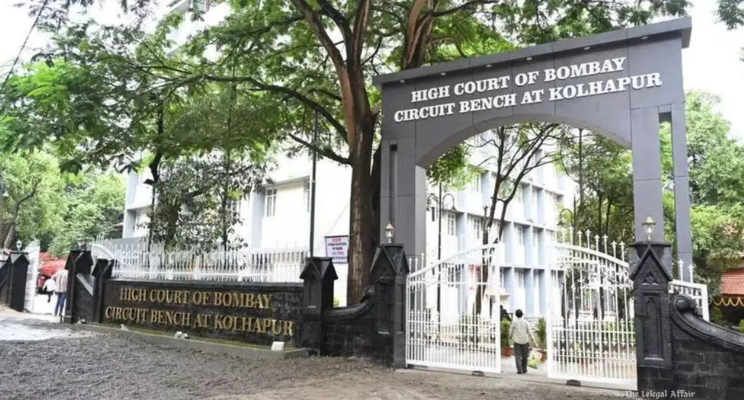
In Dr. Vrushali Vasant Yadav vs State of Maharashtra (Writ Petition No.15521 of 2024), the Bombay High Court was called upon to examine whether a woman employee working on a temporary, daily-wage basis could be denied maternity leave benefits solely because her service record reflected so-called “technical breaks” of one or two days after completion of a fixed number of working days. The petition was heard and decided by a Division Bench comprising Justice Makarand Karnik and Justice Ajit Kadethankar at the Kolhapur Circuit Bench. The petitioner, Dr. Vrushali Yadav, was engaged as an Assistant Professor in the Department of Obstetrics and Gynaecology at Rajarshree Chhatrapati Shahu Maharaj Government Medical College from September 2018 onwards. Despite having worked continuously and uninterruptedly in substance, her maternity leave from May 8, 2021 to September 16, 2021 was treated as leave without pay, and her repeated representations for maternity benefits under the Maternity Benefit Act, 1961 were rejected by the authorities, prompting her to invoke the writ jurisdiction of the High Court. The case raised significant questions on the scope of social welfare legislation, the rights of women employees engaged on temporary or daily-wage basis, and the legality of administrative practices designed to defeat statutory benefits.
Arguments of the Petitioner:
The petitioner contended that the denial of maternity benefits was arbitrary, discriminatory, and directly contrary to the letter and spirit of the Maternity Benefit Act, 1961, which is a piece of beneficial and social welfare legislation intended to protect the dignity of motherhood and ensure economic security to women during pregnancy and childbirth. It was argued that although the petitioner was formally appointed on a temporary, daily-wage basis, in reality she had been discharging her duties continuously and uninterruptedly, and the so-called “technical breaks” of one or two days were artificial devices employed by the employer to avoid conferring statutory and service-related benefits. The petitioner emphasized that she had completed well over the statutory requirement of days of work prescribed under Section 5 of the Act and had fulfilled all eligibility conditions for maternity benefits. Treating her maternity leave as leave without pay, despite her entitlement under law, amounted to a violation of her fundamental rights under Articles 14 and 21 of the Constitution, as it discriminated against her on the basis of her employment status and undermined her right to dignity and livelihood during a critical phase of motherhood. The petitioner further submitted that the nature of her work as an Assistant Professor in a government medical college involved regular teaching, clinical, and academic responsibilities, indistinguishable from those discharged by permanent faculty members, and therefore, the denial of maternity benefits solely on the ground of her temporary status was unjust, unreasonable, and legally unsustainable. Relying on judicial precedents emphasizing liberal interpretation of beneficial legislation, the petitioner urged the Court to reject a narrow and technical reading of the statute that would defeat its benevolent object.
Arguments of the Respondents:
On behalf of the State and the concerned authorities, it was argued that the petitioner was engaged on a purely temporary and daily-wage basis and that her engagement was subject to periodic technical breaks, which had the effect of interrupting her continuity of service. The respondents contended that maternity benefits were not automatically available to employees who did not hold regular or permanent posts and that the petitioner, having been granted breaks in service after completing a stipulated number of working days, could not claim continuity so as to attract the provisions of the Maternity Benefit Act. It was further argued that the administrative policy governing temporary appointments in government medical colleges did not contemplate extension of maternity benefits to daily-wage employees who were not borne on the regular establishment and whose engagement was contingent and time-bound. The State sought to justify its action by asserting that extending maternity benefits to such temporary employees would impose an additional financial burden and could open the floodgates for similar claims by other daily-wage or contractual employees. According to the respondents, the technical breaks were not a mere formality but a recognized administrative practice, and once such breaks were acknowledged, the petitioner could not claim uninterrupted service or statutory benefits linked thereto. The respondents thus urged the Court to uphold the administrative decision and dismiss the writ petition.
Court’s Judgment:
After carefully considering the rival submissions, the Division Bench undertook a detailed examination of the statutory scheme of the Maternity Benefit Act, 1961, particularly Section 5, which deals with the right to payment of maternity benefits. The Court reiterated that Section 5(1) mandates that every woman shall be entitled to maternity benefit at the rate of her average daily wage for the period of her actual absence immediately preceding and following the day of delivery, subject to fulfillment of the conditions laid down in the Act. The Bench noted that the Act does not draw any distinction between permanent, temporary, or daily-wage women employees, and its protective umbrella extends to “every woman” who satisfies the statutory conditions. The Court found, as a matter of fact, that the petitioner had been working continuously in substance and that the breaks relied upon by the authorities were purely technical and artificial in nature, introduced to circumvent the conferment of statutory benefits. Such breaks, the Court held, could not be used as a ground to deny maternity benefits, as doing so would strike at the very root of the benevolent purpose of the legislation. Emphasizing the social welfare character of the Act, the Bench observed that it must receive a liberal and purposive interpretation, and any attempt by the employer to defeat its object by resorting to technicalities must be firmly rejected. The Court categorically held that even a woman working on a temporary basis on daily wages is entitled to maternity leave benefits, and denial of such benefits merely on the ground of technical breaks of one or two days is unjustifiable, untenable, and contrary to law. The judges underscored that motherhood cannot be made conditional upon the nature of employment and that economic vulnerability of temporary employees makes it all the more necessary to extend statutory protection to them. Consequently, the writ petition was allowed, and the authorities were directed to pay the petitioner the maternity benefits amounting to ₹4,36,666 within a period of four weeks, thereby reaffirming the primacy of substantive justice over administrative convenience.