


Introduction:
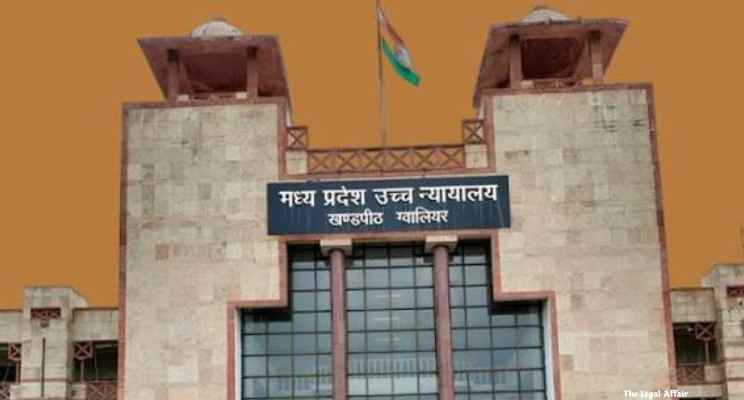
In a significant judgment concerning election law, procedural fairness, and governmental accountability, the Madhya Pradesh High Court restored an election petition challenging the election of the President of the Sheopur Municipal Council and strongly criticised the State Government and the elected President for adopting contradictory legal positions throughout the proceedings. The decision was rendered by Justice Ashish Shroti in Sumer Singh v. Renu Garg, Civil Revision No. 175 of 2024.
The dispute originated from the municipal elections held in Sheopur, Madhya Pradesh, in July 2022. Following the election of twenty-three councillors, the Municipal Council convened its first meeting on August 5, 2022, during which Renu Garg was elected President of the Municipal Council through the indirect electoral system introduced after amendments to the Madhya Pradesh Municipalities Act, 1961.
Shortly thereafter, Sumer Singh filed an election petition challenging her election under the provisions of the Municipalities Act. However, the Election Tribunal dismissed the petition on February 1, 2024, primarily on two grounds. First, the Tribunal held that the election petition was premature because no notification regarding the President’s election had been published in the Official Gazette. Secondly, it observed that the petitioner had failed to comply with Section 20(3)(ii) of the Act by not filing a treasury receipt of ₹200 along with the petition.
Aggrieved by the dismissal, the petitioner approached the High Court through a revision petition. During the course of proceedings, the High Court identified serious inconsistencies in the legal positions adopted by the State Government and the elected President. Before the Election Tribunal, they had insisted that Gazette publication of the President’s election was mandatory before an election petition could be entertained. However, before the High Court, the same parties argued that following the 2020 amendment to the Municipalities Act, publication in the Official Gazette was no longer required at all.
The High Court treated this contradiction seriously and described the conduct of the State authorities as lacking bona fides. The case subsequently expanded beyond a mere technical dispute regarding maintainability and evolved into a larger judicial examination of legislative inconsistencies, misuse of procedural objections, and the responsibility of the Government to adopt consistent and fair legal positions before courts.
The judgment also dealt extensively with the consequences of the 2020 amendments to the Municipalities Act, the doctrine of harmonious construction, the interpretation of election-related limitation provisions, and the proper role of the State in election litigation.
Ultimately, the Court restored the election petition, imposed costs upon the elected President for misuse of judicial process, and directed the Chief Secretary of Madhya Pradesh to personally supervise an inquiry into the filing of objections before the Election Tribunal. The ruling stands as a sharp reminder that procedural technicalities cannot be manipulated to obstruct adjudication of substantive electoral disputes.
Arguments of the Parties:
The petitioner, Sumer Singh, challenged the order of the Election Tribunal dismissing his election petition as non-maintainable. He argued that the Tribunal had committed a serious jurisdictional error in treating the petition as premature merely because no Gazette notification concerning the President’s election had been published.
According to the petitioner, after the 2020 amendment to the Madhya Pradesh Municipalities Act, the process governing election of Municipal Council Presidents underwent a fundamental change. Earlier, Presidents were directly elected by voters and their election results were separately notified in the Official Gazette under Section 45 of the Act. However, after the amendment, Presidents were elected indirectly during the first meeting of elected councillors under Section 55. Despite this structural change, no corresponding mechanism was introduced for separate Gazette publication of the President’s election.
The petitioner argued that this legislative inconsistency made it practically impossible to wait for Gazette publication before filing an election petition because no such publication was contemplated in practice after the amendment. Therefore, insisting upon Gazette publication as a precondition for maintainability would effectively defeat the statutory remedy of challenging the election.
It was further contended that the cause of action for filing the election petition arose immediately upon completion of the election meeting on August 5, 2022, when Renu Garg was declared elected President. Since the election petition was filed on August 23, 2022, it was well within the prescribed limitation period.
The petitioner also submitted that the objection regarding non-filing of the ₹200 treasury receipt under Section 20(3)(ii) could not justify outright rejection of the election petition at the threshold under Order VII Rule 11 of the Code of Civil Procedure. According to him, such procedural defects, if any, were curable in nature and required factual examination during trial.
Another major grievance raised by the petitioner concerned the inconsistent and contradictory positions adopted by the State Government and the elected President. The petitioner pointed out that before the Election Tribunal, the respondents had argued that Gazette publication was mandatory for maintainability, whereas before the High Court they completely reversed their stand by asserting that no Gazette publication was legally required after the amendment.
The petitioner argued that such contradictory stands demonstrated mala fide conduct and an attempt to delay adjudication of the election dispute through technical objections lacking legal certainty.
Renu Garg, the elected President, along with the State Government, initially defended the dismissal of the election petition by contending that publication of the election result in the Official Gazette was a mandatory statutory requirement before any election petition could be entertained.
They argued before the Tribunal that unless the election notification was officially published, the election process could not be treated as complete for purposes of invoking the election dispute mechanism under the Municipalities Act. Therefore, according to them, the election petition filed by Sumer Singh was premature and not maintainable.
However, during the revision proceedings before the High Court, the respondents adopted a substantially different position. They argued that after the 2020 amendment to the Municipalities Act, publication of the President’s election in the Official Gazette was no longer necessary because the scheme of indirect election did not contemplate separate Gazette notification for Presidents elected by councillors.
The State Government further attempted to explain that the legislative framework had created certain ambiguities due to the transition from direct elections to indirect elections. It was submitted that the subsequent 2023 amendment clarified the legislative intent by specifically prescribing that election petitions against Municipal Presidents should be filed within thirty days from the election meeting itself rather than from Gazette publication.
At one stage, the Government also attempted to withdraw the objections earlier raised before the Election Tribunal and requested the High Court not to proceed further into the issue. However, the Court viewed this conduct with suspicion and questioned the bona fides behind the shifting stand.
The State also defended its officers and attempted to place responsibility upon subordinate officials. However, the High Court took serious note of the fact that applications filed before the Tribunal lacked supporting affidavits and were signed only by Government Advocates without proper authorisation from the concerned Officer-in-Charge.
The proceedings further witnessed sharp criticism from the High Court after repeated adjournment requests were made on behalf of the State. At one stage, the Court observed that the request for adjournment appeared to amount to “bench hunting,” thereby reflecting judicial dissatisfaction with the conduct of the Government during litigation.
Court’s Judgment:
The Madhya Pradesh High Court allowed the revision petition, restored the election petition filed by Sumer Singh, and set aside the order of the Election Tribunal dismissing the matter as non-maintainable.
Justice Ashish Shroti strongly criticised the contradictory and inconsistent legal positions adopted by the State Government and the elected President throughout the proceedings. The Court observed that the respondents themselves appeared uncertain regarding the very objection on which they had secured dismissal of the election petition before the Tribunal.
The Court remarked that while a rival party certainly possesses the right to raise objections regarding maintainability, such objections can only be legitimately advanced when the party itself is clear and certain about the legal basis of those objections. The Court found it deeply problematic that the respondents argued before one forum that Gazette publication was mandatory, while simultaneously asserting before another forum that such publication was unnecessary altogether.
A particularly significant aspect of the judgment was the Court’s analysis of the legislative inconsistencies created after the 2020 amendment to the Municipalities Act. Justice Shroti noted that prior to the amendment, Municipal Presidents were directly elected by voters and their elections were separately notified in the Official Gazette under Section 45.
However, after the amendment introduced indirect elections through councillors, no corresponding statutory mechanism existed for separate Gazette publication of the President’s election. Despite this, the election petition provisions continued to refer to Gazette publication as the triggering point for limitation.
The Court observed that this created a fundamentally unworkable situation. On one hand, no practical mechanism existed for Gazette publication of the President’s election; on the other hand, election petitions technically appeared dependent upon such publication.
Describing the inconsistency as a “serious discrepancy” in the statutory scheme, the Court applied the doctrine of harmonious construction to reconcile the conflicting provisions. The Court held that the law must be interpreted in a manner that preserves the effectiveness of the election dispute remedy rather than rendering it illusory.
The High Court also relied upon the subsequent 2023 amendment to the Municipalities Act, which clarified that election petitions against Municipal Presidents must be filed within thirty days from the completion of the election meeting under Section 55. Although the amendment was prospective, the Court treated it as indicative of the legislative intent underlying the earlier provisions.
Applying this interpretation, the Court held that the cause of action arose on August 5, 2022, when Renu Garg was elected President during the first meeting of councillors. Since the election petition was instituted on August 23, 2022, it was clearly within limitation and fully maintainable.
The Court further held that the objection regarding the ₹200 treasury receipt under Section 20(3)(ii) could not be summarily adjudicated under Order VII Rule 11 of the Code of Civil Procedure. According to the Court, such issues required proper examination after evidence was led during trial.
Justice Shroti also took serious exception to the conduct of the State Government during litigation. The Court noted repeated attempts to delay proceedings and criticised adjournment requests that appeared intended to avoid hearing before the Bench. The Court expressly observed that such conduct amounted to an attempt at “bench hunting.”
Another important feature of the judgment was the Court’s concern regarding accountability within the State administration. The Court observed that the Government appeared to be shielding higher officials while placing blame upon subordinate officers. It noted that applications filed before the Tribunal were unsupported by affidavits and lacked proper authorisation.
Consequently, the Court directed the Chief Secretary of Madhya Pradesh to personally supervise an inquiry into the circumstances under which objections regarding maintainability were filed before the Election Tribunal.
The High Court also questioned the logical inconsistency in the respondents’ own stand. If, according to the State, the President’s election never required Gazette publication to become effective, then the earlier argument that the election petition was premature due to absence of publication became entirely unsustainable.
The Court further noted that on October 8, 2025, after the respondents themselves asserted that Gazette publication was unnecessary, the High Court had restrained Renu Garg from functioning as President. Challenges against that order before the Division Bench and the Supreme Court had also failed.
In its final directions, the Court restored the election petition and directed the Election Tribunal to complete proceedings by November 2026. Additionally, the Court imposed costs of ₹1 lakh upon Renu Garg for misuse of judicial process and for adopting contradictory stands during litigation.
The judgment stands as a powerful reaffirmation of judicial intolerance toward procedural manipulation, inconsistent pleadings, and abuse of technical objections in election disputes. At a broader level, it reinforces the principle that statutory ambiguities must be interpreted in a manner that preserves democratic remedies and ensures meaningful adjudication of electoral challenges.