


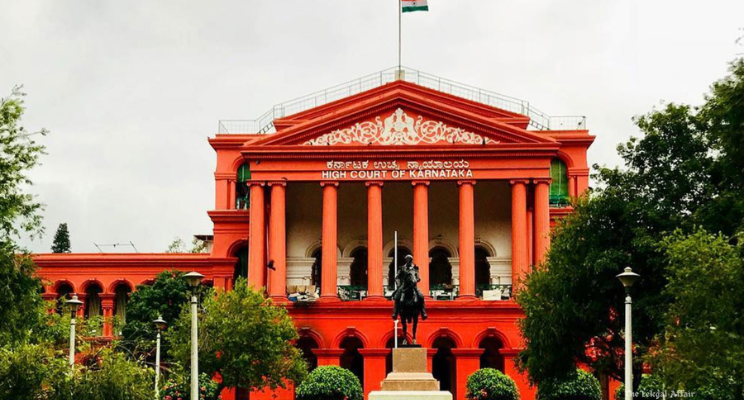
Introduction:
In T.N. Jagadeesh v. Chairman/Deputy Commissioner, The District Caste and Income Verification Committee & Ors., Writ Petition No. 24836 of 2016, the Karnataka High Court addressed a nuanced and socially significant question: whether “Lingayat” as a religious denomination and “Ganiga” as an occupational caste are mutually exclusive identities, or whether a person may simultaneously profess the Lingayat faith while belonging to the Ganiga caste for purposes of reservation classification. Justice Suraj Govindaraj, after examining constitutional principles, sociological history, statutory notifications, and binding precedents including M.V. Chandrakanth v. Sangappa and Prabhushankar K.V. v. Selection Committee for Medical Colleges, held that Lingayat and Ganiga are not mutually exclusive identities. The Court clarified that Ganiga is a distinct occupational caste that may subsist within the broader Lingayat/Veerashaiva fold. While a person may be Lingayat by religious affiliation and Ganiga by caste classification, the coexistence of such identities must be established through credible and verifiable evidence in each case. The judgment arose from a service dispute concerning the validity of a caste certificate issued under Category II-A of the Other Backward Classes in Karnataka. Ultimately, the Court upheld the grant of the caste certificate, finding that documentary material sufficiently established the respondent’s Ganiga identity despite ancestral records describing the family as “Lingayat.” The ruling offers important clarity on the interaction between denominational identity and caste classification in reservation law, emphasizing both legal possibility and evidentiary rigor.
Factual Background and Genesis of the Dispute:
The petitioner, a Police Constable appointed in 1998 and belonging to the Vishwakarma community classified under Category II-A of the Other Backward Classes, challenged the caste status of respondent No. 3 in relation to recruitment for the post of Police Sub-Inspector (PSI). In 2009, pursuant to a Government Notification inviting applications for PSI recruitment for the 2010–11 batch, both the petitioner and respondent No. 3 applied. According to the petitioner, respondent No. 3 falsely represented himself as belonging to the “Lingayat Ganiga” community, which is classified under Category II-A, despite allegedly being only Lingayat, a community not falling under Category II-A in that context. Acting on the complaint filed before the Commissioner, Backward Classes Welfare Department, the District Caste and Income Verification Committee conducted an inquiry and, by order dated 16.06.2010, rejected respondent No. 3’s request for issuance of a caste certificate under Category II-A. However, respondent No. 3 preferred an appeal. By order dated 13.07.2010, the appellate authority allowed the appeal and remanded the matter to the Committee for fresh consideration after granting him an opportunity to produce relevant documents. Upon remand, the Committee observed that school records contained a correction indicating caste as “Lingayat Ganiga.” Proceeding on the presumption that such correction was made pursuant to a valid order and taking note of a recommendation from the President of the Akhila Bharath Ganigara Sangha, the Committee directed issuance of a caste certificate under Category II-A. The petitioner’s subsequent appeal was dismissed, prompting him to approach the High Court under Article 226 of the Constitution.
Arguments on Behalf of the Petitioner:
The petitioner’s principal contention was that Lingayat and Ganiga are distinct and mutually exclusive identities. He argued that respondent No. 3’s ancestral and school records described him as “Hindu Lingayat,” and that the later insertion or correction indicating “Lingayat Ganiga” was suspicious and insufficient to establish caste identity. According to the petitioner, Ganiga is a specific occupational caste, whereas Lingayat is a broad religious community; therefore, a person identified as Lingayat cannot simultaneously claim Ganiga status unless historically and genealogically proven. The petitioner further contended that the correction in school records was made belatedly and without adequate scrutiny. He questioned the reliance placed on the recommendation of the Akhila Bharath Ganigara Sangha, arguing that such endorsements cannot override statutory requirements. It was also urged that granting Category II-A status to respondent No. 3 prejudiced genuine candidates belonging to backward classes, including the petitioner himself. The petitioner sought to characterize the issuance of the caste certificate as perverse, violative of principles of natural justice, and unsupported by cogent evidence. He maintained that the authorities failed to conduct a rigorous inquiry and mechanically accepted the respondent’s claim.
Arguments on Behalf of Respondent No. 3 and the Authorities:
Respondent No. 3 defended the validity of his caste certificate, asserting that Ganiga is an occupational caste that historically exists within or alongside the Lingayat/Veerashaiva fold. It was contended that denominational identity does not extinguish caste classification, and that the description “Hindu Lingayat” in earlier records does not negate Ganiga status. The respondent relied on documentary evidence, including family records and school documents, to establish continuity of caste identity. It was argued that the appellate authority had correctly remanded the matter for reconsideration and that upon remand, the Committee conducted due inquiry before granting the certificate. Reliance was placed on judicial precedents, particularly the Supreme Court’s decision in M.V. Chandrakanth v. Sangappa, which recognized that absence of sub-caste description in earlier records does not conclusively negate such identity. The respondent also invoked Prabhushankar K.V. v. Selection Committee for Medical Colleges, wherein it was held that denominational identity and caste identity may operate simultaneously. The authorities maintained that the order granting the caste certificate was based on material evidence and was neither arbitrary nor perverse.
Judicial Analysis and Sociological Context:
Justice Suraj Govindaraj undertook an extensive analysis of the sociological and historical structure of the Lingayat/Veerashaiva community in Karnataka. The Court observed that Lingayat is a broad religious denomination that historically incorporated multiple occupational and caste groups. Reference was made to the Havanur Commission Report, which documented the evolution of the Veerashaiva/Lingayat community by incorporating distinct caste-blocks such as Ganigas (oil pressers), Kumbaras (potters), Kshowrikas (barbers), and Agasas (washermen), among others. These groups retained occupational and social identities while participating in a shared denominational framework. The Court emphasized that legal identity must reflect sociological reality. Relying on M.V. Chandrakanth v. Sangappa, the Court noted that government notifications dated 03.03.2002, 27.01.2009, and 28.02.2009 demonstrated legislative and executive recognition that Lingayat-Ganigas fall within the Ganiga grouping for reservation purposes under Category II-A. The brief reclassification and immediate restoration indicated that the State did not intend to exclude Lingayat-Ganigas from benefits available to Ganigas. The Court distilled key principles: Lingayat and Ganiga are not mutually exclusive; Ganiga is a distinct occupational caste that may subsist within the broader Lingayat fold; a person may be Lingayat by faith and Ganiga by caste; the description “Hindu Lingayat” in school records does not automatically negate Ganiga identity; however, establishment of such identity is a matter of proof requiring documentary consistency, familial records, statutory certificates, and historical context. Mere assertion is insufficient.
Findings and Conclusion of the Court:
Applying these principles, the Court found that the documentary material on record sufficiently established that respondent No. 3 belongs to the Ganiga community under Category II-A. The broader descriptor “Lingayat” in certain ancestral records did not negate that conclusion. The Court held that the orders passed by the statutory authorities did not violate principles of natural justice, were not perverse, and were supported by material evidence. It clarified that its findings were based strictly on documentary material examined in the case and should not be construed as permitting indiscriminate claims. The writ petition was accordingly dismissed.