


Introduction:
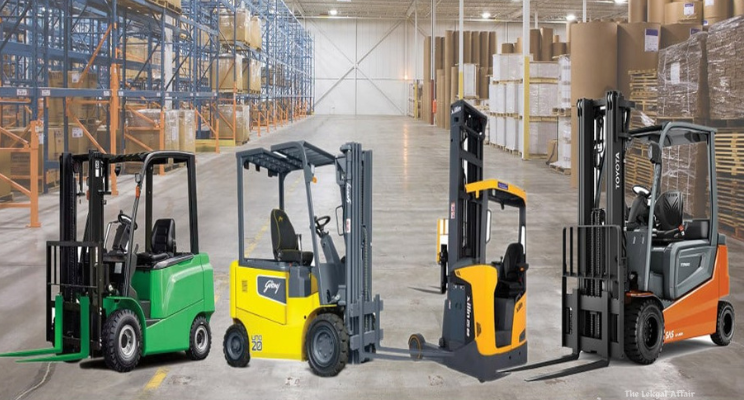
In Natural Wood & Veneers Pvt. Ltd. v. State of Kerala, the Kerala High Court addressed a significant question with far-reaching implications for industrial establishments across the State—whether forklifts and hydraulic cranes operating solely inside private factory premises fall within the definition of “motor vehicle” under Section 2(28) of the Motor Vehicles Act, 1988, thereby requiring them to be mandatorily registered and taxed under applicable law. The petitioner, Natural Wood & Veneers Pvt. Ltd., challenged a direction issued by the Motor Vehicles Department prohibiting the use of two forklifts and a hydraulic crane without registration and insurance, asserting that these machines never enter public roads and are exclusively used for material handling within the factory compound. The respondents, represented by the Motor Vehicles Department, contended that the machinery is roadworthy, structurally capable of being used on public roads, and thus squarely covered under the statutory definition. Justice Mohammed Nias C.P., after an extensive analysis of statutory provisions, precedent, and the legal evolution surrounding compensatory tax and road usability, concluded that the machinery qualifies as “motor vehicles” and must therefore comply with mandatory registration and taxation requirements. The judgment, exhaustive and deeply reasoned, clarifies the legal position on industrial mobility equipment and marks a significant development in the interpretation of road-adaptability under the Motor Vehicles Act.
Arguments of Both Sides:
The petitioner-company advanced a multi-layered argument focused primarily on the statutory language of Section 2(28) of the Motor Vehicles Act, 1988, and on judicial precedents concerning the meaning of “motor vehicle” and the role of compensatory tax under the earlier Motor Vehicles Taxation regime. The petitioner contended that the forklifts and hydraulic crane are not vehicles within the meaning of the Act and that they operate exclusively within a completely enclosed factory premises without any possibility or requirement of entering public roads. To reinforce this point, the petitioner argued that Section 39 of the Act makes registration mandatory only for vehicles intended to be used in “public places,” thereby exempting factory-based machinery from such requirements. Additionally, the petitioner stated that the forklifts and crane are nothing more than industrial material-handling equipment, designed for in-house loading, stacking, and logistical support; hence they should fall within the statutory exclusion of vehicles “of a special type adapted for use only in a factory or other enclosed premises.” The petitioner also relied heavily on precedents including Bolani Ores Ltd. v. State of Orissa, Travancore Tea Estates v. State of Kerala, and Tarachand Logistic Solutions Ltd. v. State of Andhra Pradesh, which held that motor vehicle tax is attracted only when a vehicle is used or intended to be used on public roads. These cases, the petitioner argued, establish the principle that motor-vehicle taxation is compensatory in nature, and thus machinery that never uses public roads cannot be taxed or required to register as motor vehicles. Therefore, the petitioner urged the Court to quash the Motor Vehicle Department’s prohibitory direction and to hold that the forklifts and crane are not motor vehicles for the purpose of Sections 2(28), 39, and Section 3 of the Kerala Motor Vehicle Taxation Act.
The respondents countered this by asserting that the statutory definition of “motor vehicle” under Section 2(28) is intentionally broad and focuses on the structural adaptability of the machine for movement on roads rather than its actual or intended use. The respondents emphasized that the forklifts and crane have rubber tyres, steering mechanisms, lighting systems, braking systems, and mobility features capable of road use. This structural roadworthiness, they argued, is sufficient to place them within the statutory definition. They also contended that the petitioner’s premises—though private—are accessible to workers, transport vehicles, contractors, suppliers, and visitors, and therefore qualify as a “public place” under Section 2(34) of the Act, making registration even more crucial. The respondents further insisted that mandatory insurance ensures safety and compensation for persons entering the factory should any accident occur. More critically, they argued that the petitioner’s reliance on older judgments rested on the compensatory-tax doctrine, which the Supreme Court has overruled in Jindal Stainless Ltd.. This meant that earlier case law premised on the compensatory nature of motor vehicle taxation was no longer good law. The respondents then drew the Court’s attention to the 2020 amendment introducing “Construction Equipment Vehicle (CEV)” under Rule 2(cab) of the Central Motor Vehicle Rules, highlighting that CEVs include forklifts, cranes, and other mobile industrial machinery, and that any CEV structurally capable of movement on public roads must be treated as a motor vehicle. They contended that proper application of Section 2(28) and Rule 2(cab) leaves no scope for exclusion unless the equipment is purely off-highway and exclusively adapted for enclosed premises. Hence, they urged that the petition be dismissed and that mandatory registration and tax obligations be upheld.
Court’s Judgment:
The Kerala High Court, in a meticulously reasoned judgment authored by Justice Mohammed Nias C.P., dismissed the petition and upheld the stand of the Motor Vehicles Department. The Court began by examining Section 2(28) of the Motor Vehicles Act, which defines “motor vehicle” as any mechanically propelled vehicle adapted for use upon roads, excluding those running on fixed rails and those of a special type adapted only for use within a factory or other enclosed premises. The Court highlighted that the statutory focus is not on the machine’s actual use, but on its adaptability and structural suitability for road use. The forklifts and crane in question were found to have features clearly enabling them to move on roads—rubber tyres, hydraulics, steering systems, lighting provisions, and the ability to travel distances independently. This, the Court held, satisfied the statutory test for road adaptability. The Court noted that the exclusion clause applies only to machines adapted “only” for enclosed premises, and in the present case, the equipment was not structurally restricted from road use. The Court further emphasized that the legislative intent of Section 2(28) is broad, reflecting the need for safety, compliance, and accountability in all areas where machinery capable of mobility is operated.
The Court then turned to the petitioner’s argument regarding Section 39—that registration is required only for vehicles intended to be used in public places. It rejected a narrow interpretation of “public place,” observing that the petitioner’s factory is accessible to workers, labourers, supervisors, contractors, delivery vehicles, and visitors. Such access transforms the premises into a public place under Section 2(34), which defines it as any place where the public has access, regardless of ownership. Therefore, the machinery was being used in a public place and needed valid registration. Addressing the judicial precedents cited by the petitioner, the Court observed that the earlier line of cases was tied to the doctrine that motor-vehicle taxation is compensatory. However, since the Supreme Court’s Constitution Bench decision in Jindal Stainless Ltd. expressly rejected the compensatory-tax theory, earlier decisions like Bolani Ores, Travancore Tea Estates, and Tarachand Logistic Solutions—to the extent they rely on compensatory taxation—stood overruled. The Court therefore held that these decisions could not assist the petitioner.
A major part of the Court’s reasoning examined the interpretation and effect of the 2020 amendment introducing Rule 2(cab) defining Construction Equipment Vehicle (CEV). The Court noted that CEVs include a wide class of equipment such as forklifts, industrial cranes, hauling vehicles, compactors, loaders, dumpers, and other machinery commonly used in industrial environments. These machines typically operate on or off highways, in industrial complexes, or in construction areas. The Court harmonized Section 2(28) and Rule 2(cab), applying the principle that parent and subordinate legislation must be read together. Since Rule 2(cab) expressly recognizes that CEVs may occasionally or incidentally move on public roads, their structural capability to do so brings them clearly within the definition of “motor vehicle.” The Court ruled that only machines exclusively adapted for enclosed premises and incapable of road movement fall within the exclusion. The forklifts and crane in question did not meet this standard. Thus, they are motor vehicles under the Act.
The Court finally held that once the equipment falls within the definition of motor vehicle under Section 2(28), registration under Section 39 becomes mandatory, and liability under Section 3 of the Kerala Motor Vehicle Taxation Act automatically follows. Accordingly, the petition was dismissed, and the Court upheld the direction issued by the Motor Vehicles Department prohibiting operation of the forklifts and crane without proper registration and insurance. The judgment strongly underlines the statutory obligation of industrial establishments to ensure that all road-adaptable machinery is registered and insured, protecting both the public and employees inside industrial premises.