


Introduction:
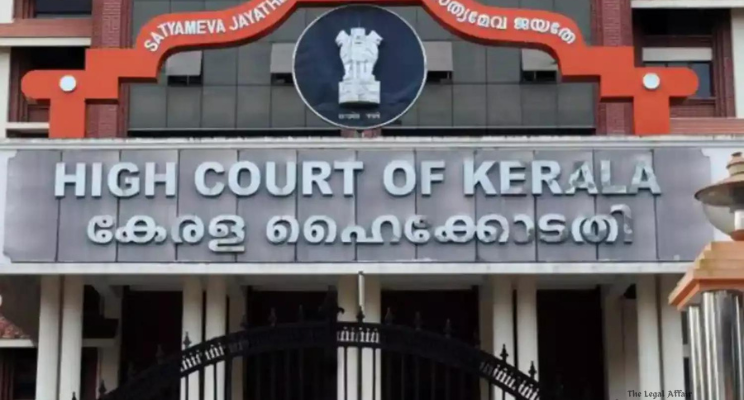
On August 22, 2024, the Kerala High Court delivered a significant judgment regarding the procedural handling of marriage-related offences under the Indian Penal Code (IPC). The case, Amal Babu v. State of Kerala and Others (Crl.M.C. No. 4549/2024), focused on whether a Magistrate can take cognizance of offences under IPC Chapter XX—pertaining to marriage-related crimes—based solely on a police report, or if the original complaint from the aggrieved person is mandatory. Justice A. Badharudeen clarified that for such offences, cognizance by the Magistrate must be based on the original complaint from the aggrieved party, as stipulated by Section 198 of the Code of Criminal Procedure (CrPC), regardless of any preliminary investigation or police report.
Arguments:
Petitioner’s Argument:
The petitioner sought to quash an FIR filed under Section 494 IPC, which pertains to bigamy, arguing that according to Section 198 CrPC, the Magistrate could only take cognizance based on a complaint from the aggrieved person and not on a police report. The petitioner contended that the Magistrate’s decision to forward the complaint for police investigation was inappropriate, as Section 198 CrPC explicitly restricts the court’s ability to act on police reports in such cases. The petitioner’s counsel argued that the procedural framework established by Section 198 CrPC must be strictly adhered to, and any deviation undermines the legal process.
Respondent’s Counterargument:
The respondent’s counsel, representing the State, countered by asserting that while Section 198 CrPC restricts taking cognizance of marriage-related offences based solely on a police report, it does not bar the Magistrate from referring a complaint for police investigation. The argument was that Section 198 only applies to the Magistrate’s ability to take cognizance directly based on a police report, not to the initial referral for investigation. The counsel emphasized that the Magistrate’s decision to refer the complaint for investigation under Section 156(3) CrPC is within legal bounds, and any subsequent cognizance must still follow the procedural requirements outlined in the CrPC.
Court’s Judgment:
Clarification on Cognizance and Complaint: Justice A. Badharudeen’s judgment provided a crucial interpretation of Section 198 CrPC, emphasizing that for offences under IPC Chapter XX, the Magistrate must take cognizance based on the original complaint of the aggrieved person. The court highlighted that the term ‘complaint’ as per Section 2(d) CrPC specifically refers to a complaint from the aggrieved individual and not a police report. This distinction is vital because Chapter XX of the IPC deals with sensitive issues related to marriage, where personal grievances must be directly addressed through the aggrieved party’s complaint.
The court noted that the Magistrate’s forwarding of the complaint for investigation under Section 156(3) CrPC does not replace the need for the original complaint when it comes to taking cognizance. The police report resulting from such an investigation cannot substitute the aggrieved person’s complaint required for initiating legal action under Chapter XX of the IPC. Justice Badharudeen reinforced that the Magistrate’s role is to ensure that the original complaint forms the basis for taking cognizance, thereby maintaining the integrity of the procedural safeguards established by the CrPC.
- Procedural Integrity: The judgment underscored the procedural integrity required in cases involving marriage-related offences. The court observed that while the police investigation is a necessary part of the process, it does not alter the requirement for a Magistrate to base cognizance on the original complaint from the aggrieved person. This approach ensures that the legal process remains focused on the grievances of the directly affected individuals, as intended by the legislative framework.
- Directions to Magistrate: The Kerala High Court directed the concerned Magistrate to reconsider the legal position and proceed according to the established procedure. The court’s order emphasized that the Magistrate should act on the original complaint when taking cognizance, not solely on the police report. This directive aims to uphold procedural norms and ensure that the aggrieved party’s complaint is central to initiating legal proceedings for marriage-related offences.