


Introduction:
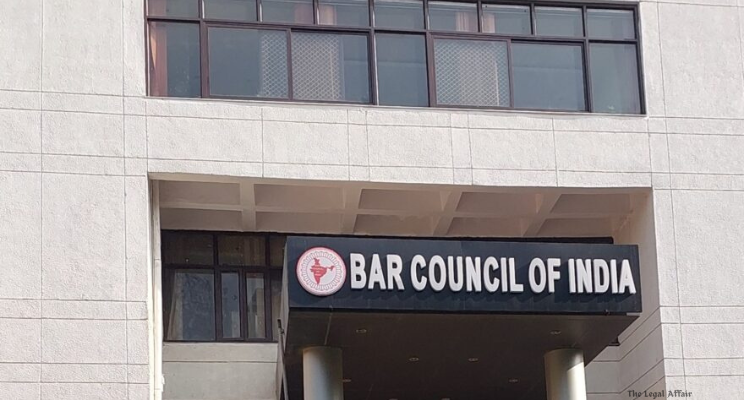
The case titled Muhammed Anwar Saidu v. Bar Council of India and Others, WP(C) 39952/2025, recently came before the Kerala High Court and has triggered far-reaching legal and academic repercussions regarding the state of legal education in Kerala, especially concerning the recognition and affiliation status of prominent law colleges. The petitioner, Advocate Muhammed Anwar Saidu, who completed his 5-year integrated law degree from the Government Law College, Kozhikode (GLC Kozhikode), approached the Court after discovering that his degree was not recognized as a valid qualification by the National Committee on Accreditation (NCA), Canada, when he sought to pursue higher studies and professional opportunities abroad. He contended that the Bar Council of India (BCI), the statutory authority empowered by the Advocates Act to regulate legal education and maintain the official list of recognized Centres of Legal Education, had failed to renew or provide affiliation to the 5-year course offered by GLC Kozhikode since 2011, even though the college continued admitting students without interruption.
Background Facts:
According to the petitioner, upon verification of the BCI’s online list of approved legal institutions, it became evident that the Government Law College, Kozhikode did not possess continuing affiliation for its integrated course, and the official recognition had expired in 2011. This revelation raised serious doubts regarding the legal validity of degrees awarded by the institution post-2011 and created concerns about the future of a large number of alumni who might face similar international recognition barriers. The petitioner sought retrospective recognition for his degree, arguing that he and many others pursued the course believing in the implied assurance of government legitimacy and regulatory compliance. He further submitted that the absence of updated affiliation constituted a failure of statutory duty by the BCI, resulting in grave academic and professional prejudice.
Statement of the Principal:
Pursuant to a judicial direction, the Principal of GLC Kozhikode filed a detailed statement, revealing shocking gaps in regulatory oversight. The Principal disclosed that repeated communications had been sent to the Bar Council of India since 2012 requesting inspection for continuation of affiliation. However, the BCI allegedly delayed action for years, finally conducting inspection in 2016 but provided no subsequent approval or acknowledgment. The statement claimed that despite the institution possessing required infrastructure, faculty, library resources, and academic standards, the BCI remained silent and failed to issue the necessary certificate. The college asserted that it had paid approximately Rs. 24 lakhs toward inspection and administrative charges, yet no receipts were issued by BCI officials. More startlingly, the Principal stated that GLC Kozhikode was not the sole victim of bureaucratic inaction; the same problem persisted in Government Law College Thrissur and Government Law College Thiruvananthapuram, and various private law colleges in Kerala whose affiliations were pending due to non-inspection by the BCI. The Principal further highlighted that in 2019, the BCI granted retrospective recognition to GLC Ernakulam for its BA LLB Criminology programme from 2011 after directing payment of default fees, thereby establishing a precedent for retrospective validation.
Petitioner’s Arguments:
Represented by Advocates S. Rajeev, V. Vinay, M.S. Aneer, Sarath K.P., Anilkumar C.R., K.S. Kiran Krishnan, Dipa V., Akash Cherian Thomas, and Azad Sunil, the petitioner argued that he could not be penalized for regulatory lapses beyond his control. He asserted that he was induced into enrolling in the course based on the assumption that all government-run law colleges operate under proper statutory recognition. The petitioner contended that the responsibility to maintain affiliation records rests solely with the BCI, and a student cannot be expected to verify approval status each academic year. He submitted that denial of accreditation abroad due to BCI’s administrative failure amounts to infringement of his right to education and profession under Article 19(1)(g) of the Constitution. Further, the petitioner urged the Court to direct the BCI to grant retrospective approval from 2011 so that students graduating thereafter are not deprived of global academic mobility. Finally, he prayed for issuance of an equivalency certificate by the BCI confirming the validity of his degree.
Respondent’s Position and Institutional Lapses:
The most significant disclosure came from the Principal’s side, stating that the college had remitted Rs. 18.5 lakhs as default fee and Rs. 5 lakhs as guarantee fee upon instructions of the BCI, yet no official receipt or acknowledgment was issued. The Principal emphasized that the college had complied with every requirement and even completed the online renewal process for its 3-year LL.B. programme. However, technical glitches in the BCI portal prevented submission of data for the 5-year integrated course. The BCI, according to the statement, did not provide timely support to resolve the digital issues. Court Proceedings and Observations – When the matter came before Justice V.G. Arun, the court expressed serious concern about the absence of receipts for payments running into lakhs of rupees. The Court remarked, “Does the government make payments without accepting receipts? What is there to show that you have made this payment?” highlighting procedural inconsistencies. The petitioner’s counsel submitted that the BCI could issue an equivalency certificate, upon which the Court suggested that a formal request be made to the Council. Justice Arun indicated willingness to grant relief if the BCI fails to act reasonably. The matter was adjourned to December 8 for further consideration.
Court’s Judgement:
Though the final judgment is awaited, the Court’s oral observations hint towards a direction compelling the Bar Council of India to authenticate payment receipts, clear affiliation backlog, and consider issuing equivalency certificates to affected graduates. The Court recognized that governmental legal education institutions cannot be left in regulatory ambiguity and that students cannot be victimized for bureaucratic inertia. Implicit in the Court’s tone was a reminder that statutory bodies must operate transparently, ensuring that academic programs are recognized, validated, and regularly inspected. The High Court thus positioned itself as a protector of legal education standards and individual rights, placing accountability squarely on the shoulders of the Bar Council of India.