


Introduction:
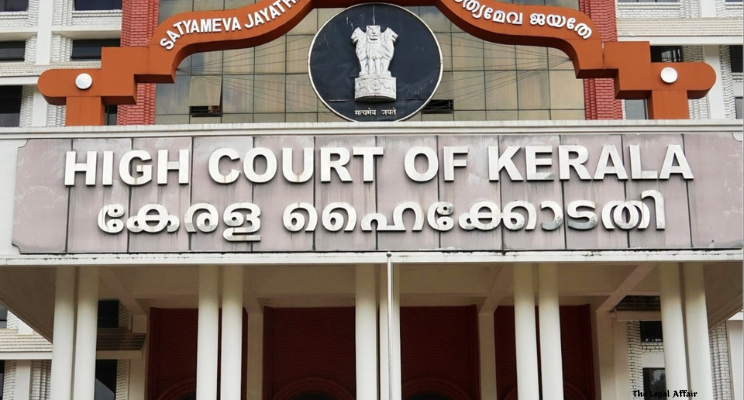
In a significant ruling, the Kerala High Court lifted a controversial bail condition imposed on the Managing Editor of the YouTube news channel ‘i21 News.’ The Sessions Court had barred the news channel from airing any news regarding the death of Sri K.P. Yohannan, the former Supreme Head of Believers Eastern Church, pending the disposal of a complaint before the State Police Chief. This restriction was imposed after allegations surfaced that the death of the Bishop, reportedly caused by a car accident in Texas on May 8, 2024, might have been the result of foul play. The Managing Editor, who had raised suspicions about the circumstances surrounding the Bishop’s death, challenged the Sessions Court’s bail condition, which he argued was an arbitrary restriction on the freedom of the press.
Sri K. P. Yohannan, also known as Moran Mar Athanasius Yohan Metropolitan, was a significant religious figure, and his sudden death raised concerns across his community. The Managing Editor of ‘i21 News’ claimed that his investigative journalism had uncovered evidence suggesting foul play in the Bishop’s death, prompting him to file a complaint with the State Police Chief. In response, the news channel, along with its Managing Editor and Marketing Executive, found themselves accused in an FIR under several provisions of the Indian Penal Code and the Kerala Police Act. They were charged with criminal conspiracy, provocation with intent to cause a riot, extortion, criminal intimidation, and causing public nuisance.
After the Managing Editor sought anticipatory bail from the Sessions Court, the Court imposed the condition that the news channel should refrain from broadcasting any news related to the Bishop’s death until the complaint filed before the State Police Chief was fully resolved. Dissatisfied with this condition, the Managing Editor approached the Kerala High Court, seeking relief from the restrictions placed on the freedom of the press.
Arguments of Both Parties:
Petitioner’s Arguments (Managing Editor of ‘i21 News’):
- Violation of Freedom of Expression:
The primary contention raised by the petitioner was that the Sessions Court’s bail condition imposed a direct and undue restriction on his right to freedom of expression, guaranteed under Article 19(1)(a) of the Constitution of India. The Managing Editor argued that he was simply exercising his journalistic duties by reporting on issues of public interest. The imposed condition effectively amounted to censorship, as it prevented him and his channel from reporting on an important and newsworthy event.
- Investigative Journalism and Public Interest:
The petitioner submitted that his investigative efforts revealed foul play in the death of Bishop K.P. Yohannan. He had filed a complaint with the State Police Chief based on this information. His journalism, he argued, aimed to shed light on suspicious circumstances surrounding the death, which could have broader public implications. He further asserted that his reports were based on legitimate investigative efforts and not on fabricated or false information.
- Challenge to Arbitrariness of Bail Conditions:
The petitioner contended that the condition imposed by the Sessions Court was arbitrary and exceeded the bounds of judicial discretion. He argued that a bail condition must not infringe upon fundamental rights or be disproportionate to the gravity of the alleged offense. In this case, the restriction on airing news about the death of the Bishop was, according to the petitioner, neither justified nor necessary to safeguard the investigation or public order.
- Remedies for Alleged False News:
The petitioner also pointed out that if the news aired by his channel was indeed false or defamatory, there were established legal remedies available to the aggrieved parties, including civil and criminal defamation suits. He argued that restricting news coverage via a bail condition was not the appropriate mechanism to address such grievances.
Respondents’ Arguments (State and Believers Church Bishop):
- False News and Public Disturbance:
The respondent, representing another Bishop of Believers Church, argued that the Managing Editor and his channel had aired false news, alleging that the Bishop’s death was a planned murder. The respondent asserted that this baseless news had the potential to cause public unrest and division within the Church community. The airing of such inflammatory content, it was contended, could provoke communal tensions and disturb public order.
- Extortion Allegations:
The respondents further claimed that the Marketing Executive of the news channel had contacted the Church, demanding advertisements in exchange for not publishing false news about the Bishop’s death. This, according to the respondents, amounted to extortion and criminal intimidation. The FIR filed against the Managing Editor and his associates included charges under Sections 153, 120B, 384, and 506 of the IPC, along with Section 120(o) of the Kerala Police Act.
- Justification for Media Ban:
The respondents defended the Sessions Court’s decision to impose a temporary ban on media coverage of the Bishop’s death, arguing that it was necessary to prevent the spread of false information and to maintain peace within the Church community. The Sessions Court had, in their view, acted within its discretion to impose such a condition as part of the bail order to avoid further dissemination of misleading and provocative content.
- Ongoing Investigation:
The respondents also pointed out that the allegations regarding foul play in the Bishop’s death were already under investigation by the police. They argued that allowing the media to air unverified claims about the incident could interfere with the ongoing investigation and lead to public confusion. Thus, they contended that the temporary restriction on media coverage was a reasonable and proportionate measure.
Kerala High Court’s Observations and Judgment:
Justice Bechu Kurian Thomas of the Kerala High Court carefully considered the arguments presented by both sides, as well as relevant legal principles and precedents. In his judgment, the Court made the following key observations:
- Bail Conditions Must Not Infringe Fundamental Rights:
The Court emphasized that while courts have the power to impose conditions while granting bail, such conditions must not be arbitrary, fanciful, or disproportionate. Citing several Supreme Court rulings, Justice Thomas reiterated that bail conditions should not infringe upon the fundamental rights of individuals, including the right to freedom of expression under Article 19(1)(a) of the Constitution.
- Restriction on Freedom of Expression Cannot Be a Bail Condition:
The Court held that imposing a blanket restriction on media coverage as a condition for granting bail was neither appropriate nor justified. The right to freedom of the press and freedom of expression, though not absolute, cannot be curtailed arbitrarily under the guise of a bail condition. Justice Thomas emphasized that while the press must act responsibly, curbing media reports through such conditions would be an excessive and unjustified limitation on the press’s role in a democracy.
- Importance of a Free Press in a Democracy:
Justice Thomas underscored the critical role of a free press in preserving democratic values. The Court observed that, despite the controversies and criticisms that often surround the media, the absence of a free press would severely curtail democratic rights and liberties. The Court further noted that independent journalism has, in many instances, led to important revelations and investigations that have served the public interest.
- Freedom of the Press Not Absolute, But Restrictions Must Be Reasonable:
While affirming the importance of press freedom, the Court also acknowledged that this freedom is not unlimited. In appropriate cases, reasonable restrictions may be imposed, such as when media reports incite violence, hatred, or unrest. However, the Court held that such restrictions should be based on specific circumstances and not imposed through arbitrary bail conditions. If the petitioner’s actions amounted to an offense, the aggrieved party could seek redress through legal channels, rather than relying on preemptive media bans.
- Probability of Offense Not a Ground for Restricting Speech:
The Court rejected the argument that the mere possibility of an offense arising from the airing of certain news could justify a restriction on speech. Justice Thomas clarified that freedom of expression cannot be curtailed on the speculative ground that it may lead to the commission of an offense. The proper legal remedies, such as defamation or criminal complaints, were available to parties who felt aggrieved by false or defamatory news.
- Judgment and Conclusion:
The Kerala High Court ultimately lifted the condition imposed by the Sessions Court, allowing the YouTube channel to resume airing news about the death of Bishop K.P. Yohannan. The Court held that the restriction was an excessive and arbitrary interference with the freedom of the press and that such curbs could not be justified merely by the possibility of public unrest or offense. The Court also noted that there were other legal remedies available to the respondents if they believed that the news reports amounted to falsehoods or defamation.
In conclusion, the High Court’s ruling reaffirms the importance of safeguarding press freedom, while also maintaining that this freedom must be exercised responsibly. It serves as a reminder that arbitrary restrictions on speech, especially when imposed as part of bail conditions, are unconstitutional and disproportionate.