


Introduction:
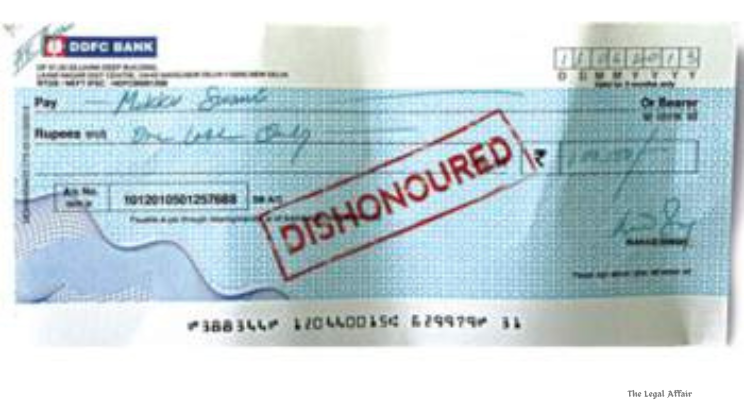
In a recent ruling, the Delhi High Court reinforced a significant principle regarding sole proprietorships, holding that only the sole proprietor can be held liable for cheques issued by the firm. The decision emerged in the case of Sanat Kumar v. Sanjay Sharma, where the petitioner, Sanat Kumar, was accused under Section 138 of the Negotiable Instruments (NI) Act for allegedly issuing dishonoured cheques on behalf of a sole proprietorship firm. The High Court quashed the complaint and the summoning order against Sanat Kumar, observing that the sole proprietorship firm was owned by Rajeev Kumar, and not the petitioner.
Case Background:
The case arose from a financial dispute between Sanjay Sharma, the complainant, and the accused, Rajeev Kumar and Sanat Kumar, regarding a loan. The dishonour of two cheques issued as repayment led to the initiation of legal proceedings under Section 138 of the NI Act. However, the High Court highlighted the critical issue of properly identifying the liable party in matters involving sole proprietorships.
Petitioner’s Arguments (Sanat Kumar):
- Sole Proprietor Liability:
Sanat Kumar argued that he could not be held liable for the dishonoured cheques, as he was not the proprietor of the firm that issued them. The loan was taken by “Regal Cruiser Travels,” a sole proprietorship owned by Rajeev Kumar. Under established legal principles, only the sole proprietor can be liable for cheques issued by the firm. Since Sanat Kumar was not the proprietor, he contended that no liability could be fixed on him for the dishonoured cheques.
- Non-Applicability of Section 138 NI Act:
The petitioner argued that Section 138 NI Act, which penalizes the dishonour of cheques, did not apply to him as he neither issued the cheques nor took the loan. Consequently, the complaint and the summoning order against him were unsustainable.
- GST Forms as Evidence:
To support his claims, Sanat Kumar presented GST registration documents showing that “Regal Cruiser Travels” was a sole proprietorship under Rajeev Kumar’s name. He argued that these documents conclusively established that Rajeev Kumar, not Sanat Kumar, was responsible for the loan and cheques.
- Challenge to Summoning Order:
Sanat Kumar challenged the 2018 summoning order, arguing that it was issued without proper consideration of his non-liability, especially in light of the GST records proving Rajeev Kumar’s sole proprietorship.
Respondent’s Arguments (Sanjay Sharma):
- Loan Agreement and Cheques Issued:
The complainant, Sanjay Sharma, maintained that the loan was taken by both Rajeev and Sanat Kumar, with the repayment being a joint responsibility. He argued that the dishonoured cheques were issued by both accused, making them both liable under Section 138 NI Act.
- Liability of Both Accused:
Although Rajeev Kumar was the proprietor of “Regal Cruiser Travels,” the respondent claimed that Sanat Kumar was equally involved in the financial dealings and should be held accountable for the dishonoured cheques.
- Legal Notice and Default in Payment:
Sanjay Sharma emphasized that after the cheques were dishonoured, legal notices were sent to both Rajeev and Sanat Kumar, but no repayment was made, thus justifying the complaint under Section 138.
- Summoning Order Justified:
The respondent defended the summoning order, asserting that the Magistrate found sufficient evidence to summon both accused. The GST records, according to the respondent, did not absolve Sanat Kumar of liability, as he was involved in the loan transaction.
Delhi High Court’s Observations and Judgment:
- Sole Proprietor’s Liability for Cheques Issued:
Justice Subramonium Prasad reaffirmed that in sole proprietorship cases, only the sole proprietor can be held liable for cheques issued in the firm’s name. Since “Regal Cruiser Travels” was solely owned by Rajeev Kumar, the petitioner Sanat Kumar could not be held liable for the dishonoured cheques.
- Non-Applicability of Section 138 NI Act to Petitioner:
The Court held that the essential ingredients of Section 138 NI Act were not met concerning Sanat Kumar. Since he neither issued the cheques nor took the loan, the complaint against him could not be sustained.
- GST Documents as Conclusive Evidence:
The High Court relied heavily on the GST forms submitted by the petitioner, which identified Rajeev Kumar as the sole proprietor. The Court considered these documents as conclusive proof that the petitioner was not liable for the dishonoured cheques.
- Summoning Order Quashed:
The Court quashed the summoning order against Sanat Kumar, deeming it erroneous. The Court clarified that the complaint could only proceed against Rajeev Kumar, the sole proprietor.
Conclusion:
This ruling reinforces the legal principle that in cases involving sole proprietorships, only the sole proprietor can be held liable for cheques issued by the firm. The decision highlights the importance of identifying the correct liable party in cheque dishonour cases and serves as a reminder for courts to carefully consider the legal and factual circumstances before issuing summons.