


Introduction:
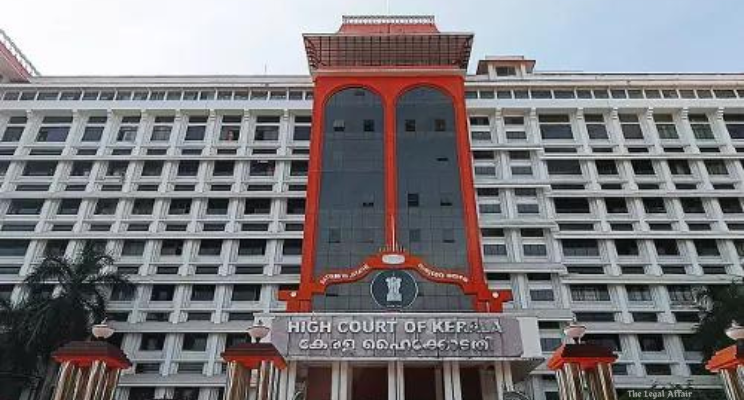
The Kerala High Court recently addressed a significant issue concerning industrial relations by directing Fertilisers and Chemicals Travancore Limited (FACT) to conduct a Trade Union Referendum through a secret ballot. The court’s decision aimed to ascertain the representative status of Fact United Employees Liberation, a trade union operating within FACT’s Cochin Division. This ruling underscores the importance of determining which trade union should negotiate on behalf of workers to ensure industrial peace and effective collective bargaining.
Background:
The case, titled *Fact United Employees Liberation v. Fertilisers and Chemicals Travancore Limited* (WP(C) NO. 1071 OF 2024), arose from a writ petition filed by Fact United Employees Liberation (the petitioner). The petitioner sought a court order to compel FACT to conduct a Trade Union Referendum in its Cochin Division to establish which union truly represents the interests of the workers. The petitioner argued that the lack of a proper referendum was affecting their ability to negotiate effectively on behalf of the workforce.
Arguments of the Petitioner:
United Employees Liberation contended that the absence of a Trade Union Referendum in the Cochin Division undermined their ability to represent workers’ interests effectively. The petitioner argued that collective bargaining and negotiation should be conducted with a union that genuinely represents the majority of employees. The petitioner highlighted the critical role of such referendums in ensuring that agreements reached between the employer and the union reflect the true interests of the majority of workers, thereby contributing to industrial peace.
Arguments of the Respondent:
FACT, the respondent, opposed the petition on several grounds. The company argued that the writ petition was not maintainable, asserting that there was no infringement of fundamental rights that warranted judicial intervention. FACT emphasized that it was not statutorily obligated to conduct Trade Union Referendums. The company noted that there were already five recognized trade unions in the Cochin Division, and a similar referendum had been conducted in their Udyogamandal Division, where the results showed that out of four participating unions, three had secured 20% or more of the total votes.
Court’s Judgment:
Justice N. Nagaresh, presiding over the case, acknowledged the importance of determining which trade union should negotiate with the employer, especially in establishments with multiple registered unions. The judge emphasized that collective bargaining should be conducted with the union that truly represents the majority of employees to avoid conflicts and ensure industrial harmony.
The court observed that while FACT had conducted a referendum in the Udyogamandal Division, no such referendum had been held in the Cochin Division. The court agreed with the petitioner’s argument that a referendum was necessary to determine the representative status of Fact United Employees Liberation in the Cochin Division. This step was deemed crucial to ensure that the collective bargaining process reflects the genuine interests of the majority of workers, thereby promoting industrial peace.
Consequently, the court directed FACT to conduct a Trade Union Referendum by secret ballot in the Cochin Division. This referendum would help ascertain the true representative status of Fact United Employees Liberation among the workers. The court’s decision aimed to ensure that future negotiations and agreements between FACT and the trade unions are conducted with the union that represents the majority of employees, thereby fostering a more stable and equitable industrial environment.
Conclusion:
The Kerala High Court’s directive for a Trade Union Referendum act FACT’s Cochin Division is a pivotal move towards ensuring that industrial negotiations are conducted fairly and effectively. By mandating a secret ballot to determine the representative status of trade unions, the court has reinforced the importance of genuine worker representation in collective bargaining processes. This decision not only highlights the court’s commitment to upholding industrial peace but also sets a precedent for how trade union representation should be handled in diverse and complex industrial settings.