


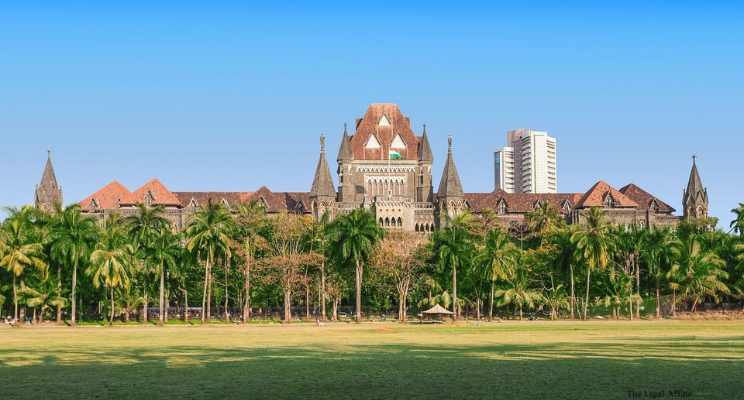
Introduction:
In a landmark ruling, the Bombay High Court declared the arrest of Thane-based journalist Abhijit Padale by the Mumbai Police illegal. The Court ordered the Mumbai Police to pay Rs 25,000 in compensation to Padale, emphasizing the critical importance of following legal protocols before making arrests, particularly in cases involving non-bailable offenses.
Background:
The case, Abhijit Padale vs. State of Maharashtra (WP/1197/2022), centers around the arrest of journalist Abhijit Padale by the Vakola Police Station on January 15, 2022. Padale was charged under sections 384 (extortion) and 506 (criminal intimidation) of the Indian Penal Code (IPC). He challenged his arrest, asserting that it was conducted in violation of legal standards and due process.
Arguments of the Petitioner:
Padale’s counsel argued that his arrest was illegal and violated the procedural safeguards outlined in the Criminal Procedure Code (CrPC). They emphasized that the arrest was carried out without serving a notice under Section 41A, which is required for non-bailable offenses carrying a maximum punishment of less than seven years. The counsel contended that the arrest was executed in a mechanical and casual manner, disregarding the Supreme Court’s guidelines set forth in the Arnesh Kumar case. Padale was detained without proper justification and had to remain in custody for a bail hearing due to the non-availability of the prosecutor, further infringing on his liberty.
Arguments of the Respondent:
The Mumbai Police defended the arrest, arguing that it was conducted in accordance with legal provisions for non-bailable offenses. They maintained that the procedural requirements were met and that the arrest was justified given the seriousness of the charges. The police claimed that the actions taken were appropriate for the circumstances and necessary to address the alleged offenses.
Court’s Judgment:
The division bench of Justices Revati Mohite-Dere and Prithviraj Chavan ruled in favor of the petitioner, declaring the arrest illegal. The Court noted that the police failed to serve a notice under Section 41A before making the arrest, which is a mandatory requirement for non-bailable offenses with a punishment of less than seven years. The bench observed that the police did not record reasons for the necessity of the arrest, nor did they provide justification for why the arrest was preferable to other measures.
The Court criticized the police’s mechanical approach, stating that the arrest was executed without reasonable satisfaction or proper investigation into the genuineness of the allegations. The Court emphasized that arrests should not be made routinely based on mere allegations and must follow due process to safeguard individual rights. The bench referred to the principles laid down in DK Basu vs. State of West Bengal, stressing that state actions must be “right, just, and fair.”
In addition to declaring the arrest illegal, the Court ordered the Mumbai Police to pay Rs 25,000 in compensation to Padale. It also recommended that the Commissioner of Police, Mumbai, appoint a Deputy Commissioner of Police (DCP) to conduct an inquiry into the arrest and the conduct of the police officers involved. This inquiry is intended to ensure accountability and adherence to legal procedures in future cases.
Conclusion:
The Bombay High Court’s decision is a significant reaffirmation of the procedural safeguards governing arrests and detentions. By ruling the arrest of journalist Abhijit Padale illegal and ordering compensation, the Court has reinforced the necessity for police to strictly adhere to legal standards, ensuring that individual liberties are not arbitrarily curtailed. The recommended inquiry into police conduct serves as a crucial step toward accountability and upholding the rule of law.