


Introduction:
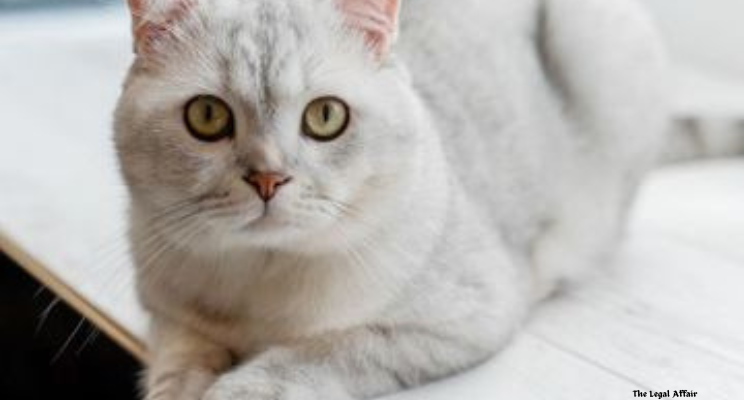
In a case that brought together financial recovery laws and compassion for animals, the Kerala High Court recently issued an interim direction ensuring that a pet cat trapped inside a property taken over by a bank must be safely returned to its owner. The case titled Muhammed Nishad v. State Bank of India and Ors. (OP (DRT) No. 304 of 2025) was heard by Justice Mohammed Nias C.P., where the petitioner sought not only to halt loan recovery proceedings against his residence but also urgently pleaded for the release of his beloved cat. The matter arose after the State Bank of India took possession of the borrower’s residence as a secured asset in the course of recovery proceedings, inadvertently trapping the cat inside. While financial disputes between borrowers and banks are common, this unusual case highlighted the importance of humane considerations and the protection of animal rights even amidst strict enforcement of financial laws.
Arguments of the Petitioner:
The petitioner, Muhammed Nishad, who was facing loan default proceedings initiated by the State Bank of India, contended before the High Court that while the bank had taken possession of his house as a secured asset under recovery laws, an innocent party—his pet cat—was left trapped inside. Nishad stressed that his request was not only a plea for staying coercive measures but primarily an urgent humanitarian concern, as the cat was confined without access to food, water, or care. He argued that this amounted to cruelty to animals and a violation of the principles under the Prevention of Cruelty to Animals Act, 1960. He further submitted that despite the financial liabilities, basic rights of living creatures must not be disregarded in the process of enforcing recovery. Nishad urged the Court to direct the bank to return his pet immediately and claimed that the loan proceedings could not justify depriving him of his animal companion. He also prayed for interim relief in the form of a stay on further proceedings against his residential property.
Arguments of the Respondent Bank:
The State Bank of India, which had taken possession of the petitioner’s house under recovery proceedings, submitted that it was merely exercising its rights under the Securitisation and Reconstruction of Financial Assets and Enforcement of Security Interest Act (SARFAESI), 2002. The bank maintained that once possession was taken of the secured asset, it was duty-bound to safeguard the property as part of the recovery process. However, the bank did not dispute the petitioner’s submission about the possibility of the cat being inside. The bank’s counsel stated that while the institution was focused on protecting its financial interests and recovering the outstanding dues, it had no objection to verifying the petitioner’s claim regarding the pet. The bank further submitted that it would comply with the Court’s directions and had no intention of committing any act of cruelty or neglect towards the animal.
Court’s Judgement:
After hearing both parties, Justice Mohammed Nias C.P. emphasized that while loan recovery is a legitimate right of financial institutions, the process cannot overlook humanitarian and ethical considerations, particularly when it involves the life of an animal. The Court observed that if the petitioner’s claim was correct, the cat was trapped within the secured asset under the bank’s possession, thereby requiring immediate intervention. In its interim order, the Court directed the State Bank of India to verify the petitioner’s submission without delay. If found true, the bank was ordered to ensure that the cat was safely handed over to the petitioner at the earliest. The Court also required the bank to file a statement on or before October 6, 2025, confirming compliance and clarifying the factual position. This direction reflected the Court’s balanced approach—recognizing the bank’s legal right to enforce recovery while ensuring that animal welfare and ethical treatment were not compromised in the process. The case was accordingly posted for the next hearing on October 6, 2025.
The judgment reaffirmed that judicial oversight extends beyond human disputes to ensure that non-human life is not neglected in legal proceedings. By issuing this order, the Court demonstrated sensitivity to animal welfare, aligning with the broader constitutional duty under Article 51A(g), which casts upon citizens the responsibility to show compassion towards all living creatures. Moreover, the order highlights that even in financial recovery matters, courts will not allow mechanical application of law to override humane values.