


Introduction:
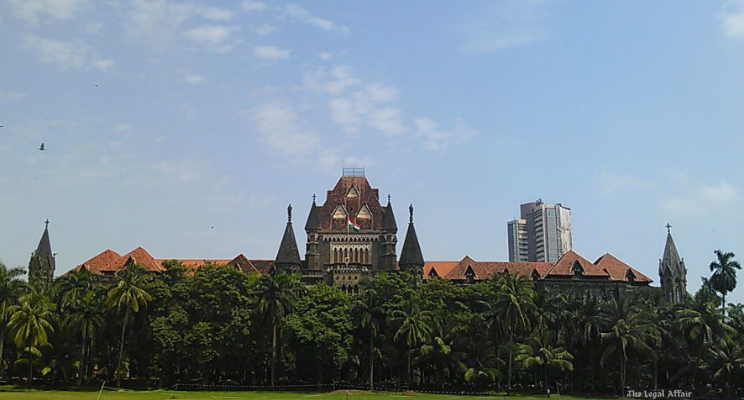
The case of State of Maharashtra v. Aakash Sandhi Bindu (Criminal Application 367 of 2025) came before the Bombay High Court where Justice Dr. Neela Gokhale examined the validity of bail granted by the Additional Sessions Judge at Dindoshi (Borivali Division) to an accused in a gang rape case. The trial court had released the accused, Aakash Bindu, on bail on February 24, 2025, primarily on two grounds: first, that there were no injuries on the victim’s private parts, and second, that the accused’s marriage was scheduled to take place in March 2025. Justice Gokhale found these considerations deeply flawed, observing that the lower court had ignored crucial material on record, failed to assess the gravity of the offence, and placed undue emphasis on extraneous factors like an impending marriage. The High Court therefore intervened, cancelled the bail, and ordered the accused to surrender within two days at the DN Nagar police station in Mumbai. This ruling raises important questions about the standards applied by courts while dealing with bail in serious sexual offence cases and the judicial obligation to prioritise victim’s rights and the gravity of offences over personal conveniences of the accused.
Arguments of the Victim:
The victim, represented by Advocates Shivamsinh Deshmukh and Tarun Shetty, challenged the trial court’s decision, arguing that the grant of bail was wholly unsustainable in law and fact. It was submitted that the trial court had failed to properly evaluate the material on record, which clearly indicted the accused. Among the key evidences placed before the court were indecent photographs of the victim found on the accused’s mobile phone, corroborating the victim’s statement of exploitation and coercion. Further, medical reports documented physical violence, including a head injury and scratch marks on her body, which aligned with her allegations of assault. The victim’s supplementary statements and those of the co-accused were also part of the prosecution’s record but were overlooked by the trial court.
The victim’s counsel argued that the absence of injuries on the private parts of the victim could not be treated as conclusive evidence against rape, as established in numerous precedents, since sexual assault may not always result in visible genital injuries. The trial court’s undue emphasis on this factor betrayed a flawed understanding of law. They further argued that the accused’s marriage could never be a legitimate ground for bail in a heinous offence like gang rape. Even if the claim of impending marriage was true, which itself was contested, such personal circumstances could not override the seriousness of the charges and the need to ensure justice for the victim. The defence’s reliance on this ground, they contended, was misleading and frivolous.
The victim emphasized that the trial court’s order revealed a casual disregard for the gravity of the allegations and the trauma suffered. By focusing only on peripheral considerations, the trial court undermined the confidence of victims in the justice system. Hence, it was urged that the High Court set aside the bail order and direct the accused to be taken into custody, ensuring a fair trial uninfluenced by premature liberty granted to the accused.
Arguments of the State:
The State of Maharashtra, represented by Additional Public Prosecutor Megha Bajoria, supported the victim’s challenge and highlighted the seriousness of the offence. It was submitted that the case involved allegations of gang rape, a crime of a heinous nature that shook the conscience of society. The prosecution pointed out that the charge sheet and supplementary charge sheet contained sufficient material establishing a prima facie case against the accused. Despite this, the trial court enlarged the accused on bail within barely two and a half months of arrest, disregarding the incriminating material available.
The State argued that in cases of grave offences like gang rape, courts are expected to apply stringent scrutiny before granting bail, keeping in mind the potential for witness intimidation, the trauma to the victim, and the societal interest in prosecuting such crimes effectively. The trial court’s reliance on the accused’s supposed upcoming marriage as a mitigating factor was described as “perverse” and alien to criminal jurisprudence. It was further submitted that granting bail on such grounds sent a dangerous message to society, trivialising the seriousness of sexual offences.
The prosecution urged the High Court to consider the victim’s statement, corroborative medical evidence, and digital evidence against the accused. It was emphasized that the balance of justice demanded the cancellation of bail, particularly since the trial court’s order revealed non-application of mind and failure to consider relevant factors mandated under Section 437 and 439 of the Code of Criminal Procedure.
Arguments of the Accused:
The accused, represented by Advocate Shlok Saraogi, defended the trial court’s order granting bail. Counsel submitted that the accused had been in custody since December 9, 2024, and was released only on February 24, 2025. It was argued that bail does not signify acquittal, but only temporary release to allow the accused to face trial without prolonged pre-trial detention. The accused’s counsel claimed that the trial court had considered relevant aspects, including medical findings which did not show injuries on the victim’s private parts, thereby weakening the prosecution’s case.
It was also contended that the accused had no prior criminal record and that his personal circumstances, including his impending marriage, demonstrated his rootedness in society and reduced the likelihood of absconding. The defence urged that bail was a matter of judicial discretion, and since the trial court had exercised it, the High Court should not ordinarily interfere unless there was gross perversity. They argued that bail once granted should not be cancelled mechanically, as it affects the liberty of an individual, which is a constitutionally protected right under Article 21.
Court’s Judgment and Reasoning:
Justice Neela Gokhale, after carefully examining the trial court’s order and submissions of the parties, found the reasoning adopted by the lower court to be legally untenable and inconsistent with the principles governing bail in heinous offences. The High Court observed that the trial court’s considerations were limited to two aspects: the absence of genital injuries and the accused’s scheduled marriage. Both were found irrelevant or grossly insufficient to justify bail in a gang rape case.
The Court emphasised that the absence of injuries on private parts does not negate allegations of rape, especially when there are other corroborative evidences such as physical injuries on other parts of the body and incriminating digital material. By ignoring injuries documented on the victim’s person in the medical report, the trial court failed to assess the case in its totality.
On the issue of the accused’s marriage, Justice Gokhale was categorical: marriage plans cannot be treated as a mitigating factor in a case involving heinous crimes. The judge noted that this consideration was particularly troubling because it revealed a misplaced sympathy for the accused while disregarding the trauma of the victim. Moreover, it was pointed out that the claim of marriage was misleading since no marriage had been solemnised even by the time the High Court was hearing the matter.
The High Court found that the trial court had prematurely released the accused on bail without examining crucial material in the charge sheet and supplementary charge sheet. This, the Court held, amounted to ignoring relevant evidence and failing to apply judicial mind to the gravity of the offence. The High Court thus concluded that the order granting bail required urgent intervention.
Justice Gokhale observed:
“Upon taking into account the entirety of the case, it appears that the impugned order requires intercession. A plain reading of the order reveals that the Respondent-Accused was enlarged on bail, without examining all material aspects placed by the prosecution before the Trial Court by way of filing the charge-sheet and the supplementary charge-sheet. The offence alleged is heinous, involving gang rape. The trial court appears to have been swayed by irrelevant considerations, ignoring the gravity of the allegations.”
Accordingly, the High Court cancelled the bail granted to Aakash Bindu and directed him to surrender before DN Nagar police station within two days. This ensured that the trial could proceed with the accused in custody, preventing any possibility of tampering with evidence or intimidating witnesses.
Broader Implications:
The ruling by Justice Gokhale sends a strong message about the judicial responsibility in handling bail matters, particularly in cases involving sexual offences. It underscores that personal circumstances such as impending marriage cannot dilute the seriousness of offences like gang rape. Courts must exercise bail jurisdiction with utmost caution, weighing the gravity of the crime, the interests of the victim, and the integrity of the trial process.
The decision also highlights the need for trial courts to avoid superficial or extraneous considerations while granting bail. The focus must remain on the merits of the case, the evidence available, and the legal standards governing bail. By intervening, the High Court restored faith in the judicial process, assuring victims that their grievances will not be trivialised and that accused persons in serious crimes will not be let off lightly based on irrelevant grounds.