


Introduction:
The Kerala High Court has delivered an important ruling on the liability of the State for injuries and loss of life caused by wild animals, holding that victims are entitled to just, fair and reasonable compensation and that such compensation cannot be mechanically restricted to the amount prescribed under an executive compensation scheme. In Wildlife Warden and Ors. v. Thadathil Saramma and Ors., R.S.A. No. 588 of 2011, reported as 2026 LiveLaw (Ker) 475, Justice Mohammed Nias C.P. dismissed a Regular Second Appeal filed by Forest Department officials and upheld the concurrent findings of the courts below awarding compensation to the family of a man who died in a wild elephant attack.
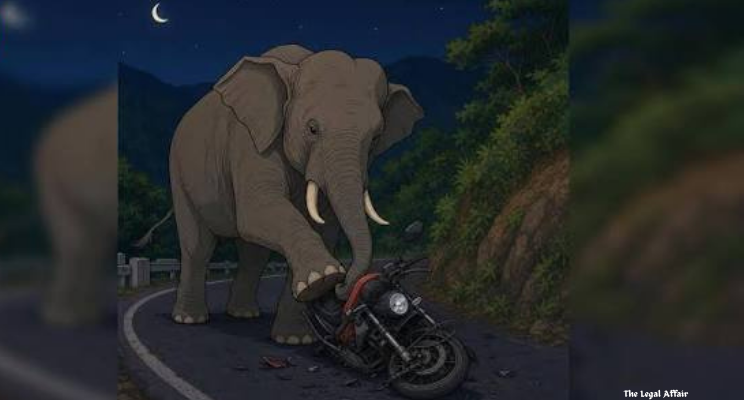
The dispute arose from the death of a man following an attack by a wild elephant while he was travelling on a panchayat road. His wife and children, who claimed to have been dependent upon his income, instituted a suit seeking damages from the State authorities. They alleged that the death was not merely an unfortunate consequence of wildlife movement but was attributable to the failure of the Forest Department to take reasonable preventive measures along the forest boundary.
According to the plaintiffs, the Forest Department had failed to install adequate fencing, trenches and other protective mechanisms to prevent wild elephants and other wild animals from entering areas frequented by human beings. They claimed compensation of ₹2 lakh for the loss suffered by the family.
The authorities, however, had already paid ₹20,000 to the family under the Kerala Rules for Payment of Compensation to Victims of Attack by Wild Animals, 1980. The plaintiffs contended that the amount prescribed under the Rules could not constitute the complete measure of their legal entitlement and sought compensation commensurate with the actual loss caused by the death of the breadwinner.
The controversy consequently involved two interconnected questions. First, whether the State could be held liable for loss caused by a wild animal attack in circumstances where negligence on the part of public authorities was alleged. Second, whether the compensation payable to victims was restricted to ₹20,000 merely because that amount had been prescribed under the 1980 Rules.
The trial court found in favour of the plaintiffs. It rejected the suggestion that the deceased had been travelling on a forest road and found that the incident had occurred on a panchayat road. The court also concluded that the Forest Department had failed to take adequate precautions, including installation of power fencing and trenches along the relevant forest boundary.
The trial court consequently awarded ₹1,78,000 to the plaintiffs after taking into account the ₹20,000 already paid by the authorities. The Forest Department officials challenged that decision before the first appellate court, but the appeal was dismissed.
The matter thereafter reached the High Court in the Regular Second Appeal. The Forest Department sought interference with the concurrent findings, particularly questioning the finding of liability and the quantum of compensation.
The High Court, however, found no substantial ground for disturbing the findings of the courts below. More significantly, the Court examined the legal nature of the State’s responsibility towards citizens who suffer injury or death because of wild animal attacks.
Justice Mohammed Nias C.P. held that the right to claim just and adequate compensation for loss of life or injury is traceable to Article 21 of the Constitution and is also supported by the common-law principle of strict liability. According to the Court, these rights do not arise merely from the existence of a governmental compensation scheme. They exist independently.
The Court held that the amount prescribed by the Kerala Rules of 1980 operates as a minimum amount payable by the State under the executive scheme and cannot restrict the jurisdiction of a competent court to determine a higher amount based upon the actual loss, pain and suffering caused by the incident.
The ruling is particularly significant in the context of increasing human-wildlife conflict. As wild animals increasingly enter human habitations, agricultural areas and public roads, the question of who bears responsibility for resulting injuries and deaths assumes considerable legal and constitutional importance.
The Court’s reasoning places the State’s role as custodian of wildlife at the centre of the issue. Since wild animals are treated as State property and are under governmental protection and management, the State also carries a corresponding responsibility to take reasonable measures to minimise foreseeable human-wildlife conflict.
The judgment thus moves beyond a narrow question of statutory compensation and recognises a broader constitutional obligation to protect life and ensure meaningful compensation when that obligation is breached.
Arguments of the Parties:
The appellants, consisting of the Wildlife Warden and other Forest Department officials, challenged the concurrent judgments of the courts below. Their principal case was that the Forest Department could not be held liable merely because a wild animal had attacked and killed the deceased.
The appellants sought to dispute the factual basis upon which negligence had been attributed to the Department. They contended that sufficient precautions had been undertaken to prevent wild animals from entering private property and that the authorities could not be expected to guarantee that wildlife would never come into contact with human beings.
The Forest Department also sought to rely upon the circumstances in which the incident occurred. It was suggested that the deceased had been careless and was allegedly intoxicated at the time of the incident. According to the appellants, such conduct on the part of the deceased contributed to the occurrence and should therefore have been taken into account while considering the claim for damages.
Another significant submission concerned the location of the incident. The appellants attempted to suggest that the deceased had been travelling on a forest road. If accepted, such a contention could have affected the assessment of the circumstances surrounding the attack and the alleged duty of the authorities.
The appellants also relied upon the compensation framework contained in the Kerala Rules for Payment of Compensation to Victims of Attack by Wild Animals, 1980. Since ₹20,000 had already been paid to the family under the applicable scheme, their position was that the statutory or executive framework governing compensation should inform, if not limit, the liability of the State.
The Forest Department’s broader position was that compensation could not be enhanced merely because the claimants considered the amount prescribed under the Rules inadequate. The appellants sought to distinguish between an ex gratia or scheme-based payment and a civil claim founded upon negligence, and argued that the plaintiffs were required to establish a legally actionable basis for claiming damages beyond the amount already paid.
The respondents, namely the wife and children of the deceased, opposed the appeal and defended the findings of the trial court and the first appellate court.
Their case was that the death occurred because the Forest Department failed to discharge its duty to prevent wild animals from entering areas accessible to the public. They specifically relied upon the absence of adequate fencing and trenches along the forest boundary.
The respondents contended that the incident occurred on a panchayat road and not on a forest road. The location was therefore an important factor in determining the Department’s responsibility, because the deceased was using a public road rather than voluntarily entering a restricted forest area.
The respondents further argued that the State, as the custodian and deemed owner of wildlife, bears a special responsibility to take reasonable steps to prevent wild animals from causing harm to citizens. Where the authorities fail to implement appropriate protective measures and such failure results in loss of life, the State cannot avoid responsibility merely by asserting that the attack was carried out by a wild animal.
The family also disputed the relevance of the ₹20,000 payment under the 1980 Rules as a ceiling on their entitlement. Their claim was for compensation based upon the actual loss suffered by the death of the earning member of the family.
The respondents argued that the family had been dependent upon the deceased’s income and that the loss therefore had consequences extending far beyond the limited amount available under the government scheme. The compensation awarded by the trial court, according to them, represented an assessment of the actual loss and was not an excessive or arbitrary amount.
The respondents also resisted the allegation that the deceased’s conduct should reduce or defeat the claim. The High Court was ultimately not persuaded that there was sufficient material to establish the appellants’ contention concerning the deceased’s alleged intoxication or carelessness in a manner that could displace the findings already recorded by the courts below.
The central legal submission advanced on behalf of the respondents was that the State’s obligation did not depend entirely upon proof of conventional negligence. They relied upon the principle of strict liability and the constitutional guarantee of life under Article 21.
According to this argument, the government cannot treat wildlife merely as a natural force beyond its responsibility when it exercises control and custody over wild animals. The State has the authority and responsibility to regulate forests, wildlife movement and preventive measures at the interface between forests and human settlements.
The respondents therefore maintained that where inadequate preventive measures lead to a fatal wild animal attack, the State should be responsible for the resulting loss.
The dispute thus required the High Court to examine not only whether the factual findings regarding negligence could be disturbed in a second appeal, but also whether the government’s compensation rules could restrict the jurisdiction of civil courts to award damages based upon actual loss.
Court’s Judgment:
The Kerala High Court dismissed the Regular Second Appeal and upheld the concurrent findings of the trial court and first appellate court. Justice Mohammed Nias C.P. found no sufficient basis to interfere with the factual conclusions already reached by the courts below.
A significant aspect of the judgment was the Court’s rejection of the argument that the compensation prescribed under the Kerala Rules of 1980 constituted the maximum amount that could be recovered by victims of wild animal attacks.
The Court drew a distinction between an executive compensation scheme and an independent legal right to seek damages. According to the Court, the existence of a government scheme does not extinguish or restrict substantive rights available under the Constitution or common law.
Justice Nias held that the right to seek just and adequate compensation for loss of life or injury is traceable to Article 21 of the Constitution. The Court further held that the principle of strict liability provides an additional basis for State responsibility in cases involving attacks by wild animals.
The Court made it clear that the ₹20,000 amount prescribed by the 1980 Rules operates only as a floor or minimum amount payable under the government scheme. It cannot operate as a ceiling on the compensation that a court may award after examining the actual loss suffered by the victim or the victim’s family.
The Court observed that courts are duty-bound to ensure that compensation is just, fair and reasonable and corresponds to the nature and extent of the injury or loss. A compensation regime that mechanically fixes a small amount cannot prevent a court from examining the actual consequences of a death or serious injury.
This principle becomes particularly important where the victim is an earning member of a family. The death of a breadwinner can result in loss of future income, dependency, emotional suffering and disruption of the family’s economic security. Treating such loss as equivalent to a fixed ex gratia payment would, in appropriate circumstances, fail to provide meaningful compensation.
The Court therefore rejected the proposition that the 1980 Rules could fetter judicial determination of damages.
The judgment also placed considerable emphasis on the constitutional significance of Article 21. The right to life under Article 21 has long been interpreted by constitutional courts to encompass more than mere physical existence. It includes the right to live with dignity and protection against circumstances that seriously threaten life and personal security.
In the present case, the Court connected that constitutional protection with the State’s obligation to manage wildlife and prevent avoidable human-wildlife conflict.
The Court described the State as the “deemed owner and custodian” of wildlife. From that status, it found a corresponding duty upon the government to take reasonable and adequate measures to minimise the possibility of wild animals entering human habitations, agricultural properties and areas where members of the public are likely to be present.
The Court reasoned that if wild animals treated as government property cause injury or death, the State cannot simply distance itself from the consequences. The responsibility of the State extends to taking appropriate preventive steps.
Importantly, the Court held that liability could arise even in the absence of conventional negligence. It relied upon the doctrine of strict liability and referred to the earlier decision in The State of Kerala and Ors. v. V. V. George, where liability of the State and its officers in cases involving wild animal attacks had been recognised on the basis of strict liability.
The Court therefore rejected the need to establish negligence as the sole foundation of State responsibility. The doctrine of strict liability means that the State may be held responsible for harm caused by wild animals under its custody and control even if a conventional allegation of negligence cannot be conclusively established.
At the factual level, the Court found that the authorities had failed to establish their assertion that the deceased was travelling on a forest road. There was no material on record supporting that contention.
Instead, the evidence indicated that the incident occurred on a panchayat road. This finding was important because the deceased was using a public road rather than entering a forest area where the risk of encountering wildlife might have been more apparent.
The Court further accepted the finding that the Forest Department had failed to put adequate protective measures in place along the forest boundary. The absence of power fencing and trenches was treated as a significant failure in the preventive infrastructure that could have reduced the possibility of wild animals entering areas used by members of the public.
The Court reasoned that had appropriate precautionary measures been implemented, the fatal incident could potentially have been avoided.
The Court was also not persuaded by the allegation concerning the deceased’s alleged intoxication or carelessness. The factual findings of the courts below did not support the appellants’ attempt to shift responsibility onto the deceased in a manner sufficient to warrant interference in second appeal.
The High Court’s jurisdiction in a Regular Second Appeal is limited. A second appeal is not ordinarily an opportunity to reappreciate every factual finding merely because another view may be possible. Intervention is warranted where the statutory requirements for second appellate jurisdiction are satisfied, particularly where a substantial question of law arises.
Here, the High Court found no reason to disturb the concurrent findings reached by the courts below.
The Court then addressed the quantum of compensation. The trial court had awarded ₹1,78,000 after adjusting the ₹20,000 already paid by the Department. The total compensation attributable to the claim was therefore ₹1,98,000, against the plaintiffs’ original claim of ₹2 lakh.
The High Court found that this award could not be characterised as exaggerated or unreasonable.
The Court stressed that compensation must correspond to the actual loss. The value of human life cannot be reduced to a fixed amount that fails to recognise the magnitude of the harm suffered by the victim’s family.
This observation has considerable significance because government compensation schemes often operate through predetermined amounts designed to provide immediate relief. Such schemes can serve an important welfare function, particularly where families require prompt financial assistance following an unexpected death.
However, the Court made clear that an administrative scheme for immediate compensation does not necessarily determine the full extent of civil liability.
In other words, receiving ₹20,000 under the 1980 Rules did not prevent the family from pursuing a claim for additional damages before a competent court.
The Court treated the scheme as providing a “floor” rather than a “ceiling”. This distinction ensures that administrative compensation and judicial damages can operate alongside each other.
The Court’s reasoning also reinforces the principle that executive authorities cannot, through subordinate rules or administrative schemes, restrict substantive constitutional and common-law rights unless such restriction has a valid legal foundation.
The right to claim just compensation, according to the Court, exists independently of the government’s decision to formulate a compensation scheme.
The Court further emphasised the responsibility of the State in the context of human-wildlife conflict. The government has an obligation to adopt appropriate preventive strategies because it is the custodian of wildlife and possesses institutional control over forest management.
This does not mean that every wild animal attack will automatically result in an identical monetary award. Compensation must still be assessed according to the circumstances of each case, including the nature of the injury, the consequences of death, dependency and other relevant factors.
What the judgment establishes is that victims cannot be denied adequate compensation merely because an executive scheme prescribes a fixed amount.
The Court also observed that citizens may claim compensation for damage caused by wild animals even where the relevant claim is not specifically contemplated in a particular government order, scheme or administrative provision.
The constitutional basis of the claim therefore assumes importance. The absence of a specific provision providing for full compensation cannot necessarily be treated as an answer to a claim founded upon Article 21 and the common-law principle of strict liability.
The judgment consequently places substantive responsibility upon the State to address the consequences of human-wildlife conflict rather than treating such incidents as unavoidable accidents for which the government has no legal responsibility.
The decision is particularly relevant for communities living near forest boundaries and wildlife corridors. For such communities, encounters with elephants, leopards and other wild animals can pose serious and recurring risks. Public roads, agricultural land and residential areas can become points of contact between wildlife and human populations.
The Court’s approach recognises that the State’s responsibility extends beyod reacting after an attack has occurred. Preventive infrastructure, incl