


Introduction:
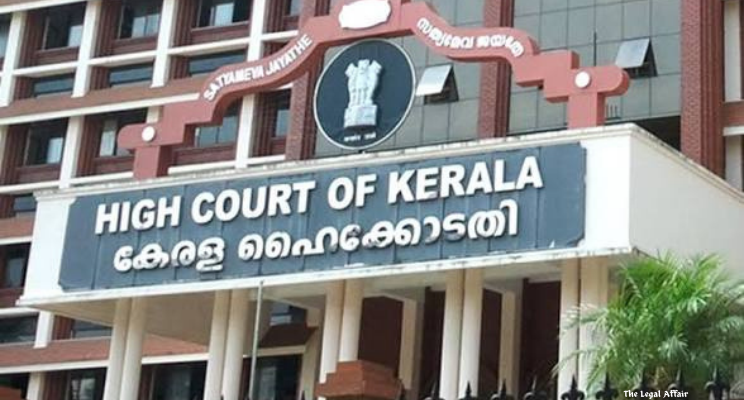
The Kerala High Court has directed the police to provide adequate protection to the life and property of a senior television journalist who allegedly faced death threats and sustained cyber harassment following her participation in a discussion concerning a public statement on women’s rights. The Court made it clear that the journalist could approach the jurisdictional Station House Officer whenever she apprehended a threat or intimidation, and that the police would be required to take necessary protective measures to safeguard her and her residence.
Justice Murali Purushothaman passed the order on November 6, 2026, while disposing of a petition filed by Big TV journalist Aparna Kurup. The matter arose after Kurup allegedly received threatening messages and faced severe online attacks following her role as the anchor of a programme titled Big Dialogue. The programme discussed a public statement made by Islamic scholar Kanthapuram A.P. Aboobacker Musaliar concerning women’s rights.
Kurup is a senior journalist working as Senior Coordinating Editor with Big TV Channel. According to her petition, the television discussion was undertaken in the ordinary course of her journalistic responsibilities. She maintained that the programme was an exercise of the freedom of the press and freedom of expression protected under Article 19(1)(a) of the Constitution of India. However, following the broadcast, she allegedly became the target of vicious cyber attacks and threats that raised concerns about her personal safety and the security of her family.
The petitioner stated that the situation did not improve even after she lodged a criminal complaint. Rather, the threats allegedly continued and intensified, prompting her to approach the Station House Officer of Ernakulam South Police Station with a representation seeking police protection. When she did not receive the level of assurance she considered necessary, she approached the High Court seeking judicial intervention.
Her petition sought protection not only for herself but also for her minor son and their property, including their residential apartment. She additionally sought a direction to the City Police Commissioner to undertake a threat assessment and take appropriate steps to prevent any physical harm. A further request was made for an effective investigation into the criminal case registered pursuant to her complaint.
The matter was considered in light of an earlier interim order passed by the High Court. During the hearing on November 6, the Court was informed that the Station House Officer was already providing protection pursuant to that order. The Government Pleader also submitted, on instructions, that the police were willing to provide adequate protection to Kurup and her residential apartment whenever required. The Court was further informed that police surveillance was being maintained near her residence.
Taking note of these submissions, the Court disposed of the petition by directing the petitioner to alert the Station House Officer if she faced any further threat or intimidation. The officer was required to provide necessary protection to her and her residence and take appropriate steps to prevent any law and order situation. The Court also directed adequate protection for the lives of Kurup and her minor son.
The case brings into focus the responsibility of the police to respond to credible threats against individuals, particularly where intimidation allegedly follows the exercise of constitutionally protected journalistic activity. Article 19(1)(a) guarantees freedom of speech and expression, which includes the freedom of the press. At the same time, the State has a responsibility to protect the life and personal security of individuals under Article 21.
The Court’s order was directed towards ensuring immediate safety and preventing a possible breach of peace. It did not adjudicate upon the truth or otherwise of the allegations made against those allegedly responsible for the threats, nor did it determine the merits of the underlying criminal complaint. Instead, it focused on the practical obligation of the police to remain accessible and provide protection whenever the petitioner apprehended danger.
Arguments of the Parties:
Aparna Kurup approached the Kerala High Court seeking protection after allegedly facing threats and cyber attacks following her anchoring of the Big Dialogue programme on Big TV. Her case was that the programme concerned a public statement made by Kanthapuram A.P. Aboobacker Musaliar on women’s rights and was conducted as part of her professional journalistic responsibilities.
The petitioner maintained that the discussion was purely journalistic in nature. It was undertaken in the exercise of the freedom of speech and expression guaranteed under Article 19(1)(a) of the Constitution. According to her, the programme addressed a matter of public interest and did not provide any justification for the threats and intimidation that allegedly followed.
Her grievance was not limited to criticism or disagreement with the programme. She alleged that she had been subjected to severe and vicious cyber attacks and had received death threats, creating a genuine apprehension about her physical safety. The alleged threats, according to the petition, had continued despite her taking steps to report the matter to the authorities.
Kurup informed the Court that she had lodged a criminal complaint in relation to the threats. However, the filing of the complaint did not bring the situation under control. She claimed that the threats had not stopped and had instead become more aggravated. This prompted her to submit a representation to the Station House Officer of Ernakulam South Police Station, requesting police protection.
The petitioner subsequently sought the intervention of the High Court because she apprehended danger not only to herself but also to her minor son. Her request extended to the protection of their property, including their residential apartment. The nature of the relief sought reflected her concern that online intimidation could potentially translate into physical harm or a disturbance at her residence.
She therefore requested the Court to direct the police to ensure the safety of her and her son. She also sought a direction to the City Police Commissioner to conduct a threat assessment and take all necessary measures to prevent any physical attack. In addition, she requested that the criminal case registered pursuant to her complaint be investigated effectively.
The petitioner’s position was that the authorities were required to respond to the threats in a meaningful and preventive manner rather than treating the filing of a criminal complaint as sufficient. Her request for protection was intended to ensure that the police remained prepared to intervene if any person attempted to intimidate or harm her or her family.
The petitioner was represented by Advocate Mansoor B.H.
On behalf of the State, the Government Pleader placed the position of the police before the Court. The State informed the Court that, pursuant to an earlier interim order, the Station House Officer of Ernakulam South Police Station was already affording protection to the petitioner.
The Government Pleader, on instructions, submitted that the Station House Officer was willing to provide adequate protection to Kurup’s life and her residential apartment whenever required. The Court was also informed that police surveillance was being maintained near her residence.
The State’s submission thus indicated that the police were prepared to respond to any further threat or intimidation and to take steps to maintain public order. The Government Pleader assured the Court that the jurisdictional police officer would provide the necessary protection as and when the petitioner approached him with information about a threat.
The submissions made by the State were significant because they addressed the immediate concern underlying the petition: whether the petitioner would have access to police assistance if the alleged threats continued or escalated. The assurance that protection would be provided, together with the information regarding surveillance near her residence, enabled the Court to issue directions centred on the continuing responsibility of the Station House Officer.
The available case summary does not indicate any detailed counter-allegations by the State concerning the petitioner’s account of the cyber attacks or the circumstances surrounding the television discussion. The State’s position, as placed before the Court, was primarily directed towards the protective measures already being taken and its willingness to provide further assistance whenever necessary.
Accordingly, the principal issue before the High Court was not a final determination of criminal liability for the alleged threats. It was whether adequate protective directions were necessary to safeguard the journalist and her minor son and to ensure that the police responded promptly if any further intimidation occurred.
Court’s Judgment:
The Kerala High Court disposed of the petition after considering the submissions made on behalf of the petitioner and the assurances given by the Government Pleader regarding police protection.
Justice Murali Purushothaman was informed that the Station House Officer of Ernakulam South Police Station had already begun providing protection to Kurup pursuant to an earlier interim order passed by the Court. The Government Pleader further submitted that the officer was willing to ensure adequate protection to the petitioner and her residential apartment whenever required. The Court also took note of the submission that police surveillance was being maintained near her residence.
In view of these circumstances, the Court considered it appropriate to clarify the procedure that the petitioner could follow if she faced any further threat or intimidation. It observed:
“In the circumstances it will be open to the petitioner to alert the 4th respondent [SHO] in case of any threat or threat or intimidation from any person, and in such event, the 4th respondent shall afford necessary protection to the petitioner and her residence and, take all the necessary steps to avoid any law and order situation.”
The direction places the responsibility on the jurisdictional police officer to respond whenever the petitioner brings a threat or intimidation to his notice. Rather than limiting the protection to the measures already in place, the Court made it clear that the Station House Officer must provide necessary assistance if any fresh incident occurs.
The order is significant because police protection is not merely about maintaining a visible presence at a person’s residence. It also involves ensuring that the concerned authorities remain responsive to new information about possible threats and take appropriate steps to prevent harm. By permitting Kurup to alert the Station House Officer whenever she apprehended danger, the Court established a direct channel through which she could seek immediate intervention.
The Court also expressly referred to the protection of the petitioner’s residence. This aspect was relevant because the alleged threats had created concerns extending beyond her professional activities to her personal and family life. Protection of the residence was therefore included in the directions, alongside protection of the petitioner herself.
Importantly, the Court’s direction was not confined to responding after an incident had taken place. The requirement to take necessary steps to avoid a law and order situation reflects the preventive purpose of police protection. The police were expected to act in a manner that would reduce the possibility of intimidation escalating into physical confrontation or a disturbance.
The Court also directed adequate protection for the life of Kurup’s minor son. This addressed the petitioner’s specific concern that the alleged threats could affect her family members as well. The order therefore recognised the need to secure the safety of both the journalist and her child.
The constitutional context of the petition is also relevant. Article 19(1)(a) of the Constitution guarantees every citizen the right to freedom of speech and expression. The freedom of the press, although not separately enumerated as an independent fundamental right, is recognised as an essential component of this guarantee. Journalists must be able to report, question, moderate discussions and examine matters of public interest without being subjected to unlawful threats or physical intimidation.
The programme anchored by Kurup concerned a public statement relating to women’s rights. Such subjects can generate strong public reactions and disagreement. However, disagreement with a journalist’s views, the content of a programme or the decision to discuss a particular public statement cannot, by itself, justify threats or intimidation. The constitutional protection of expression would be weakened if journalists were compelled to abandon legitimate professional activities because of the possibility of retaliation.
At the same time, the Court’s order should be understood within its precise scope. The High Court did not make a final finding that any particular individual was responsible for the alleged threats. Nor did it determine whether the alleged cyber attacks constituted specific criminal offences. Those questions would have to be examined through the appropriate investigative and legal processes.
The Court’s intervention was instead concerned with the immediate need to protect the petitioner and her family. The order ensured that the police could not treat the earlier provision of protection as a reason to remain inactive if further threats were reported. The Station House Officer was specifically required to provide necessary protection whenever the petitioner alerted him to any threat or intimidation.
Article 21 of the Constitution, which protects life and personal liberty, provides an important constitutional background to such protective measures. The protection of life is not limited to the absence of unlawful physical interference by the State. It also informs the State’s responsibility to take reasonable steps within the law when a person’s safety is threatened. In appropriate circumstances, police protection may therefore become necessary to prevent foreseeable harm.
The Supreme Court has recognised the importance of safeguarding individual liberty and ensuring that the State fulfils its legal responsibilities in protecting citizens. In National Human Rights Commission v. State of Arunachal Pradesh, the Supreme Court emphasised the State’s obligation to protect the life and liberty of individuals within its territory. The broader constitutional principle is that the authorities cannot remain indifferent where a genuine threat to life or personal security is brought to their attention.
Similarly, in People’s Union for Civil Liberties v. Union of India, the Supreme Court reiterated the significance of constitutional protections and the responsibility of public authorities to act within the framework of fundamental rights. These principles provide the broader setting in which police protection requests are considered, although the present order, as described in the case summary, does not indicate that the High Court relied on these decisions.
The High Court’s approach was also consistent with the practical requirements of maintaining public order. Where an individual reports threats or intimidation, the police must assess the situation and take measures appropriate to the circumstances. The nature and extent of protection may depend on the information received, the credibility of the apprehension and the possibility of an actual disturbance. In this case, the State itself informed the Court that surveillance was being maintained near the petitioner’s residence and that the Station House Officer was willing to provide protection whenever necessary.
The Court’s directions therefore gave effect to the assurance placed on record by the State while making the officer’s responsibility clear. The petitioner was permitted to contact the Station House Officer if she encountered any further threat, and the officer was directed to provide necessary protection to her and her residence. The police were also required to take appropriate steps to avoid any law and order situation.
The petition had additionally sought a direction to the City Police Commissioner to conduct a threat assessment and ensure that no physical harm was caused to the petitioner. It also sought effective investigation of the criminal case registered following her complaint. However, the final directions set out in the available summary primarily concern police protection and the prevention of a law and order situation. No separate finding on the merits of the investigation or a detailed direction concerning its progress has been indicated.
The distinction is important. The disposal of the police protection petition should not be understood as a determination of the criminal complaint itself. The allegations of death threats and cyber attacks remain matters for investigation and assessment by the competent authorities. Likewise, the Court did not decide any question of criminal liability arising from the online conduct allegedly directed against the petitioner.
By disposing of the petition, the High Court brought the proceedings to a close while preserving the petitioner’s ability to seek immediate police assistance if the situation deteriorated. The order also made clear that protection extended to her minor son and residential premises.
The decision highlights the responsibility of law enforcement authorities to respond to threats against individuals and to prevent intimidation from developing into a law and order problem. It is particularly relevant in circumstances where a journalist alleges that threats have followed the exercise of professional duties involving discussion of a public issue.
Ultimately, the Kerala High Court directed the Station House Officer of Ernakulam South Police Station to provide adequate protection to Aparna Kurup and her minor son and to safeguard her residence whenever necessary. The petitioner was permitted to alert the officer in the event of any further threat or intimidation, and the police were required to take appropriate steps to prevent a law and order situation. The petition was accordingly disposed of.
The order reinforces an important principle: freedom of expression cannot be meaningfully exercised if journalists are left without protection when they face credible threats because of their professional work. While criticism and disagreement remain part of public discourse, intimidation and threats to personal safety require an appropriate response from the authorities. The Court’s directions ensure that the petitioner has access to police protection whenever the need arises, without prejudging the allegations or the outcome of the criminal investigation.