


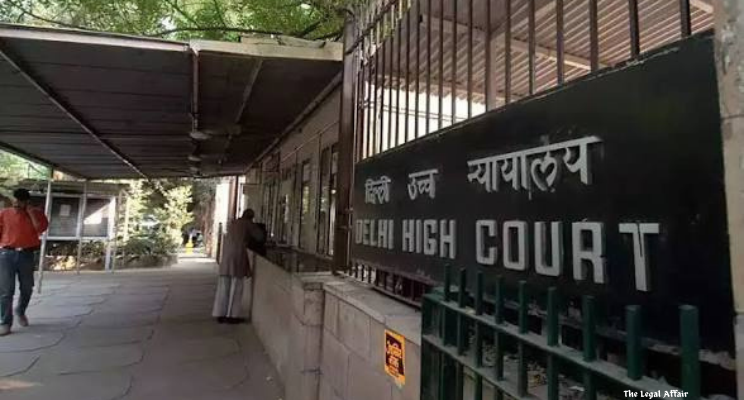
Introduction:
The Delhi High Court has ordered the transfer of a matter to another Bench after expressing strong displeasure over the conduct of an advocate who repeatedly remarked, “I cry my beloved justice system,” during a hearing and walked out of the courtroom while proceedings were still underway. Justice Manmeet Pritam Singh Arora described the advocate’s behaviour as reckless and reprehensible, observing that it amounted to misconduct and undermined the dignity of the judicial process. The Court also rejected the advocate’s subsequent apology, finding that it did not appear to be heartfelt or genuine.
The incident occurred during the hearing of a petition filed by 91-year-old Arjun Dev Bhatia, who had challenged a trial court order permitting his daughter-in-law to enter his residential property in Pitampura as alternative accommodation in proceedings under the domestic violence law. The underlying dispute concerned the daughter’s-in-law right to residential accommodation after she faced eviction from a rented flat where she had been living with her husband and two children.
The trial court had passed the disputed order on October 23, directing that the daughter-in-law be permitted to enter Bhatia’s Pitampura house. Bhatia challenged the direction before the High Court, pointing out that he was the absolute owner of the property and was himself residing there. The dispute therefore raised questions concerning the balance between a woman’s entitlement to residence under the Protection of Women from Domestic Violence Act, 2005, and the property and residential rights of an elderly family member.
During the hearing, the High Court explored whether the immediate residential difficulty could be addressed without requiring the daughter-in-law to enter Bhatia’s house. The Court asked whether the elderly petitioner would be willing to pay monthly rent of ₹27,500 so that his daughter-in-law could continue residing in the rented accommodation, or whether he could provide another residence of equivalent standard.
Bhatia’s counsel submitted that his client was willing to pay the monthly rent and deposit an advance equivalent to six months’ rent. However, counsel for the daughter-in-law informed the Court that she had already vacated the rented premises and handed over the keys to the landlord. This assertion was disputed by counsel appearing for her husband. The Court further noted that the daughter-in-law subsequently stated that she did not wish to return to rented accommodation even if Bhatia agreed to pay the rent.
The conflicting submissions concerning the status of the rented flat led the Court to issue directions intended to verify whether possession had actually been handed over to the landlord. Bhatia was directed to deposit an amount equivalent to six months’ rent, while the husband was directed to clear any outstanding rent payable to the landlord within two days. The landlord was also issued notice and directed to maintain status quo concerning possession of the rented premises.
The hearing, however, took an unexpected turn after the Court dictated its order. The advocate representing one of the parties repeatedly made the remark, “I cry my beloved justice system,” waved his hands and began walking out of the courtroom even though the proceedings had not concluded. The Court paused the hearing and called him back, expressing its surprise and displeasure at his conduct.
Justice Arora observed that an advocate was expected to maintain the highest regard for the judicial process and could not express a loss of faith in the justice system merely because a particular order was not favourable to the advocate or the client. The Court also questioned the advocate’s apparent alignment with the client’s interests at the expense of professional obligations towards the institution.
The Court ultimately concluded that the advocate’s conduct had made it appropriate to transfer the case to another Bench in order to protect the dignity of the Court and the judicial system. It clarified, however, that the directions already issued to the petitioner, the landlord and the Additional Standing Counsel (Criminal) would continue to operate. The matter was directed to be listed before another Bench, subject to the orders of the Judge-in-Charge (Criminal Side).
The incident highlights the importance of professional discipline and courtroom decorum in the administration of justice. Advocates are entitled to disagree with judicial observations and orders and may challenge them through legally recognised procedures. However, such disagreement must be expressed through appropriate professional conduct rather than gestures or remarks that disrupt judicial proceedings.
Arguments of the Parties:
The petitioner, Arjun Dev Bhatia, approached the Delhi High Court challenging the trial court’s order dated October 23, which permitted his daughter-in-law to enter his house in Pitampura as alternative accommodation in the domestic violence proceedings. Bhatia, aged 91, asserted that he was the absolute owner of the property and was residing there himself. The direction therefore directly affected his residential arrangements and his ability to enjoy his own home.
The petitioner’s challenge arose in the context of the daughter-in-law’s request for accommodation after she faced eviction from a rented flat where she had been living with her husband and two children. The trial court had permitted her to enter Bhatia’s house as an alternative arrangement. Bhatia questioned that direction before the High Court, seeking relief from an order that would require him to accommodate his daughter-in-law in his own residence.
During the hearing, the Court explored whether the residential dispute could be resolved through a financial arrangement instead. It specifically asked whether Bhatia would be willing to pay ₹27,500 per month towards rent so that his daughter-in-law could continue residing in the rented flat. The Court also considered whether he could provide alternative accommodation of an equivalent standard.
In response, counsel appearing for Bhatia submitted that the petitioner was willing to pay the monthly rent of ₹27,500. The counsel further stated that Bhatia was prepared to deposit an advance amount equivalent to six months’ rent. This submission indicated that the petitioner was willing to explore a financial solution to the accommodation dispute rather than have the daughter-in-law enter his residence.
The willingness to pay rent was relevant to the Court’s attempt to examine whether the immediate housing requirement could be addressed through an alternative arrangement. It also provided a possible basis for preserving the daughter’s-in-law residential security while considering the petitioner’s objection to the trial court’s direction.
On behalf of the daughter-in-law, counsel submitted that she had already vacated the rented flat and handed over its keys to the landlord. This position was disputed by counsel representing her husband. The disagreement concerning the actual status of possession became an important factual issue because the proposed arrangement depended on whether the rented premises remained available for occupation.
The Court also noted that the daughter-in-law subsequently stated that she did not wish to return to the rented accommodation even if Bhatia agreed to pay the monthly rent. This submission complicated the possibility of resolving the dispute through the payment of rent, as the proposed alternative would not necessarily address her stated preference regarding accommodation.
The changing position concerning the handing over of keys prompted the Court to make specific observations. It expressed concern that the stand regarding delivery of possession to the landlord was being changed repeatedly despite the Bench asking direct questions about the status of the premises.
The Court observed:
“It is extremely unfortunate that the stand on handover of keys to the landlord is being changed repeatedly by respondent no. 2, when the Court has specifically enquired about the status of handover of the possession of the flat to the landlord.”
In order to verify the position, the Court directed the landlord to maintain status quo concerning possession of the rented flat and issued notice to him. The landlord was also directed to appear before the Court on November 5 at 10:30 AM. These directions were intended to enable the Court to ascertain whether the premises had actually been vacated and possession had been handed over.
The husband was also directed to deposit any arrears payable to the landlord within two days. Separately, Bhatia was directed to deposit an amount equivalent to six months’ rent with the Court. These directions sought to preserve the relevant financial and possession-related arrangements while the Court examined the competing positions.
The conduct of the advocate who made the repeated courtroom remarks became a separate and significant issue during the hearing. After the order had been dictated, the advocate repeatedly stated, “I cry my beloved justice system,” waved his hands and began leaving the courtroom while proceedings were still in progress. The Court called him back and questioned the propriety of his behaviour.
The available case summary does not set out a detailed substantive submission by the advocate explaining or justifying these remarks. It records that the Court rejected the apology subsequently offered, finding that it lacked sincerity and appeared to be mere lip service.
The State’s position, as reflected in the case summary, is limited to the participation of the Additional Standing Counsel (Criminal), to whom the Court issued directions. No detailed State argument on the merits of the accommodation dispute or the advocate’s conduct has been provided. Accordingly, the central submissions recorded during the hearing concerned Bhatia’s willingness to pay rent, the daughter’s-in-law assertion that she had vacated the rented flat, and the dispute over whether the keys had been handed over to the landlord.
Court’s Judgment:
The Delhi High Court’s order addressed two connected but distinct aspects of the proceedings. The first concerned the accommodation dispute between the elderly petitioner and his daughter-in-law. The second arose from the advocate’s conduct during the hearing, which the Court considered sufficiently serious to warrant transferring the matter to another Bench.
On the accommodation issue, the Court attempted to explore a practical alternative to the daughter-in-law entering Bhatia’s residential property. It asked whether the petitioner would be willing to pay monthly rent of ₹27,500 to enable her to remain in the rented accommodation or provide another residence of equivalent standard.
Bhatia’s counsel informed the Court that the petitioner was willing to pay the monthly rent and deposit an advance equivalent to six months’ rent. However, the daughter-in-law’s counsel stated that she had already vacated the rented flat and handed over its keys to the landlord. Since this position was disputed by the husband’s counsel, the Court considered it necessary to verify the actual status of possession.
The Court was particularly concerned that the position concerning the handover of keys appeared to be changing despite repeated questions from the Bench. It observed that the stand of respondent no. 2 regarding the handing over of possession was being altered repeatedly. This uncertainty was material because the availability of the rented premises affected the feasibility of the alternative accommodation arrangement being considered.
Rather than proceeding on the basis of conflicting oral submissions, the Court issued directions to preserve the position of the rented premises and obtain clarification from the landlord. It directed the landlord to maintain status quo regarding possession of the flat and issued notice requiring his appearance before the Court on November 5 at 10:30 AM.
The direction to maintain status quo was intended to prevent any further change in the possession of the premises before the Court could examine whether the daughter-in-law had actually vacated it. The landlord’s presence would assist the Court in verifying the factual position concerning the alleged handover of keys.
The Court also directed Bhatia to deposit an amount equivalent to six months’ rent. In addition, the husband was directed to deposit any arrears payable to the landlord within two days. These directions were intended to secure the financial aspects of the proposed arrangement while the factual position regarding the rented accommodation was being examined.
The broader legal context of the accommodation dispute lies in the Protection of Women from Domestic Violence Act, 2005. Section 17 of the Act recognises the right of a woman in a domestic relationship to reside in a shared household, subject to the provisions of the law. Section 19 empowers a Magistrate to pass residence orders, including directions restraining dispossession, requiring alternative accommodation or payment of rent in appropriate circumstances.
The right to residence under the Act is an important protective measure intended to prevent women from being rendered homeless as a consequence of domestic violence or disputes within the family. At the same time, the application of these provisions requires courts to examine the facts of each case, including the nature of the property, the parties’ living arrangements and the availability of suitable accommodation.
In S. Vanitha v. Deputy Commissioner, Bengaluru Urban District, the Supreme Court considered the interaction between the rights of senior citizens under the Maintenance and Welfare of Parents and Senior Citizens Act, 2007, and a woman’s claim to residence under the Domestic Violence Act. The Court emphasised that the competing statutory protections must be harmoniously construed rather than allowing one enactment to automatically defeat the other.
The present case similarly involved the need to consider the residential requirements of a daughter-in-law alongside the rights of an elderly person who claimed absolute ownership of and residence in the property. However, the available summary does not indicate that the High Court finally decided the competing statutory rights or conclusively determined whether the daughter-in-law could lawfully enter the Pitampura property. Its directions were primarily concerned with examining the alternative accommodation proposal and verifying the status of the rented flat.
The more significant development during the hearing concerned the advocate’s behaviour after the order had been dictated. The Court recorded that the advocate repeatedly remarked, “I cry my beloved justice system,” waved his hands and began walking out of the courtroom while the hearing was still underway.
Justice Manmeet Pritam Singh Arora paused the proceedings and called the advocate back. The Court expressed surprise and strong displeasure, describing the conduct as reckless and reprehensible. It considered the behaviour to amount to misconduct and observed that an advocate was expected to maintain the highest regard for the process of law.
The Court rejected the apology offered by the advocate. It found that the apology was neither heartfelt nor genuine and appeared to be merely “just lip service”. This observation reflected the Court’s assessment that an apology must demonstrate genuine recognition of the impropriety of one’s conduct rather than serve as a formal expression intended only to bring an uncomfortable situation to an end.
The Court further observed that an advocate could not express a loss of faith in the judicial system simply because an order did not suit the advocate or the client’s interests. The legal profession requires advocates to represent their clients firmly, but that responsibility does not displace their independent professional obligations towards the court and the administration of justice.
An advocate’s duty is not limited to advancing the client’s case by every possible means. The advocate is also an officer of the court and is expected to assist in the orderly administration of justice. This requires respect for judicial proceedings, compliance with courtroom discipline and the ability to disagree with judicial decisions through lawful and professional means.
The Court also expressed concern that the advocate’s conduct appeared to suggest complete alignment with the client’s interests in an attempt to secure favourable orders. It further remarked that the advocate might attempt to influence the client to make frivolous allegations against the Judge and the judicial system.
These observations were serious because they went beyond the immediate courtroom disruption. The Court considered whether the advocate’s conduct could undermine confidence in the judicial process and affect the dignity of the institution. It emphasised that disagreement with an order cannot justify behaviour that brings the court or the justice system into disrepute.
The professional obligations of advocates are governed by the Advocates Act, 1961, and the rules framed by the Bar Council of India. Section 35 of the Advocates Act provides for disciplinary action where an advocate is found guilty of professional or other misconduct. The Bar Council of India Rules also prescribe standards of professional conduct and etiquette, including duties towards the court.
These standards require advocates to maintain respect towards the court and to conduct themselves in a manner consistent with the dignity of the profession. An advocate may challenge an order, seek clarification, make submissions or pursue an appropriate appellate remedy. However, courtroom conduct must remain within the bounds of professional discipline.
The Supreme Court has repeatedly stressed that the legal profession carries responsibilities extending beyond the private interests of individual clients. In R.K. Anand v. Registrar, Delhi High Court, the Supreme Court discussed the importance of professional standards and the responsibility of advocates to uphold the integrity of the justice system. The Court emphasised that conduct undermining the administration of justice cannot be treated as a matter of private disagreement between counsel and the Bench.
Similarly, in Bar Council of Maharashtra v. M.V. Dabholkar, the Supreme Court recognised that the legal profession has a public character and that professional misconduct must be assessed in light of the duties advocates owe to the justice system. These broader principles explain why courtroom decorum is not merely a matter of personal courtesy but an essential part of maintaining public confidence in judicial institutions.
The Delhi High Court’s observations must nevertheless be distinguished from a formal disciplinary finding by a Bar Council. The Court described the advocate’s behaviour as misconduct and expressed strong disapproval, but the principal direction recorded in the supplied case summary was the transfer of the matter to another Bench. No separate disciplinary reference or final punishment against the advocate has been specified.
The Court ultimately held that, in order to protect the dignity of the Court and the judicial system, it was appropriate to transfer the matter to another Bench. It stated:
“In these circumstances, to protect the dignity of this Court and the judicial system, this Court deems it appropriate to transfer this matter to another Bench.”
The transfer was therefore directed in the interest of preserving the institutional dignity of the Court and ensuring that the proceedings could continue before another Bench. It was not recorded as a decision on the merits of Bhaia’s challenge to the trial court’s accommodation orde