


Introduction:
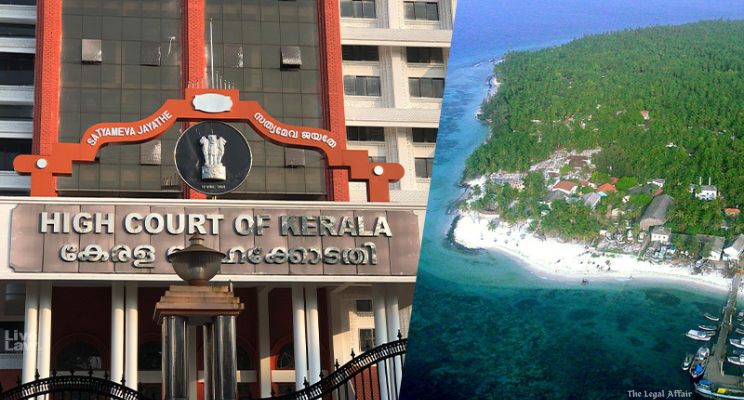
In Ajas Akber P. I. v. Union Territory of Lakshadweep & Others (WP (PIL) 48/2025), a Public Interest Litigation filed by the President of the National Students’ Union of India (Lakshadweep), the Kerala High Court, led by Chief Justice Nitin Jamdar and Justice Basant Balaji, on Monday, June 9, 2025, temporarily stayed an administrative order mandating Hindi as the compulsory third language in schools across Lakshadweep.
This directive had effectively removed existing options such as Arabic and Mahal—languages deeply rooted in the local culture, particularly on Minicoy Island. The Court observed that “a language holds deep cultural significance, and any changes could have serious ramifications,” and questioned the absence of any pre-implementation study or stakeholder consultation. It also noted that the order was issued through an office memorandum rather than via a formal and reasoned policy decision.
While the administration cited the National Education Policy (NEP) 2020 and associated curriculum frameworks, the Court emphasized that the NEP prohibits coercive language imposition and upholds the principle of choice for states, regions, and students. With 26 of the 34 Lakshadweep schools following the Kerala SCERT curriculum—which mandates Arabic under the Kerala Education Rules—the petitioners argued that both cultural and constitutional rights were being violated.
The Court adjourned further proceedings to July 2025 and directed that existing language options be retained unless proper consultation and localized studies are conducted by the administration.
Arguments of the Petitioners (Ajas Akber and NSUI):
Represented by Advocates Reena Sharon Suresh and K.P.S. Suresh, the petitioners argued that the abrupt removal of Arabic and Mahal infringed upon Lakshadweep’s constitutional protections under Articles 29 and 30, which safeguard the cultural and educational rights of minorities. They stressed that Mahal is used exclusively on Minicoy Island and that Arabic holds significant cultural, religious, and economic relevance—especially in Islamic education and overseas employment.
Given the absence of private or aided schools on the islands, the administrative order would leave no alternative for students, thereby threatening the preservation of minority identity and future prospects. The petitioners criticized the lack of stakeholder engagement, data analysis, and due process in enacting such a culturally consequential decision.
Arguments of the Respondent (Lakshadweep Administration):
The administration, through its counsel, defended the move as consistent with NEP 2020 and the National Curriculum Frameworks of 2022 and 2023, which promote the three-language formula—two of which must be Indian languages. It argued that the office order was part of aligning the local curriculum with national educational goals.
The State claimed that the new policy was scheduled for implementation in July and that there was no immediate harm requiring judicial intervention. However, the Court pointed out that no region-specific consultations or linguistic impact assessments had been conducted, thereby casting doubt on the order’s legitimacy and procedural soundness.
Court’s Analysis & Judgment:
While acknowledging the government’s autonomy over educational policy, the Court emphasized that decisions impacting cultural identity must be carefully reasoned and participatory. It held that the issuance of such a significant change via an office memorandum was procedurally inadequate.
Citing the NEP’s own stress on flexibility, inclusivity, and local choice, the Court found the exclusion of Mahal and Arabic—especially without community input or academic study—both arbitrary and constitutionally problematic. It highlighted that Arabic remains a prescribed subject under the Kerala Education Rules, and its removal in 26 of the 34 SCERT-affiliated Lakshadweep schools would cause significant disruption.
Justice Jamdar remarked that language policy changes must be handled with cultural sensitivity. The Court stayed the order, directed schools to continue offering existing language options, and urged the administration to undertake a thorough consultation and data-backed study before reconsidering the issue. A fresh hearing is scheduled for late July 2025.