


Introduction:
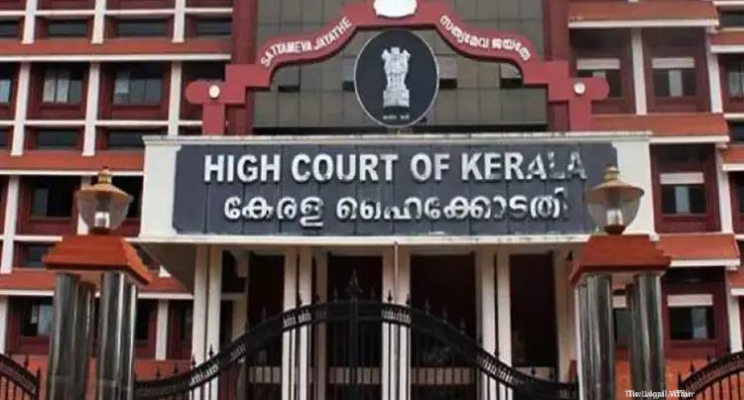
This contempt petition arose from alleged non-compliance with a prior judgment of the Kerala High Court directing the constitution of a Management Unit for Conservation of the Ashtamudi Wetland, and the matter was heard by a Division Bench comprising Chief Justice Nitin Jamdar and Justice Syam Kumar V M, wherein the petitioner, Adv. Boris Paul, approached the Court alleging that despite clear directions issued in July 2025, the State Wetland Authority and concerned government officials had failed to constitute the Management Unit as mandated, thereby frustrating the purpose of the earlier judgment aimed at strengthening institutional mechanisms for wetland conservation; the respondents included senior government officials and authorities responsible for implementing the Wetlands (Conservation and Management) Rules and the specific judicial directions issued earlier, and the Court had already indicated in prior proceedings that if the notification constituting the Management Unit was not issued before 7 January, the Secretary of the State Wetland Authority would be required to remain personally present, reflecting the seriousness with which the Court viewed continued non-compliance; when the matter was taken up on 7 January, the Government Pleader submitted that the issuance of a formal notification had been delayed because, according to the State, constitution of the Management Unit would necessitate the creation of new posts, which required administrative approvals and financial sanctions, thereby implying that procedural and budgetary hurdles had prevented immediate compliance, whereas the petitioner contended that such justification was merely an excuse to delay compliance with clear judicial directions, and that environmental protection, especially of ecologically sensitive wetlands like Ashtamudi, cannot be postponed on the ground of bureaucratic convenience, particularly when the Court’s earlier judgment had already specified the composition of the Management Unit.
Arguments:
On behalf of the petitioner, it was argued that the judgment delivered in July 2025 had clearly laid down the structure and composition of the Management Unit, which was primarily to consist of existing government officials and nominees of the State, and therefore the claim that new posts had to be created was contrary to the express language of the judgment, and that the deliberate or negligent misinterpretation of judicial directions amounted to willful disobedience, attracting contempt jurisdiction, especially when the objective of constituting the Management Unit was to ensure on-ground conservation, monitoring, and coordinated action for protecting the Ashtamudi Wetland, which is internationally recognized and environmentally sensitive; it was further submitted that delays in institutional setup directly undermine conservation efforts and allow continued ecological degradation, and therefore courts must adopt a strict approach when executive authorities fail to comply with time-bound environmental directions; the petitioner also stressed that repeated adjournments and administrative explanations weaken the authority of judicial orders and embolden non-compliance, thereby necessitating personal accountability of senior officers to ensure prompt implementation; on the other hand, the State, through the Government Pleader, submitted that there was no intention to defy the Court’s judgment and that the delay was purely administrative, based on an understanding that the constitution of the Management Unit would involve appointing a Chief Executive Officer and supporting technical staff, which in turn would require creation of sanctioned posts and allocation of funds, processes that take time under service and financial rules, and it was argued that without proper staffing and administrative sanction, issuing a notification might result in an ineffective or legally unsustainable structure; the respondents thus sought to convey that they were acting in good faith and that the delay was procedural rather than deliberate, and that steps were being taken to move forward once clarity on staffing and funding was achieved, while also implying that environmental governance requires not only legal directions but also practical administrative capacity to implement those directions; however, this submission was met with pointed observations from the Bench, which indicated that the State’s understanding was flawed and that the earlier judgment did not condition the constitution of the Management Unit on prior creation of new posts, and that such interpretation effectively stalled compliance with the very first step mandated by the Court.
Court’s Judgment:
The Division Bench categorically clarified that the submission of the Government Pleader was based on an incorrect reading of the earlier judgment, and orally observed that the composition of the Management Unit, as directed earlier, was almost entirely drawn from existing government officials and representatives to be nominated by the State, and that the Chairperson of the Committee was the District Collector, an officer already in position, while the Chief Executive Officer was a full-time salaried professional already holding office, thereby negating the argument that new appointments were required before constitution of the body; the Court further clarified that the “Member Secretary” referred to in the earlier judgment was the Member Secretary of the State Wetland Authority itself, and not a newly created post, making it abundantly clear that no new cadre or post was necessary to issue the notification constituting the Management Unit, and therefore, there existed no administrative or legal obstacle to immediate compliance with paragraph 26 clause (a) of the earlier judgment, which specifically dealt with the constitution of the Management Unit; addressing the argument regarding the technical and professional team envisaged to function under the Chief Executive Officer, the Court observed that such staffing was a subsequent step contemplated under the judgment and did not constitute a pre-condition for constituting the Management Unit itself, and that even for such technical staff, the State could initially draw personnel from existing departments or, if genuinely required, later consider creation of posts, but that cannot be used as a justification to delay the foundational step of setting up the Management Unit; the Bench thus emphasized a step-by-step compliance approach, stating in substance that the first obligation is to constitute the body as directed, and only thereafter to proceed with additional administrative strengthening, and the Court’s oral remarks reflected concern that executive authorities often delay compliance by projecting downstream administrative actions as threshold requirements, thereby defeating the very intent of judicial monitoring in environmental matters; taking note of these observations, the Government Pleader submitted that necessary orders constituting the Management Unit would be issued during the course of the day, and in view of this assurance, the Court posted the matter for the next day to review compliance, thereby retaining close supervisory control to ensure that its directions are not reduced to empty assurances; while the Court did not at this stage impose penalties or record a finding of contempt, its strong clarification and insistence on immediate action underscore the judiciary’s increasing intolerance for administrative delays in environmental governance, particularly where wetlands, biodiversity, and ecological balance are concerned, and the order reinforces the principle that executive agencies must implement judicial directions in letter and spirit, without inventing procedural obstacles not contemplated by the judgment.