


Introduction:
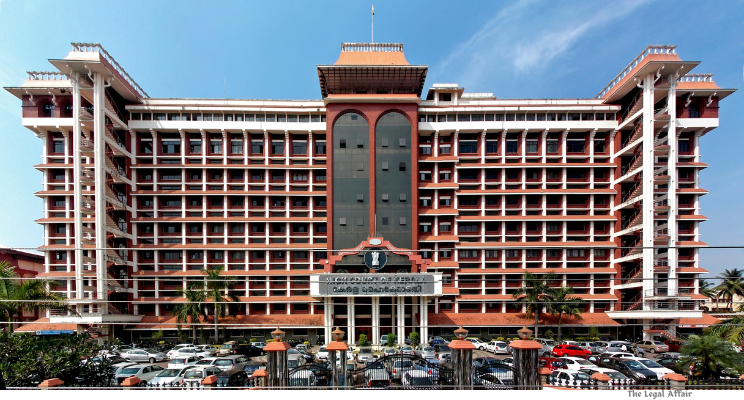
In the case Badusha v. State of Kerala, Bail Application No. 6388 of 2025, the Kerala High Court has delivered a significant ruling interpreting the phrase “immediate official superior” under Section 42(2) of the Narcotic Drugs and Psychotropic Substances Act, 1985 (NDPS Act). Justice Bechu Kurian Thomas held that the term must be construed contextually rather than adhering to a rigid bureaucratic hierarchy. The decision came while dismissing a bail application filed by a petitioner charged under Sections 22(c) and 29(1) of the NDPS Act for the alleged possession of 108.938 grams of MDMA. The petitioner contended that the search and seizure carried out by the District Anti-Narcotic Special Action Force (DANSAF), functioning under the jurisdiction of the City Police Commissioner, was vitiated due to a procedural lapse—specifically, the non-compliance of the statutory requirement under Section 42(2) of the NDPS Act. The petitioner claimed that the City Police Commissioner was not the correct authority to be informed, as the Assistant Commissioner of Police was the direct officer-in-charge of DANSAF. However, the Court rejected this argument, observing that the City Police Commissioner is the functional head of DANSAF in urban areas and thus qualifies as the ‘immediate official superior’ in the context of the anti-narcotics squad.
Arguments by the Petitioner:
The petitioner, represented by Advocates Arjun S, Chithra Mol R, and Anju P V, argued that the procedural safeguard under Section 42(2) had been violated, thereby rendering the search illegal and vitiating the entire investigation. They contended that DANSAF, being an operational wing under the direct supervision of the Assistant Commissioner of Police (ACP), ought to have submitted the required information to the ACP, and not the City Police Commissioner. The counsel stressed that the NDPS Act places great emphasis on procedural safeguards due to the stringent nature of its provisions. In particular, Section 42(2) requires any officer receiving information regarding commission of an offence involving narcotics to reduce it to writing and send it to the ‘immediate official superior’ within a prescribed timeframe. The petitioner relied on various precedents, including Karnail Singh v. State of Haryana [(2009) 8 SCC 539], arguing that failure to comply with this provision strikes at the root of a fair investigation. It was submitted that while the 2001 amendment had relaxed the time frame, it did not dilute the statutory mandate to inform the correct superior authority. The petitioner urged the Court to view the alleged procedural lapse as substantial enough to grant bail, especially in light of the relatively small quantity involved.
Arguments by the Respondent:
The respondent-State, represented by Public Prosecutor Noushad K A, countered the petitioner’s claims by asserting that there had been no procedural lapse whatsoever. It was argued that DANSAF, although operationally led by the ACP, is ultimately governed by the City Police Commissioner in urban jurisdictions. Therefore, communication of information to the Commissioner constitutes valid compliance with Section 42(2). The prosecution emphasized that the Supreme Court in Union of India v. Md. Nawaz Khan [(2021) 10 SCC 100] and Karnail Singh had clarified that procedural violations under Section 42 do not automatically vitiate the prosecution’s case unless there is prejudice caused to the accused. Moreover, the Court was reminded that the amended provision now allows 72 hours for compliance, thus giving room for flexibility. The prosecution contended that the bail application was premature and that the trial was the appropriate stage to examine whether there had been any procedural deficiency that could have materially affected the outcome. The State also emphasized the seriousness of the offence and the quantity of MDMA involved, contending that prima facie evidence supported the allegations and justified continued detention.
Court’s Judgment and Findings:
Justice Bechu Kurian Thomas, in his detailed judgment, held that the interpretation of the term ‘immediate official superior’ in Section 42(2) must be approached from a functional and contextual perspective rather than a rigid bureaucratic lens. He observed that DANSAF functions under the jurisdictional authority of the City Police Commissioner, who exercises control over all operational anti-narcotic units in urban settings. Therefore, information passed to the Commissioner fulfilled the statutory obligation. The Court emphasized that the purpose behind Section 42(2) is to introduce a system of accountability to avoid misuse of the sweeping powers granted under the NDPS Act. However, compliance must be viewed through a lens of practicality and context.
The Court relied on Karnail Singh and Md. Nawaz Khan to underscore the concept of ‘substantial compliance.’ In Karnail Singh, the Supreme Court had ruled that while Section 42 is mandatory, non-compliance does not automatically result in acquittal unless it prejudices the accused. Similarly, in Md. Nawaz Khan, the Supreme Court reiterated that the question of procedural lapse should be raised during trial, not at the stage of bail. Justice Thomas noted that the 2001 amendment to the NDPS Act that altered the timeline from ‘forthwith’ to ‘within 72 hours’ reflects legislative intent to allow flexibility, indicating that the requirement, while mandatory, is not inflexible. He further stated that interpreting the statute otherwise would render investigation agencies dysfunctional, especially in a hierarchical police system where functional command structures may not always align with administrative designations.
In applying this principle to the present case, the Court found that the City Police Commissioner being the overall in-charge of DANSAF, satisfies the definition of ‘immediate official superior.’ Thus, no procedural irregularity could be found in the search and seizure operation. Regarding the issue of premature bail, the Court observed that serious offences under the NDPS Act warrant a stricter threshold for granting bail, especially when the substance involved is MDMA—a synthetic drug known for its harmful psychoactive effects. The Court concluded that the allegations, supported by preliminary evidence, made out a prima facie case against the petitioner, and that the bail plea was devoid of merit.
Justice Thomas reiterated that the question of whether procedural safeguards were followed in toto must be left to the trial court to adjudicate based on the evidence adduced. Dismissing the bail plea, the Court affirmed that the statutory safeguards under Section 42(2) had been complied with substantially and functionally, thereby upholding the validity of the investigation process.