


Introduction:
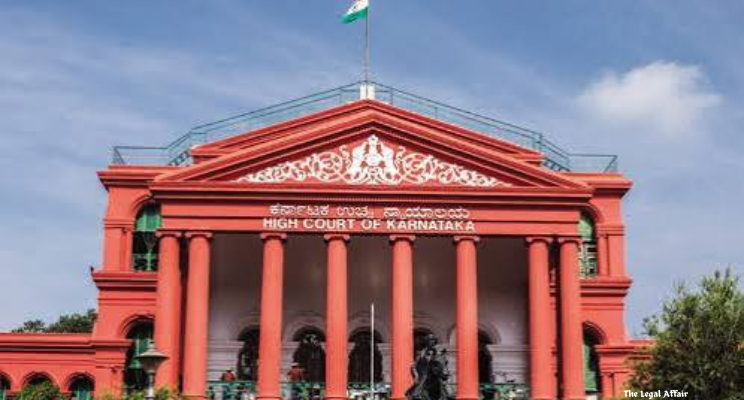
The Karnataka High Court is set to examine a challenge to the relegation of a constitutional dispute concerning the alleged exclusion of Urdu-medium and other linguistic-minority teaching posts from the State Government’s ongoing recruitment drive for 15,000 school teachers. A writ appeal filed by teacher aspirants, a registered society representing linguistic-minority interests and a minor student was mentioned before a Division Bench comprising Justice M. Nagaprasanna and Justice Hema Kulkarni at the Dharwad Bench, which directed the Registry to list the matter.
The appeal arises from an order dated September 18, 2026, passed by Justice T.M. Nadaf, who declined to entertain the original writ petition and granted liberty to the petitioners to approach the Karnataka State Administrative Tribunal (KSAT). The Single Judge took this course after the State relied upon an earlier order of a coordinate Bench in another recruitment-related matter, where similarly placed petitioners had been directed to avail themselves of the alternative remedy before the Tribunal. (Live Law)
The present appellants, however, contend that the dispute cannot be treated as an ordinary service matter. Their principal case is that the August 11, 2026 recruitment notification, which concerns the appointment of 15,000 school teachers, allegedly provides for recruitment to Kannada and English-medium posts while making no provision for Urdu-medium and other linguistic-minority schools. According to the appellants, the alleged exclusion raises questions concerning constitutional guarantees relating to equality, education, protection of linguistic interests and the State’s obligation to facilitate primary education in the mother tongue of linguistic minorities.
The original petition was filed as Asma Gori (Mogare) & Ors. v. State of Karnataka & Ors. The petitioners had earlier succeeded in obtaining consideration of their grievance when Justice Anant Ramanath Hegde, sitting at Dharwad, issued notice to the State and sought an explanation as to why a selection process had not been undertaken for linguistic minorities, including Urdu-medium schools. The Court, however, declined at that stage to stay the larger recruitment process of 15,000 teachers. (Live Law)
The dispute has its roots in the State’s August 11 recruitment notification. The petitioners allege that although Karnataka has a substantial network of Urdu-medium schools, the notification does not provide even a single post for Urdu-medium teachers, nor does it make corresponding provision for other linguistic-minority mediums such as Hindi and Marathi.
The appellants rely on figures which, according to them, demonstrate the practical consequences of the alleged exclusion. They claim that Karnataka has 4,236 Urdu-medium schools, comprising 3,934 Government schools and 302 aided schools, and that there is an existing shortage of teachers proficient in Urdu. They further refer to the Comptroller and Auditor General’s Performance Audit of 2024, which, according to the appeal, recorded that 38 of the test-checked Urdu-medium schools across eight districts did not have Urdu-proficient teachers. The appellants contend that Kannada-medium qualified teachers were deployed in such schools in their place.
The petitioners further rely upon the State’s institutional recognition of linguistic-minority education. They point out that the Directorate of Urdu and Other Linguistic Minority Schools was established in 1987, demonstrating, according to them, that Urdu-medium and other linguistic-minority education has historically been treated as a distinct component of Karnataka’s school education system.
They also rely upon the previous recruitment exercise conducted in 2022, during which Urdu-medium teachers were allegedly included. The appellants contend that the 2026 notification has departed from that practice without any disclosed change in policy or circumstances that would justify the exclusion.
The constitutional challenge is founded principally upon Articles 14, 21A, 29(1) and 350A, with the appellants also referring to Article 19. Article 29(1) protects the right of any section of citizens having a distinct language, script or culture to conserve the same, while Article 350A places a constitutional responsibility upon every State and local authority to endeavour to provide adequate facilities for instruction in the mother tongue at the primary stage for children belonging to linguistic-minority groups.
The appellants therefore argue that the issue is not merely whether individual candidates satisfy the eligibility requirements for a government teaching post. Their case is that the recruitment policy itself allegedly excludes an entire linguistic medium and, consequently, affects the educational interests of students belonging to linguistic minorities.
It is this distinction which now forms the central issue in the writ appeal. The appellants contend that the Single Judge treated the matter as a conventional recruitment dispute and applied the alternative-remedy rule without separately examining the constitutional and policy questions raised by the petition.
Arguments of the Parties:
The appellants have challenged the September 18 order primarily on the ground that the Single Judge mechanically applied the principle of alternative remedy. They argue that the availability of a remedy before KSAT cannot automatically prevent the High Court from exercising its jurisdiction under Article 226, particularly where the challenge alleges violation of fundamental rights and questions the legality or constitutional validity of a State policy.
According to the appellants, the present dispute is materially different from the earlier case relied upon by the State and accepted by the Single Judge. The earlier matter, they contend, concerned B.Com. B.Ed. graduates who were aggrieved by their own alleged ineligibility under the applicable qualification criteria. The present case, by contrast, challenges what the appellants describe as a State-wide policy decision that allegedly excludes an entire linguistic medium from the recruitment exercise.
The appellants therefore submit that the earlier coordinate Bench decision could not have been mechanically applied without examining the nature of the present challenge, the identity of the petitioners, the reliefs sought and the constitutional questions raised.
They further contend that Section 15 of the Administrative Tribunals Act, 1985, which defines the jurisdiction of a State Administrative Tribunal, principally concerns service matters. According to the appellants, their grievance cannot simply be categorised as an individual service dispute because the challenge concerns the structure of a recruitment notification and the alleged exclusion of linguistic-minority teaching posts across the State.
The appellants rely upon the established Supreme Court principle that the alternative-remedy rule is a rule of judicial discretion rather than an absolute bar to the exercise of writ jurisdiction. In Whirlpool Corporation v. Registrar of Trade Marks, (1998) 8 SCC 1, the Supreme Court held that although a High Court ordinarily exercises restraint when an effective and efficacious alternative remedy exists, the rule does not operate as a bar in cases involving enforcement of fundamental rights, violation of natural justice, proceedings without jurisdiction, or a challenge to the vires of legislation. (Sci API)
The same principle was reaffirmed in Harbanslal Sahnia v. Indian Oil Corporation Ltd., (2003) 2 SCC 107. The Supreme Court described the rule excluding writ jurisdiction on account of an alternative remedy as a rule of discretion and not compulsion. It recognised that the High Court may still exercise writ jurisdiction in appropriate cases, including those involving enforcement of fundamental rights or a challenge to the vires of legislation. (Sci API)
The appellants have also relied upon the Supreme Court’s decision in The Assistant Commissioner of State Tax v. M/s Commercial Steel Limited, Civil Appeal No. 5121 of 2021. There too, the Supreme Court reiterated that the existence of an alternative remedy is not an absolute bar to a writ petition, while identifying the recognised exceptions relating to fundamental rights, natural justice, jurisdictional errors and challenges to statutory or delegated legislation. (Science Government Portal)
The appeal accordingly asserts that the constitutional character of the present challenge brings it within the recognised exceptions. The petitioners contend that Articles 14, 21A, 29(1) and 350A are not being invoked merely as an incidental grievance but constitute the substantive foundation of the challenge to the recruitment policy.
The appellants further rely upon the fact that one of the first appellants is an Urdu teacher who, according to the appeal, has less than one year remaining before reaching the maximum permissible age of 43 years applicable to the 2B category under the impugned notification. The argument is that the recruitment process is already progressing, and continued relegation to another forum could effectively deprive such candidates of a meaningful opportunity to participate if the High Court ultimately finds merit in their constitutional challenge.
The appellants have also referred to the earlier proceedings before Justice Anant Ramanath Hegde. They point out that the same writ petition had initially been entertained, notice had been issued and the State had been called upon to explain why recruitment had not been undertaken for Urdu-medium and other linguistic-minority schools. According to the appellants, the State did not raise a preliminary objection regarding maintainability at that stage.
They argue that this procedural history demonstrates that the petition was not inherently incapable of being considered by the High Court. The appellants therefore contend that the subsequent disposal on the ground of alternative remedy, without independently examining the constitutional issues, was erroneous.
The petitioners also emphasise that the recruitment notification is not merely about the eligibility of a particular category of candidates. They argue that the absence of Urdu-medium posts has consequences for students enrolled in such schools. Their reliance on Article 21A is therefore linked to the constitutional guarantee of education, while Article 29(1) is invoked in relation to the preservation of linguistic identity. Article 350A, according to the appellants, provides a specific constitutional context concerning primary education in the mother tongue of linguistic minorities.
The appellants consequently seek setting aside of the September 18 order and restoration of the original writ petition for consideration on merits. In the alternative, they seek appropriate directions that would permit the constitutional challenge to be examined by the High Court rather than requiring the petitioners to pursue proceedings before KSAT.
The State’s position, as reflected in the proceedings before the Single Judge, is materially different. The State relied upon the availability of an efficacious statutory remedy before KSAT in matters relating to recruitment to government teaching posts. It pointed to the earlier decision of a coordinate Bench in W.P. No. 107217 of 2026, concerning B.Com. B.Ed. graduates, where the petitioners had been directed to avail themselves of the Tribunal’s jurisdiction.
On that basis, the State contended that the present petition should also not be entertained directly under Article 226 when an alternative statutory forum was available. The Single Judge accepted this procedural objection and granted liberty to the petitioners to approach KSAT for appropriate relief.
The position taken by the State also finds support in the general principle that Article 226 jurisdiction, though wide, is discretionary. The Supreme Court has repeatedly held that where a statute creates a specialised mechanism for resolving a dispute, a litigant ordinarily should pursue that remedy before invoking the extraordinary writ jurisdiction of the High Court. At the same time, the Supreme Court has consistently recognised that this is a rule of policy, convenience and judicial discretion rather than a complete ouster of Article 226 jurisdiction. (Sci API)
Thus, the State’s reliance on the KSAT remedy raises a procedural question that the Division Bench will now have to consider alongside the appellants’ contention that the case falls within the recognised exceptions to the alternative-remedy rule.
Court’s Judgment:
At the present stage, there is no final judgment by the Division Bench on the merits of the appeal. The matter was merely mentioned before Justice M. Nagaprasanna and Justice Hema Kulkarni at the Dharwad Bench, following which the Division Bench directed the Registry to list the writ appeal. The appeal is expected to come up for substantive consideration shortly.
Accordingly, the September 18 order of the Single Judge continues to operate unless modified by the Division Bench. The Single Judge had declined to entertain the writ petition and had granted liberty to the petitioners to approach KSAT. The issue before the appellate Bench will therefore include whether that approach was legally sustainable in the factual and constitutional circumstances pleaded by the appellants.
The significance of the appeal lies principally in the distinction between an ordinary service dispute and a challenge to a recruitment policy on constitutional grounds. The Single Judge’s order proceeded on the premise that the impugned notification concerns appointment of government teachers and that the petitioners consequently have an efficacious alternative remedy before KSAT. (Live Law)
The appellants, however, seek to place the dispute in a different constitutional framework. Their argument is that the alleged exclusion of Urdu-medium and other linguistic-minority posts cannot be reduced to a dispute concerning individual appointment or eligibility. According to them, the recruitment notification allegedly affects the availability of teachers in schools serving linguistic-minority communities and therefore raises questions extending beyond conventional service jurisprudence.
Whether that distinction is sufficient to persuade the Division Bench to entertain the writ petition directly remains to be decided. The Supreme Court’s jurisprudence does make clear that the availability of an alternative remedy does not automatically extinguish the High Court’s power under Article 226.
In Whirlpool, the Supreme Court explained that the power under Article 226 is plenary and that the alternative-remedy principle represents a self-imposed restriction on its exercise rather than a statutory limitation. The Court identified recognised situations in which a writ petition may nevertheless be entertained, including enforcement of fundamental rights, breach of natural justice, lack of jurisdiction and challenges to vires. (Sci API)
The Supreme Court subsequently reaffirmed the principle in Harbanslal Sahnia, holding that the rule of exclusion on account of an alternative remedy is a rule of discretion and not compulsion. (Sci API)
In Radha Krishan Industries v. State of Himachal Pradesh, the Supreme Court again summarised the governing principles and emphasised that the existence of an alternative remedy does not by itself divest the High Court of its jurisdiction under Article 226. At the same time, the Court stressed that where an effective statutory remedy exists, the High Court ordinarily exercises restraint, subject to recognised exceptions. (Sci API)
The same approach was reiterated in The Assistant Commissioner of State Tax v. M/s Commercial Steel Limited. The Supreme Court observed that an alternative remedy is not an absolute bar and identified fundamental-rights violations, natural justice violations, lack of jurisdiction and challenges to vires as circumstances in which the writ jurisdiction may still be invoked. (Science Government Portal)
These precedents do not, however, mean that every petition containing a reference to fundamental rights must automatically bypass an alternative statutory remedy. The question remains one of judicial discretion and depends upon the actual nature of the challenge and the relief sought.
That distinction is likely to be central to the present appeal. The Division Bench may have to determine whether the petitioners’ reliance on Articles 14, 21A, 29(1) and 350A represents a genuine constitutional challenge to the recruitment policy or whether the dispute can effectively be adjudicated within the jurisdiction of KSAT.
The appellants’ reliance on Article 29(1) is particularly significant because the provision protects the right of a section of citizens having a distinct language, script or culture to conserve the same. Their argument is that the availability of education in a linguistic-minority medium has a direct relationship with preservation of language and therefore cannot be treated merely as a question concerning recruitment of individual government employees.
Article 350A is also relied upon in a specific manner. The provision directs every State and local authority to endeavour to provide adequate facilities for instruction in the mother tongue at the primary stage for children belonging to linguistic-minority groups. The appellants contend that the alleged absence of recruitment for Urdu-medium schools must therefore be examined against this constitutional obligation.
At the same time, the eventual adjudication of whether the recruitment notification actually violates these provisions has not yet taken place. The High Court’s earlier August 25 proceedings resulted in the State being asked to explain the alleged exclusion, but the Court declined to halt the ongoing recruitment process. During that hearing, the Court observed that the recruitment exercise could not simply be stalled on the assumption that Urdu-medium vacancies might exist, while also indicating that the grievance could be addressed if the petitioners ultimately succeeded. (LiveLaw)
The earlier proceedings are nevertheless relevant to the present appeal because they show that the Court had initially sought a substantive response from the State regarding the absence of recruitment for linguistic-minority schools. The subsequent question of maintainability before the Single Judge has therefore added a procedural dimension to what was originally a challenge concerning the substance of the recruitment policy.
The appellants also place emphasis on the urgency arising from the age of one of the teacher aspirants. If the maximum age applicable to the concerned category is reached during the pendency of proceedings, the candidate argues that a delayed adjudication could have practical consequences even if the constitutional challenge eventually succeeds.
The Division Bench will therefore have to consider not only the legal availability of the KSAT remedy but also the nature of the relief sought and the continuing recruitment process. The Supreme Court has repeatedly emphasised that alternative remedy is a matter of discretion, while the High Court must nevertheless ordinarily respect specialised statutory mechanisms where they provide an efficacious forum. (Sci API)
Another issue likely to arise is whether the jurisdiction of KSAT under Section 15 of the Administrative Tribunals Act extends sufficiently to deal with the nature of relief sought in the present case. The appellants say that their grievance concerns a State-wide policy and constitutional rights rather than an ordinary service dispute. The State, on the other hand, relies upon the fact that the impugned notification cncerns government recruitment and therefore falls