


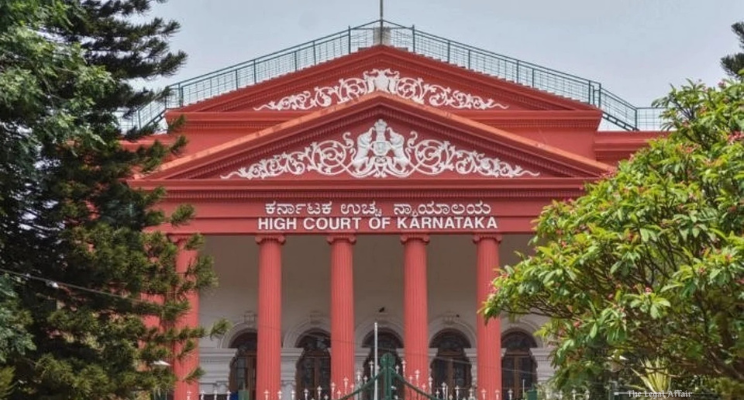
Introduction:
In a significant ruling concerning the limits of State rule-making powers under Central legislation, the Karnataka High Court in Vijay Mahantesh Mathapati & Others vs. State of Karnataka & ANR, Writ Petition No. 200873 of 2024, delivered on July 2025, struck down Rule 6 of the Karnataka State Human Rights Courts Rules, 2006. Justice S. Rachaiah presided over the matter and held that the rule was unconstitutional and inconsistent with the scheme of the Protection of Human Rights Act, 1993 (PHRA), thereby exceeding the rule-making powers conferred under Section 41 of the said Act. The Rule in question allowed victims or NGOs to directly file complaints before designated Human Rights Courts—Sessions Courts constituted under Section 30 of the PHRA—without going through the Human Rights Commission’s inquiry process. The petition was filed by nine police officers challenging both the criminal proceedings initiated against them based on a private complaint and the constitutional validity of Rule 6. The Court’s verdict clarified that this decision would apply prospectively, safeguarding pending proceedings while upholding the integrity of the legislative framework.
Arguments of the Petitioners and Respondents:
The case originated from a private complaint filed by respondent no. 2, who had been arrested on May 12, 2023, under various IPC charges including rioting, murder, and the Indian Arms Act. On January 19, 2024, while in custody, the respondent filed a private complaint before the Principal District and Sessions Judge at Vijayapura, designated as a Human Rights Court, alleging violation of his human rights by the nine petitioners—all police officials. Acting on this complaint, the Trial Court ordered an investigation by the Superintendent of Police, prompting the police officers to approach the High Court seeking to quash the proceedings and to challenge the constitutional validity of Rule 6.
Represented by Advocates V.M. Sheelavant and Sanjay Kulkarni, the petitioners contended that Rule 6 was ultra vires the Protection of Human Rights Act, 1993, a Central legislation. They argued that the PHRA established a mechanism for inquiry into human rights violations exclusively through the Human Rights Commission—National or State—as the primary adjudicatory body. They emphasized that under Sections 13 to 18 of the Act, any complaint must be examined by the Commission, which has quasi-judicial powers akin to a civil court, and only thereafter, based on the outcome, may recommend initiation of prosecution or other actions. The petitioners submitted that Rule 6 disrupted this statutory framework by allowing direct access to Human Rights Courts without any prior inquiry or recommendation by the Commission. This not only undermined the legislative scheme but was tantamount to permitting a parallel enforcement mechanism not sanctioned by the Parliament. They further argued that Section 41 of the Act—conferring rule-making powers on the State—does not authorize the framing of procedural rules which override the core provisions of the Central Act. Thus, Rule 6, by expanding access to Human Rights Courts directly, effectively created a right and a forum not contemplated by the Central statute, making it unconstitutional.
On the other hand, Senior Advocate Ashok Haranahalli, appearing for respondent no. 2, defended the validity of Rule 6. He argued that the rule was within the permissible limits of delegated legislation and aligned with the objective of ensuring greater access to remedies in human rights cases. Citing the enabling nature of Section 41, he maintained that the State was empowered to formulate rules that helped actualize the mandate of the Act. He further asserted that when human rights are violated—particularly by State actors like the police—there must be accessible judicial forums beyond the bureaucratic confines of the Commission, and Rule 6 served that democratic function. He emphasized that the Commission process was merely recommendatory and should not be allowed to act as a gatekeeper to criminal remedies.
Judgement:
However, the High Court, in a well-reasoned judgment, sided with the petitioners. Justice Rachaiah scrutinized the core provisions of the PHRA, especially Sections 13 (powers of inquiry), 14 (investigation), 17 (inquiry into complaints), and 18 (recommendation for prosecution), and observed that the Act establishes a clear mechanism: a victim must first approach the Human Rights Commission, which alone is empowered to initiate an inquiry. If the Commission finds a violation of human rights, it may recommend the initiation of proceedings to the appropriate government or authority. The Court stressed that this layered approach is deliberate and forms the backbone of the PHRA’s statutory architecture. Rule 6, by allowing direct access to Human Rights Courts without this filter, not only bypassed the mandated inquiry mechanism but also amounted to a jurisdictional expansion that was not intended by Parliament.
Further, the Court emphasized the principle of double jeopardy. It reasoned that if the Commission is already empowered to recommend prosecution upon finding a rights violation, then permitting the victim to simultaneously initiate a private criminal complaint on the same facts before a Human Rights Court could lead to conflicting proceedings, undermining procedural fairness and the coherence of the justice system. The Court drew a comparison with other legislations like the Prevention of Corruption Act or the SC/ST Act, which have their own defined offences and procedural frameworks—something the PHRA lacks. The Act does not define any stand-alone offences but instead provides for remedial processes through inquiry and recommendation. Hence, Human Rights Courts cannot be treated as original forums of jurisdiction for initiating complaints; their role is contingent on a prior inquiry by the Commission.
The Court then turned to the question of delegated legislation. Referring to the doctrine of ultra vires and the doctrine of eclipse, the Court noted that while Section 41 grants the State Government the power to make rules, these powers are narrowly tailored—to cover administrative details like salaries, service conditions, and internal procedures—not substantive procedural alterations that reshape the jurisdictional framework of the Act. Rule 6, in essence, created a new procedural avenue—an original right to file complaints in Sessions Court—without any statutory backing from the parent Act. This, the Court ruled, was not merely a case of excessive delegation but a substantive encroachment on Central legislation, making Rule 6 invalid and unenforceable. The judgment emphasized federal principles by noting that State rules cannot override or conflict with a Central Act, especially in matters where the subject—human rights—is within the concurrent list, and Parliament has already legislated comprehensively.
Importantly, the Court clarified that its ruling would apply prospectively to ensure fairness to litigants who may have acted in reliance on Rule 6 in the past. Accordingly, the criminal proceedings against the petitioners—police officials—were quashed, as the Court held that the private complaint was initiated under an invalid rule. The order thus had dual implications: first, it reaffirmed the centrality of the Human Rights Commission in the PHRA’s scheme; and second, it served as a stern reminder to State governments to respect the limits of delegated legislative authority.