


Introduction:
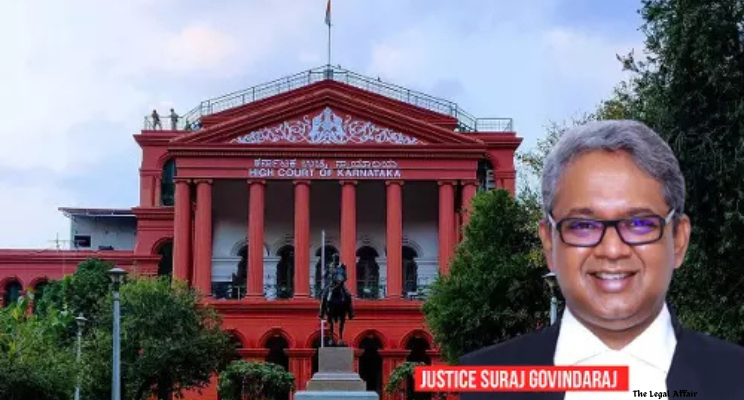
In a significant development addressing the growing concerns surrounding missing persons across the State, the Karnataka High Court has sought a comprehensive compliance report from the State Government regarding the implementation of a newly formulated Standard Operating Procedure aimed at strengthening the institutional framework for tracing missing individuals. The direction was issued by the single judge bench of Justice Suraj Govindraj while hearing a writ petition filed by Shri Mahesh concerning the disappearance of his cousin Kumar, who had gone missing in the year 2020. The petitioner approached the court after discovering that the police had marked the missing person’s First Information Report as “dormant” in 2022 due to a lack of investigative progress. Expressing serious concern over such administrative practices, the Court observed that merely labeling a case as dormant when the missing person has not been traced defeats the fundamental purpose of the criminal justice system and erodes the confidence of families seeking answers about their loved ones. During the proceedings, the Court took note of the broader systemic issue involving thousands of missing persons across the State, including minors and young women, and emphasised that the responsibility of the State extends beyond registering complaints to ensuring effective and sustained investigative efforts. The matter also involved scrutiny of Standing Order No.1054 issued by the State Government in January 2026, which outlines the procedure to be followed upon receipt of information regarding missing persons. The Court therefore directed the State to submit a detailed report explaining the extent to which the procedures under the Standing Order have been operationalised, including the constitution of specialised units, review committees, inter-state coordination mechanisms, and data management systems. While the petitioner’s personal grievance was addressed through the revival of the investigation into the disappearance of his cousin, the Court chose to examine the issue from a systemic perspective to ensure that institutional mechanisms for tracing missing persons function effectively in practice and not merely on paper.
Arguments of the Petitioner:
The petitioner, Shri Mahesh, represented by Advocate Purushotama N, approached the High Court seeking judicial intervention after the disappearance of his cousin Kumar remained unresolved for several years. According to the submissions made before the Court, Kumar had gone missing in 2020, and despite the lodging of a complaint with the police authorities, no meaningful progress had been made in tracing his whereabouts. The petitioner contended that the family had repeatedly approached the concerned police authorities requesting updates on the investigation but had received little information regarding the steps being taken to locate Kumar. In 2022, the petitioner discovered that the police had marked the FIR relating to the missing person as “dormant,” effectively halting active investigation into the matter. The petitioner argued that such a classification was arbitrary and unjustified, particularly when the missing individual had not yet been found. According to the petitioner, labeling the case as dormant created the impression that the investigation had reached a dead end, thereby depriving the family of any realistic hope that further efforts would be made to locate Kumar. The petitioner submitted that the police authorities had a continuing duty to investigate missing persons cases until the individual was traced or credible information regarding their whereabouts was obtained. He argued that the practice of marking cases as dormant without substantial justification undermined the fundamental right to life and personal liberty guaranteed under Article 21 of the Constitution. The petitioner also emphasised that cases involving missing persons—especially those concerning women and children—require urgent and sustained investigative attention because delays significantly reduce the chances of successfully tracing the missing individual. Advocate Purushotama N further contended that the State must establish a structured and accountable framework for handling missing persons complaints, including proper documentation, periodic review of investigations, and coordination between different police agencies. The petitioner urged the Court to issue appropriate directions to ensure that investigations into missing persons cases are conducted with diligence and transparency. He also sought directions for the revival of the investigation into Kumar’s disappearance and requested that the police authorities be instructed to undertake renewed efforts to locate him. Beyond the specific grievance of the petitioner, it was argued that the Court should examine the larger systemic issues affecting the investigation of missing persons cases across the State. The petitioner highlighted that thousands of individuals are reported missing every year and that families often remain without answers for long periods due to institutional shortcomings in the investigative process. The petitioner therefore requested the Court to ensure that the State establishes effective mechanisms to monitor such cases and prevent them from being neglected or prematurely closed.
Arguments of the Respondent (State):
The State of Karnataka, represented by Additional Advocate General K.P. Yashodha, defended the actions of the police authorities while also acknowledging the challenges faced in investigating missing persons cases. The State submitted statistical data indicating the scale of the issue. According to the report filed by the Director General of Police, between 2020 and 2025 a total of 38,073 men had been reported missing across the State, out of which 31,603 had been successfully traced. Similarly, 71,699 cases involving missing women and children had been registered during the same period, and 68,718 of those individuals had been located. The State argued that these figures demonstrated the extensive efforts undertaken by law enforcement agencies to trace missing persons and highlighted the significant number of successful recoveries. However, the State also acknowledged that certain cases remain unresolved for extended periods due to various practical difficulties, including lack of leads, migration of individuals to other states, and the possibility of victims being trafficked or voluntarily leaving their homes. In response to the concerns raised by the Court in earlier hearings, the State informed the bench that it had taken steps to strengthen the institutional framework for dealing with missing persons cases. The Additional Advocate General submitted that the government had issued Standing Order No.1054 on January 21, 2026, which laid down a comprehensive Standard Operating Procedure for handling complaints relating to missing persons. Pursuant to this Standing Order, a circular was also issued on January 29, 2026, directing police authorities across the State to implement the procedures contained therein. The State further submitted that several institutional mechanisms had been activated in accordance with the Standing Order. These included the establishment of District Missing Persons Units (DMPUs), the formation of Missing Persons Squads at police station levels, and the creation of review committees responsible for monitoring investigations in cases where individuals remain missing for prolonged periods. The State assured the Court that these measures were designed to improve coordination between police agencies, ensure regular monitoring of investigations, and strengthen the overall response to missing persons complaints. The Additional Advocate General also informed the Court that the investigation into the disappearance of the petitioner’s cousin Kumar had been revived and reclassified as an active investigation following the directions issued by the High Court during earlier hearings. The State therefore submitted that the individual grievance of the petitioner had already been addressed. Nevertheless, the State expressed its willingness to provide the Court with further details regarding the implementation of the Standard Operating Procedure and the functioning of the newly established institutional mechanisms.
Court’s Observations and Judgment:
After considering the submissions made by both parties and reviewing the material placed on record, the Court delivered an order that focused not only on the individual case before it but also on the broader systemic challenges associated with missing persons investigations. Justice Suraj Govindraj observed that the issue of missing persons is a matter of grave concern, particularly when it involves children, adolescents, and young women who may be vulnerable to exploitation, trafficking, or other forms of harm. The Court emphasised that the families of missing individuals often endure prolonged uncertainty and emotional distress while waiting for information about their loved ones. In such circumstances, the State bears a significant responsibility to ensure that the mechanisms established for tracing missing persons function effectively and transparently. The Court noted that it cannot be overlooked that a large number of complaints relating to missing persons are reported across the State every year. In many instances, families are left without meaningful information regarding the progress of investigations for extended periods. The Court therefore emphasised that institutional mechanisms such as standing orders, specialised units, and review committees must not remain merely formal structures but must be actively operationalised in practice. Referring to Standing Order No.1054, the Court observed that the document provided a comprehensive framework for responding to missing persons complaints. The Standing Order contemplates the establishment of District Missing Persons Units in each district, functioning as nodal agencies responsible for receiving complaints, coordinating investigations, maintaining records, and ensuring follow-up action. The Court noted that such specialised units are essential for developing institutional expertise in handling missing persons cases and ensuring that investigations are conducted in a systematic and coordinated manner. The Court also examined the provisions relating to the formation of Missing Persons Squads at the level of individual police stations. These squads are intended to facilitate prompt investigation and ensure that cases are handled with the urgency they deserve. Additionally, the Standing Order provides for the transfer of certain cases to Anti-Human Trafficking Units, particularly when there is suspicion that the missing individual may have been trafficked or exploited. Justice Govindraj also highlighted the importance of the supervisory review committees established under the Standing Order. These committees, consisting of senior police officials, are tasked with reviewing investigations in cases where a person remains missing for more than two months. The Court observed that such committees play a crucial role in identifying investigative gaps and issuing directions to ensure that investigations continue in a meaningful manner. The committees are also required to submit periodic reports to the Registrar of the High Court every six months, thereby ensuring judicial oversight of the investigative process. Another key aspect of the Court’s observations concerned the need for effective coordination between police authorities in different states. The Court acknowledged that in an era characterised by high mobility across state boundaries, missing persons may often be located outside the jurisdiction where the complaint was initially registered. As a result, cooperation between police agencies across states becomes essential for successful investigations. The Court observed that while the Standing Order provides a general framework for such cooperation, the precise modalities of inter-state coordination cannot be exhaustively codified within a single administrative order. Instead, effective cooperation must be developed through practical engagement between police authorities on a case-by-case basis. The Court also stressed the importance of maintaining comprehensive and reliable data on missing persons. It noted that a national-level database and integrated digital portal would play a crucial role in enabling coordination between states and facilitating the identification of missing individuals. The Standing Order therefore includes provisions relating to the monitoring of digital portals and the timely uploading of information relating to missing persons cases. Justice Govindraj further emphasised the importance of adhering to strict timelines during the initial stages of investigation. According to the Standard Operating Procedure, the first 48 hours and the first 15 days following the report of a missing person are critical for determining the direction of the investigation. Prompt action during this period significantly increases the likelihood of successfully locating the missing individual. While acknowledging the efforts made by the State in issuing the Standard Operating Procedure, the Court observed that the true measure of success lies in its effective implementation. Accordingly, the Court directed the State Government to submit a comprehensive compliance report detailing the extent to which the provisions of Standing Order No.1054 have been implemented. The report is required to include information regarding the constitution of District Missing Persons Units and review committees, the frequency of supervisory meetings, the classification of cases as dormant, active, or traced, the steps taken to facilitate inter-state cooperation, and the functioning of the national and integrated databases for tracking missing persons. Insofar as the petitioner’s individual grievance was concerned, the Court noted that the police had already revived the investigation into Kumar’s disappearance and had reclassified the case as an active investigation. In view of this development, the Court disposed of the writ petition with respect to the petitioner’s personal claim while continuing to monitor the broader systemic issues relating to missing persons investigations.