


Introduction:
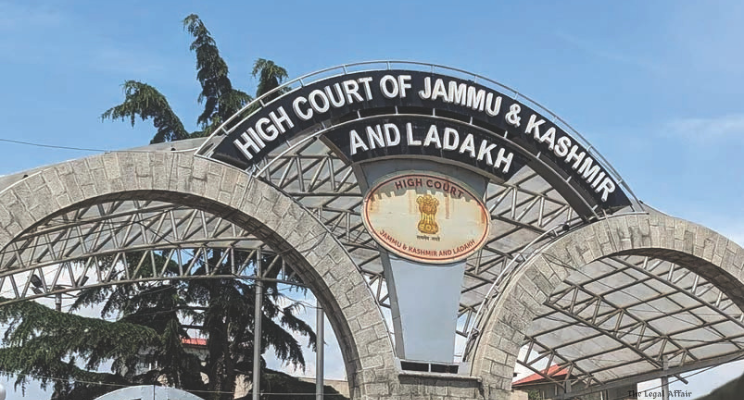
In an important ruling interpreting the scope and purpose of Section 299 of the Code of Criminal Procedure, 1973, the High Court of Jammu & Kashmir and Ladakh held that when an accused who had earlier absconded appears before the trial court and voluntarily admits the depositions of prosecution witnesses recorded during proceedings under Section 299 CrPC, the prosecution cannot insist on recalling those witnesses merely to strengthen its case. The judgment was delivered by a Bench of Justice Mohd Yousuf Wani in a petition filed by Mohammad Yaqoob Beigh challenging an order of the trial court that had permitted the prosecution to recall witnesses already examined in his absence. The case arose from criminal proceedings initiated under provisions of the Narcotic Drugs and Psychotropic Substances Act, 1985 and the Motor Vehicles Act, 1988. The High Court carefully examined the statutory object behind Section 299 CrPC, which allows courts to record evidence against an accused who has absconded and whose arrest is not immediately possible. The Court emphasized that the provision exists to safeguard and preserve evidence that might otherwise be lost due to the passage of time, the death or incapacity of witnesses, or practical difficulties in securing their attendance later. Justice Wani clarified that the provision should not be interpreted in a manner that grants the prosecution an opportunity to improve its case once the accused subsequently appears before the court. The Court ultimately concluded that the trial court had erred in allowing the prosecution’s application to recall witnesses despite the petitioner’s explicit admission of the previously recorded depositions, and therefore set aside the impugned order.
Arguments of the Petitioner:
The petitioner, Mohammad Yaqoob Beigh, represented by advocates Mr. Hakim Suhail Ishtiyaq and Mr. Syed Haroon Rashid, challenged the order of the trial court on the ground that it misconstrued the purpose and legal framework of Section 299 CrPC. The petitioner argued that the criminal proceedings originated from an FIR registered for offences under Sections 8/15 and 29 of the NDPS Act and Section 207 of the Motor Vehicles Act. During the course of investigation, the police filed a charge-sheet against three accused persons. Two of the accused were arrested and produced before the trial court, while the petitioner could not initially be apprehended as he was allegedly absconding and his whereabouts were not known to the investigating agency at the time. As a result, the investigating agency sought initiation of proceedings under Section 299 CrPC against him. The trial court, acting on the request of the prosecution, framed charges against the two arrested accused and proceeded with the trial in their presence. During the course of the trial, several prosecution witnesses were examined and their depositions were recorded in the absence of the petitioner, as permitted under Section 299 CrPC due to his alleged abscondence. Subsequently, the petitioner surrendered before the trial court and submitted himself to the jurisdiction of the court. After his appearance, the petitioner filed an application stating that he admitted the entire evidence of the prosecution witnesses whose depositions had already been recorded during his absence. He further clarified that he did not wish to recall those witnesses for cross-examination because they had already been cross-examined by the counsel representing the co-accused during the earlier stage of the trial. The petitioner contended that his decision to admit the recorded evidence was made voluntarily and in accordance with the procedural framework of criminal law. According to the petitioner, once he had accepted the depositions already recorded, there was no legal necessity or justification for recalling the witnesses again. The petitioner argued that the prosecution subsequently filed an application before the trial court seeking recall of the witnesses who had already been examined. The prosecution claimed that such recall was necessary so that the witnesses could be cross-examined specifically with respect to the petitioner’s role in the alleged offence. The petitioner strongly opposed this request and argued that the prosecution’s application was nothing more than an attempt to strengthen its case and fill gaps in the evidence. According to the petitioner, allowing the recall of witnesses under such circumstances would defeat the purpose of Section 299 CrPC. The petitioner emphasized that the entire objective of the provision is to preserve evidence against an absconding accused so that it does not get lost due to factors such as death or disappearance of witnesses. Once such evidence has been preserved and recorded in accordance with the law, the accused who later appears before the court has the right either to challenge the evidence through cross-examination or to accept it. The petitioner argued that he had chosen the latter option by admitting the depositions already recorded. Therefore, the prosecution had no right to demand that the witnesses be recalled merely for the purpose of conducting further examination or cross-examination. The petitioner further argued that criminal procedure does not permit the prosecution to repeatedly examine witnesses merely to improve the quality of its case. Such a practice would not only be contrary to the statutory framework but would also result in unnecessary delay and harassment. The petitioner therefore urged the High Court to set aside the order of the trial court permitting recall of the witnesses and to clarify the correct interpretation of Section 299 CrPC.
Arguments of the Respondent:
The respondent, represented by Government Advocate Mr. Zahid Noor, defended the decision of the trial court and argued that the recall of witnesses was necessary to ensure a fair and complete adjudication of the case. According to the respondent, the prosecution had the responsibility of proving the guilt of the accused beyond reasonable doubt. In order to discharge this burden, it was essential that witnesses be examined in a manner that allows the court to fully assess their testimony in relation to each accused person. The respondent argued that the petitioner had not been present when the witnesses were originally examined during the proceedings conducted under Section 299 CrPC. Although the witnesses had been cross-examined by counsel representing the co-accused, the respondent contended that the cross-examination conducted at that stage was limited to the defence strategy of those particular accused persons. Therefore, the prosecution argued that the testimony of witnesses had not been specifically tested in relation to the petitioner’s individual role in the alleged offence. The respondent further submitted that recalling the witnesses would not prejudice the petitioner but would instead assist the court in arriving at the truth. According to the prosecution, the recall of witnesses would allow both sides to clarify certain aspects of the evidence and ensure that the testimony was properly evaluated in the context of the petitioner’s involvement in the case. The respondent also contended that the trial court possessed discretionary powers to recall witnesses when such recall was considered necessary for the just decision of the case. The prosecution argued that the trial court had exercised this discretion judiciously and had allowed the recall of witnesses in order to ensure that the trial was conducted in a comprehensive and fair manner. The respondent therefore urged the High Court not to interfere with the order of the trial court, arguing that such interference would unnecessarily restrict the prosecution’s ability to present its case effectively.
Court’s Judgment:
After carefully examining the submissions of both parties and analysing the relevant statutory provisions, the High Court delivered a detailed judgment clarifying the scope and purpose of Section 299 CrPC. Justice Mohd Yousuf Wani began by explaining the legislative intent behind the provision. The Court observed that Section 299 CrPC is designed to address a specific situation in criminal trials—namely, when an accused person absconds and there is no immediate prospect of securing his arrest. In such circumstances, waiting indefinitely for the accused to be apprehended could result in the loss of crucial evidence, especially if witnesses die, become incapacitated, or become unavailable due to practical difficulties. The Court emphasized that Section 299 CrPC allows the court to record the evidence of prosecution witnesses in the absence of an absconding accused so that such evidence is preserved for future use. Justice Wani noted that the depositions recorded under this provision may later be used against the accused when he is apprehended or voluntarily appears before the court, provided certain conditions are satisfied. The Court explained that the provision serves as an exception to the general rule of criminal jurisprudence that evidence should ordinarily be recorded in the presence of the accused or his legal representative. However, this exception exists solely for the limited purpose of preserving evidence and preventing its loss. The Court then turned to the specific circumstances of the case. It noted that several prosecution witnesses had been examined during the period when the petitioner was allegedly absconding and that their depositions had been recorded in accordance with the procedure laid down under Section 299 CrPC. Subsequently, when the petitioner surrendered before the trial court, he had filed an application clearly stating that he admitted the depositions of the prosecution witnesses and did not wish to recall them for cross-examination. The Court observed that this admission was unequivocal and left no room for ambiguity. Justice Wani held that once the petitioner had voluntarily admitted the recorded depositions, there was no justification for permitting the prosecution to recall the witnesses. Allowing such recall, the Court observed, would effectively grant the prosecution an opportunity to strengthen or improve its case, which is not the purpose of Section 299 CrPC. The Court further emphasized that the provision cannot be interpreted in a manner that transforms it into a tool for the prosecution to repeatedly examine witnesses until it achieves the desired outcome. The Bench also referred to an earlier judgment of the High Court in Sonaullah Naik v. State, where similar principles governing the operation of Section 299 CrPC had been discussed. In that decision, the Court had clarified that evidence recorded in the absence of an absconding accused is meant to preserve testimony and not to create an additional advantage for the prosecution. Relying on this precedent, the Court reiterated that the accused who later appears before the court has the option either to challenge the evidence by seeking cross-examination of the witnesses or to accept the depositions already recorded. In the present case, since the petitioner had chosen to admit the evidence, the prosecution could not insist on recalling witnesses merely to conduct further examination. The Court concluded that the trial court had committed a legal error in allowing the prosecution’s application for recalling witnesses. Such an order, the Court observed, was inconsistent with the statutory scheme of Section 299 CrPC and undermined the very purpose of the provision. Accordingly, the High Court allowed the petition and set aside the impugned order of the trial court. The order permitting recall of prosecution witnesses was quashed, thereby reaffirming the principle that the preservation of evidence under Section 299 CrPC cannot be used as a mechanism for strengthening the prosecution’s case once the accused appears before the court.