


Introduction:
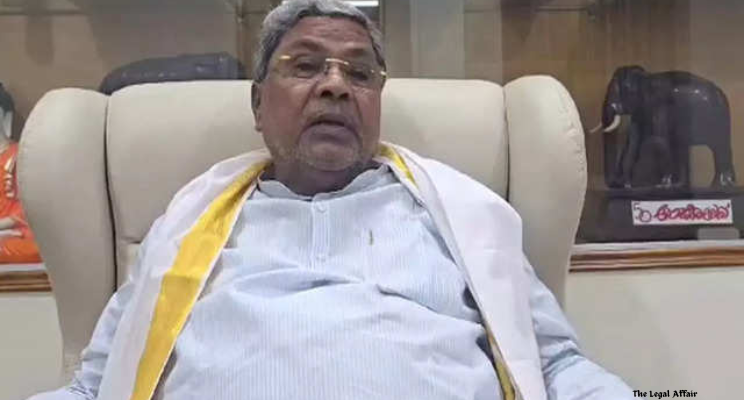
In a pivotal legal battle, Karnataka Chief Minister Siddaramaiah has challenged the Governor’s sanction to prosecute him over allegations of corruption linked to the Mysore Urban Development Authority (MUDA) in the Karnataka High Court. The case centers on claims that Governor Thaawar Chand Gehlot exceeded his authority by granting the prosecution sanction without adhering to the mandatory procedures outlined under Section 17A of the Prevention of Corruption Act. This case has significant implications as it examines the boundaries of constitutional offices like the Governor in the prosecution of high-ranking public officials.
A single-judge bench, led by Justice M Nagaprasanna, heard the matter on September 9, 2024. The case revolves around the alleged multi-crore scam related to land de-notification decisions during Siddaramaiah’s tenure as Deputy Chief Minister between 1996 and 1999, and later during his Chief Ministership from 2013 to 2018. The state’s advocate general and senior counsel presented arguments challenging the legality of the Governor’s sanction, while the opposition argued for maintaining the prosecution to ensure accountability and transparency in public service.
Arguments from Both Sides:
1. State Government’s Argument:
Representing the state, Advocate General Shashi Kiran Shetty strongly contended that the Governor’s order was flawed, as the preliminary inquiry required by Section 17A of the Prevention of Corruption Act had not been conducted. Section 17A mandates that before any inquiry or investigation into alleged corruption by a public servant, prior approval must be obtained from the appropriate authority, which in this case was the Governor. However, Shetty argued that such approval could only be granted after a thorough preliminary inquiry by the investigating officer, which had not occurred.
Shetty argued that the Governor lacked the legal standing to conduct an independent inquiry or approve prosecution without an investigation led by the police. He emphasized that the “preliminary inquiry” under the Prevention of Corruption Act must be initiated by law enforcement agencies, not by the Governor’s office. Shetty highlighted that the complaint against Siddaramaiah was prematurely forwarded to the Governor without giving the police sufficient time to investigate the allegations.
Shetty also pointed out the abnormal delay in raising the corruption allegations, noting that the alleged misconduct occurred between 1996 and 1999, yet the complaint was filed only recently. He argued that the Central Government’s Standard Operating Procedure (SOP) required a detailed inquiry process before granting a sanction, which was completely bypassed in this case. Shetty criticized the Governor’s actions, arguing that elevating private complaints over official investigations sets a dangerous precedent for baseless complaints against public officials.
Shetty concluded by referencing the Supreme Court’s judgment in Lalita Kumari v. Govt. of UP (2013), where it was held that a preliminary inquiry is mandatory before registering an FIR in corruption cases. He submitted that this principle should apply in this case, meaning the Governor’s sanction order was invalid due to the absence of such an inquiry.
2. Complainants’ Argument:
Appearing for one of the complainants, Senior Counsel Lakshmy Iyengar argued that the Governor’s sanction to prosecute Siddaramaiah was not adversarial but a step to uphold the integrity of public administration. Iyengar contended that the Governor had thoroughly applied his mind before granting the sanction, which was based on solid evidence of wrongdoing during Siddaramaiah’s tenure as a public servant.
Iyengar highlighted the significant decisions related to land de-notification that were made during Siddaramaiah’s terms in office, specifically between 1996-1999 as Deputy Chief Minister and later from 2013-2018 as Chief Minister. She argued that these decisions amounted to a misuse of power, justifying the prosecution.
Iyengar also refuted the state government’s claim that no application of mind was involved, asserting that the Governor acted within his constitutional authority, and his discretion could not be questioned as long as it was exercised fairly and transparently. She argued that Section 17A did not mandate any inquiry before the approval and that questioning the validity of the Governor’s sanction at this stage was merely a tactic to delay the investigation.
Court’s Observations and Oral Remarks:
During the hearing, Justice M Nagaprasanna raised several critical questions regarding the scope of Section 17A of the Prevention of Corruption Act and the Governor’s role in sanctioning prosecution. The judge questioned the validity of the state’s argument that a preliminary inquiry was required for Section 17A approval. He remarked that accepting the state’s argument could imply that every prosecution sanction was akin to registering an FIR, which could be a misinterpretation of the law.
The court extended the interim stay on all trial proceedings against the Chief Minister until September 12, when senior advocate Abhishek Manu Singhvi is expected to present the petitioner’s rejoinder. Singhvi is anticipated to challenge the legality of the Governor’s actions, relying on constitutional provisions that restrict the Governor’s discretionary powers.