


Introduction:
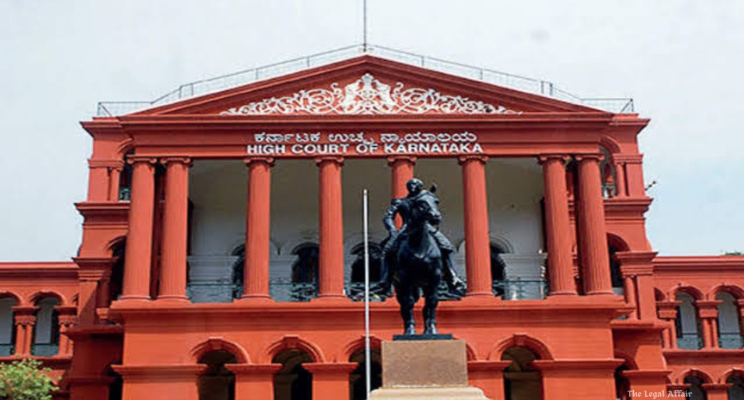
In a landmark decision, the Karnataka High Court has provided significant relief to ten staff nurses employed on a contractual basis for over two decades at Sri Jayadeva Institute of Cardiovascular Sciences and Research. The court directed the regularization of their services from the date they completed ten years of service, emphasizing the principles of fairness and equality in employment. The ruling was issued by Justice N S Sanjay Gowda in response to petitions filed by B J Rani and others, who sought to challenge the refusal of the institute to regularize their employment despite their long service and consistent job responsibilities comparable to regular staff nurses.
The court’s judgment underscores the importance of recognizing the rights of long-serving contractual workers and addresses the broader implications of employment practices in public health institutions. The ruling reflects a commitment to upholding the constitutional principles of equal pay for equal work and ensuring fair treatment for employees in the public sector. This decision not only affirms the rights of the petitioners but also sets a precedent for similar cases involving contractual workers in various sectors across the state.
Arguments of Both Sides:
The petitioners, represented by Advocate Ranganatha S Jois, argued that their long-standing service of over 20 years in the same roles as regular staff nurses entitled them to the same rights and benefits as their permanent counterparts. They contended that the denial of regularization and the payment of lesser salaries constituted a violation of their constitutional rights under Articles 14 and 16 of the Constitution of India, which guarantee equality and non-discrimination in employment. The nurses pointed out that they had been performing identical duties to those of regular staff nurses without receiving equal compensation or benefits, thus breaching the established principle of “equal pay for equal work.”
The petitioners further emphasized that their roles were critical to the functioning of the institute, and the prolonged nature of their employment should be recognized as evidence of their contribution to the healthcare system. They also argued that the renewal of their contracts for over two decades, despite being labeled as “stipendiary,” implied a de facto permanent status, warranting regularization.
On the other hand, the Sri Jayadeva Institute of Cardiovascular Sciences and Research, represented by the Additional Advocate General V G Bhanu Prakash, opposed the petitions. The institute’s defense rested on the assertion that the petitioners were not appointed against any sanctioned posts and therefore had no right to seek regularization. The defense cited the Cadre and Recruitment Rules, arguing that there was no permanent designation for “Staff Nurse (Stipendiary)” within the institutional framework. They maintained that the legal framework did not provide for the regularization of contract employees, reinforcing the idea that the petitioners were not entitled to the same benefits as permanent staff.
The institute also contended that the resolution to increase the salaries of the petitioners was a measure aimed at improving their financial condition rather than an acknowledgment of their rights to regularization. They argued that accepting the petitioners’ claims could lead to a precedent that undermines the established rules regarding contractual appointments in public institutions.
Court’s Judgment:
In a decisive ruling, the Karnataka High Court sided with the petitioners, emphasizing the need for fair treatment of long-serving employees. Justice N S Sanjay Gowda highlighted that the nurses had been working at the institute since 2004, performing the same functions as regular staff nurses without receiving equal pay or benefits. The court noted that denying regularization despite such prolonged service was unjust and contrary to the principles of equality enshrined in the Constitution.
The court rejected the institute’s argument regarding the absence of sanctioned posts for “Staff Nurse (Stipendiary),” clarifying that the institute had the authority to appoint personnel on both permanent and temporary bases, as stipulated in the “Sri Jayadeva Institute of Cardiology Rules and Regulations, 1983.” The judge emphasized that the continuous nature of the nurses’ employment and the regular renewals of their contracts should not be dismissed as mere temporary arrangements. The court also pointed out that the governing council had the power to create and renew posts, indicating that the positions held by the petitioners were indeed sanctioned posts.
Addressing the issue of pay disparity, the court firmly stated that the constitutional principle of “equal pay for equal work” must be upheld. The judge remarked that allowing the institute to perpetuate the existing disparities between the stipendiary nurses and their regular counterparts would amount to exploitation and a violation of their fundamental rights. Justice Gowda reiterated that if the petitioners had been discharging the same duties as regular staff for over 20 years, they were entitled to the same remuneration and benefits.
In terms of financial implications for the state government, the court ruled that while the petitioners were entitled to regularization, their claim for arrears would only be effective from the date of filing their petitions in June 2023. This decision took into account the budgetary constraints and the need for a balanced approach in addressing the rights of the employees while considering the financial impact on the state.
Ultimately, the court ordered the regularization of the petitioners’ services from the date they completed ten years of employment, emphasizing that the institute must act as a model employer, treating its staff fairly and justly. The judgment serves as a reminder of the importance of protecting the rights of workers, particularly those who have dedicated a significant portion of their lives to public service.