


Introduction:
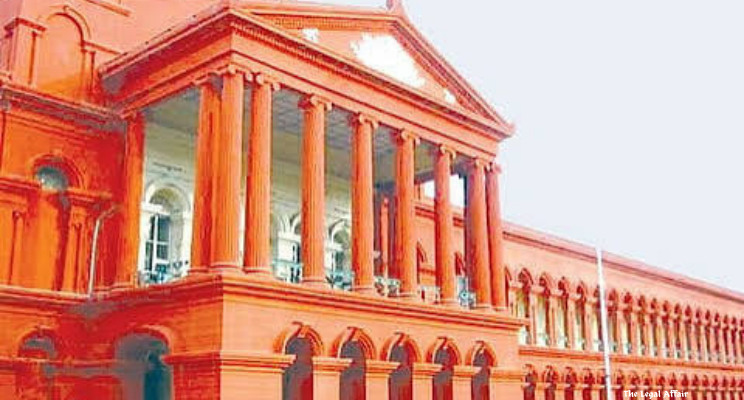
The Karnataka High Court has quashed criminal proceedings initiated against members of the Bharatiya Janata Party (BJP) over allegations that they raised the slogan “Pakistan Zindabad” during a political protest in Mandya in December 2022. The Court observed that it was highly improbable that protesters participating in a demonstration organised by the BJP would deliberately raise a slogan supporting Pakistan. Accepting the petitioners’ explanation that the words “Zindabad” had been uttered mistakenly instead of “Murdabad”, the Court held that continuing the criminal prosecution in the circumstances would serve no useful purpose and would amount to an abuse of the process of law.
Justice V. Srishananda made these observations while considering a petition filed by Dr. S. Ravi Kumar seeking quashing of criminal proceedings pending before the Principal Senior Civil Judge and Chief Judicial Magistrate at Mandya. The case had been registered by the West Police Station, Mandya, following a complaint lodged by Kannambadi Kumar. The allegations attracted Sections 153B and 505(1)(b) of the Indian Penal Code (IPC).
The complaint arose out of a protest organised by BJP members on December 18, 2022. According to the complainant, the protesters raised the slogan “Pakistan Zindabad” during the demonstration. He alleged that hearing the slogan caused him mental disturbance and sought criminal action against those responsible. The complaint was subsequently registered, and criminal proceedings were initiated against the persons allegedly involved in raising the slogan.
The petitioners disputed the allegation that the slogan had been deliberately raised to express support for Pakistan or to create hostility within society. Their explanation was that the protest was directed against an objectionable statement made by Pakistan’s Foreign Minister and that the protesters intended to raise the slogan “Pakistan Murdabad”. According to them, the word “Zindabad” had slipped out inadvertently in the course of raising slogans. They maintained that the alleged utterance was an unintended mistake and was not accompanied by any intention to disturb public order, promote hostility between communities or create unrest.
The State opposed the petition and argued that the video recording submitted by the complainant clearly captured the words “Pakistan Zindabad”. It contended that the presence of the slogan in the recording justified further investigation and that the petitioners should not be permitted to avoid criminal proceedings merely by describing the utterance as an accidental mistake.
The High Court was therefore required to examine whether the material collected in connection with the complaint disclosed a sufficient basis for continuing prosecution under Sections 153B and 505(1)(b) IPC. The question was not simply whether the disputed words could be heard in the video. It was also necessary to consider the circumstances of the protest, the purpose and context of the demonstration, the alleged intention behind the slogan, the consequences said to have followed and the procedural requirements governing prosecution.
Section 153B IPC deals with imputations, assertions prejudicial to national integration and conduct that may be directed against the interests of national integration in the circumstances specified by the provision. Section 505(1)(b) IPC concerns the making, publication or circulation of statements, rumours or reports with the intent to cause, or which are likely to cause, fear or alarm to the public or a section of the public, where such fear or alarm may induce persons to commit an offence against the State or against public tranquillity.
These provisions are intended to address conduct that carries the statutory characteristics of the offences, rather than merely penalising words without examining their meaning, context and likely consequences. Criminal liability must be assessed with reference to the ingredients prescribed by the relevant provision and the material available against the accused.
The High Court’s consideration also involved the procedural safeguard under Section 196 of the Code of Criminal Procedure, 1973, which requires previous sanction of the appropriate government or authority for prosecution of specified offences, including offences under Section 505 IPC, subject to the terms of the provision. The absence of the required sanction was an additional ground considered by the Court while examining whether the prosecution could lawfully continue.
After examining the circumstances, Justice Srishananda concluded that the complaint and the available material did not justify prolonging the criminal proceedings. The Court accepted the explanation that the disputed slogan was an inadvertent verbal mistake and took note of the absence of material identifying the participants or establishing any repercussions from the alleged utterance.
Arguments of the Parties:
The petitioners sought quashing of the criminal proceedings on the ground that the prosecution had misunderstood the nature and purpose of the political demonstration. Their principal submission was that the protesters had not deliberately raised a slogan expressing support for Pakistan. Instead, the intended slogan was “Pakistan Murdabad”, reflecting opposition to an objectionable statement made by Pakistan’s Foreign Minister.
According to the petitioners, the disputed expression arose from a slip of the tongue during the course of raising slogans. They maintained that the word “Zindabad” had inadvertently been used in place of “Murdabad” and that the mistake should not be treated as evidence of an intention to support Pakistan or to create hostility in society.
The petitioners further contended that the alleged utterance was not intended to target any particular community or provoke unrest. They argued that the demonstration was a political protest directed against a statement made by a foreign political representative. In that context, the alleged slogan had to be assessed by considering the purpose of the gathering and the broader circumstances in which the words were spoken.
The defence emphasised that the essential ingredients of the offences under Sections 153B and 505(1)(b) IPC could not be presumed merely because the disputed words appeared in a video recording. According to the petitioners, the prosecution was required to establish that the conduct fell within the scope of the statutory provisions and that the necessary elements of the offences were present. A mistaken utterance, without the requisite intention or likelihood of producing the consequences contemplated by law, could not automatically attract criminal liability.
The petitioners also questioned the basis on which the criminal case had been initiated. They pointed out that the complaint was founded on a video recording and had been lodged approximately two years after the incident. They relied on the delay and the absence of further material establishing the identity of the persons involved or any consequences arising from the alleged slogan.
Another important ground raised before the Court concerned the absence of prior sanction for prosecution under Section 505 IPC. The petitioners contended that the statutory requirement of sanction could not be disregarded and that criminal proceedings for the offence could not lawfully be continued without compliance with the prescribed procedure.
On these grounds, the petitioners sought the exercise of the High Court’s inherent jurisdiction to prevent an unnecessary prosecution and abuse of the criminal process.
The State opposed the petition and argued that the criminal proceedings should be allowed to continue. Its principal submission was based on the video recording produced by the complainant. According to the State, the recording clearly showed that the words “Pakistan Zindabad” had been spoken during the demonstration. It therefore maintained that the allegation was supported by material warranting investigation and that the petitioners’ explanation should not be accepted at the stage of quashing.
The State further submitted that the protest had been organised in response to an objectionable statement made by the Foreign Minister of Pakistan. It alleged that the petitioner had nevertheless raised the disputed slogan with the intention of creating unrest in society. The State’s position was that the nature of the words used and the circumstances of the protest justified further examination through the criminal investigation.
The State accordingly argued that the existence of the video recording was sufficient reason not to terminate the proceedings at the preliminary stage. It sought an opportunity for the investigating agency to proceed in accordance with law rather than having the prosecution brought to an end through the petitioners’ quashing application.
The competing submissions required the High Court to distinguish between the presence of particular words in a recording and the existence of a legally sustainable criminal offence. The petitioners relied on the context of the demonstration, the explanation of an accidental verbal error, the absence of identifiable participants and consequences, and the lack of sanction. The State, on the other hand, relied on the recording and alleged that the slogan had been raised to create social unrest.
Court’s Judgment:
The Karnataka High Court allowed the petition and quashed the criminal proceedings, finding that their continuation in the circumstances would be unnecessary and would amount to an abuse of the process of law. Justice V. Srishananda examined the allegations in the context of the political demonstration and found the petitioners’ explanation relevant to determining whether the disputed words had been deliberately used.
At the outset, the Court considered the nature of the protest and the political identity of the organisers. It observed that the demonstration had been organised by the BJP, a political party, and found it highly improbable that protesters participating in such a demonstration would deliberately raise a slogan supporting Pakistan. The Court therefore considered the petitioners’ explanation that the protesters had intended to raise “Pakistan Murdabad” but had mistakenly uttered “Pakistan Zindabad”.
The Bench observed:
“At the outset, in a demonstration organized by the Bharathiya Janatha Party-a Political Party, It is highly unimaginable that the protesters therein would raise the slogan ‘Pakistan Zindabad’. It is in that context that the argument of the petitioner needs to be considered that in the flow of raising the slogans by mistake the words Zindabad has crept in instead of Murdhabad.”
The observation reflects the Court’s emphasis on examining the disputed expression in its surrounding circumstances rather than treating the words in isolation. The purpose of the demonstration, the subject against which the protest was directed and the explanation offered by the petitioners were all relevant to understanding the allegation.
The Court’s approach recognised that the meaning and significance of words used during a public demonstration cannot always be determined by looking at the words alone. Their context, the nature of the gathering and the circumstances in which they were spoken may be relevant when assessing whether the conduct satisfies the ingredients of a criminal offence.
The Bench also considered the fact that the complaint had been lodged on the basis of the video recording nearly two years after the incident. The complaint was not accompanied by material establishing the identity of the persons who had participated in the demonstration or providing details of any consequences allegedly caused by the slogan.
The investigating agency, according to the material considered by the Court, had also been unable to obtain details identifying the persons who participated in the protest. Further, there was no material showing whether the alleged slogan had produced any repercussions or consequences. These gaps were significant because the prosecution was invoking provisions dealing with conduct that could affect national integration or public tranquillity.
The Court’s consideration of the absence of consequences was particularly relevant to the allegation under Section 505(1)(b) IPC. The provision addresses statements, rumours or reports made or circulated with the requisite intention, or which are likely to cause fear or alarm to the public or a section of the public in a manner that may induce the commission of offences against the State or public tranquillity. Consequently, the statutory requirements cannot be established merely by demonstrating that a particular expression was spoken. The nature of the statement, its context and the legally relevant intention or likelihood contemplated by the provision must also be considered.
In the present case, the Court found that the material did not disclose sufficient circumstances to justify continuing the prosecution. The complainant’s allegation that the slogan had caused him mental disturbance, without supporting material establishing the statutory consequences contemplated by Section 505(1)(b), could not by itself resolve the question of criminal liability.
The Court also considered the charge under Section 153B IPC. This provision is directed at specified imputations and assertions prejudicial to national integration. Its application requires an examination of whether the alleged conduct falls within the categories of statements or assertions described by the statute. The mere use of words that may appear objectionable, without considering the context and the ingredients of the offence, does not dispense with the prosecution’s obligation to establish a legally sustainable case.
The petitioners’ explanation was that the protesters intended to condemn Pakistan and that the disputed word was spoken inadvertently. The Court found this explanation plausible in light of the nature of the political demonstration. It did not accept that the prosecution material justified treating the alleged utterance as a deliberate expression of support for Pakistan or as conduct warranting continued criminal proceedings under the invoked provisions.
An additional and independent consideration was the absence of prior sanction for prosecution under Section 505 IPC. The Court noted that no such sanction had been obtained before initiating the prosecution. Section 196 of the Code of Criminal Procedure, 1973, prescribes a requirement of previous sanction for prosecution of certain offences, including offences under Section 505 IPC, in the circumstances covered by the provision.
The sanction requirement is an important procedural safeguard. It ensures that prosecution for specified offences is not initiated without the approval contemplated by the legislature. Where the law makes previous sanction a condition for taking cognizance, compliance is not a mere administrative formality. It is a statutory requirement that must be satisfied before the prosecution can proceed in the manner prescribed.
The absence of sanction therefore provided a further reason for the Court to question the continuation of the proceedings under Section 505 IPC. The prosecution could not disregard a mandatory statutory safeguard while seeking to maintain criminal action against the petitioners.
The High Court’s decision also reflects the principles governing the exercise of inherent jurisdiction to quash criminal proceedings. The High Court possesses inherent powers under Section 482 CrPC to make such orders as may be necessary to give effect to an order under the Code, prevent abuse of the process of any court or otherwise secure the ends of justice. This jurisdiction is exercised cautiously and is not intended to replace a criminal trial whenever an accused disputes the allegations.
However, where the allegations and the material placed before the Court do not disclose a sustainable basis for prosecution, or where continuation of the proceedings would amount to an abuse of the judicial process, the High Court may intervene. The power is particularly relevant where the circumstances demonstrate that allowing the prosecution to continue would serve no legitimate purpose.
In the present case, the Court considered several circumstances together: the political character and stated purpose of the demonstration, the explanation that the disputed slogan was an accidental verbal error, the fact that the complaint was based on a video recording and lodged after a substantial delay, the investigating agency’s inability to identify the participants, the absence of material showing any repercussions and the failure to obtain prior sanction for prosecution under Section 505 IPC.
The cumulative effect of these circumstances persuaded the Court that the criminal case should not be allowed to continue. It was not merely the petitioners’ denial of the allegation that led to the decision. Rather, the Court examined the available material and the legal requirements of the offences before concluding that further proceedings would be unnecessary.
The judgment must nevertheless be understood within the limits of its factual setting. It does not establish that political affiliation automatically protects a person from prosecution for raising a particular slogan. Nor does it mean that the use of objectionable expressions during a demonstration can never attract criminal liability. The relevant question remains whether the prosecution can establish the ingredients of the particular offence on the facts and evidence of the case.
Similarly, the Court’s observation about the improbability of BJP protesters raising a pro-Pakistan slogan formed part of its assessment of the specific demonstration and the explanation advanced by the petitioners. The broader legal principle is that allegations involving public statements must be examined in their factual and statutory context, rather than by relying exclusively on isolated words.
By quashing the proceedings, the Karnataka High Court underscored the need to distinguish between an alleged verbal mistake and conduct that satisfies the requirements of a criminal offence. It also reaffirmed the importance of statutory safeguards governing prosecution and the responsibility of courts to prevent criminal proceedings from continuing where the material does not justify them.
The decision ultimately brings attention to two essential aspects of criminal law: the prosecution must establish the ingredients of the offence alleged, and procedural requirements prescribed by statute must be followed. Where the available material does not justify continuation of the prosecution and the required sanction has not been obtained, the High Court may intervene to prevent abuse of the process of law.
Accordingly, Justice V. Srishananda quashed the criminal case pending before the Principal Senior Civil Judge and Chief Judicial Magistrate at Mandya against the petitioners in connection with the alleged slogan raised during the December 18, 2022 protest.