


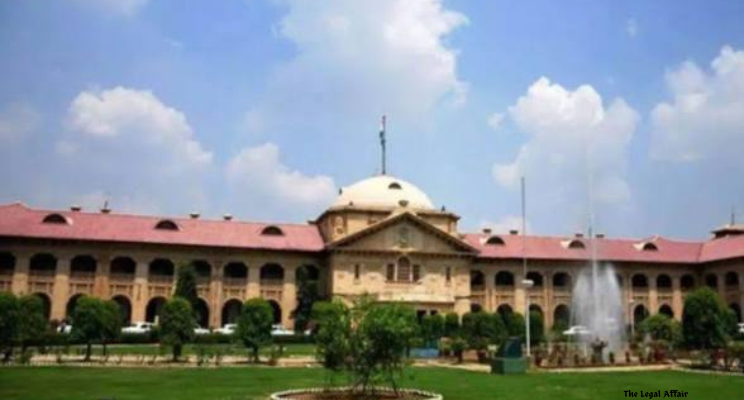
Introduction:
The Allahabad High Court has strongly disapproved of the conduct of advocates who allegedly obstructed court staff from entering a courtroom and disrupted judicial proceedings amid protests against Justice Ajay Bhanot. Observing that judicial work cannot be allowed to remain paralysed because lawyers deliberately abstain from their professional duties, the Court recorded that a group of advocates had gathered outside the courtroom, created considerable noise and prevented court staff from entering through the main gate. The Bench stated that, in view of the obstruction, the staff had been asked to enter the courtroom through the door ordinarily used by judges.
Significantly, the observations were made by a Division Bench comprising Justice Ajay Bhanot and Justice Divesh Chandra Samant. Justice Bhanot had himself been at the centre of protests by members of the Bar since October 28, following allegations concerning his conduct during proceedings in Court No. 49. The protests had reportedly intensified, with allegations of vandalism and obstruction inside the High Court premises.
The Bench made these observations while hearing a criminal writ petition challenging an FIR registered against the petitioners in connection with allegations involving sexual relations on a false promise of marriage, criminal intimidation and rioting, among other offences. The matter was taken up in the revised call. However, no counsel appeared on behalf of the petitioners to press the petition, even though their advocates’ names were reflected in the cause list. The Assistant Government Advocates were also absent.
The Court took note of the absence of the government counsel and directed the Learned Government Advocate to submit a report explaining why the Assistant Government Advocates had not appeared before the Bench. At the same time, it recorded the circumstances in which the courtroom proceedings were being conducted amid the protest outside.
The Bench observed that a large number of lawyers had assembled outside the courtroom and were making noise that interfered with the proceedings. It further noted that court staff had been prevented from entering through the main gate. Faced with the obstruction, the Court directed the staff to use the entrance meant for judges so that judicial work could continue.
The Court expressed its disapproval in clear terms, observing that judicial proceedings could not be brought to a standstill because advocates chose to remain absent from their duties. It stated, “The Court proceedings cannot stand paralyzed on account of lawyers who are deliberately absenting themselves from duty.”
Although the courtroom disruption formed an important part of the order, the Bench also considered the limited merits of the criminal writ petition. It noticed that the FIR recorded that petitioner No. 1 and the first informant had been in a consensual relationship and had physical relations. The Court also took note of the existence of a property dispute between the parties.
Considering the material referred to in the FIR, the Bench directed that the petitioners’ arrest would remain stayed until the next date of listing or until the filing of the police report under Section 173 of the Code of Criminal Procedure, 1973, or Section 193 of the Bharatiya Nagarik Suraksha Sanhita, 2023, whichever occurred earlier.
The order must be understood against the wider background of tensions between sections of the Bar and the judiciary at the Allahabad High Court. The Allahabad High Court Bar Association had written to Chief Justice Arun Bhansali on October 28, raising allegations about an incident that reportedly took place in Justice Bhanot’s courtroom on October 27. The Association threatened to boycott his court if appropriate action was not taken. Subsequent protests reportedly involved shouting, slogans and alleged vandalism, leading to disruption in other courtrooms as well.
The developments raised important questions concerning the right of advocates to raise institutional grievances, the professional responsibility of members of the Bar, the independence and functioning of the judiciary, and the obligation to ensure that litigants are not deprived of access to justice because of disputes within the legal institution. The High Court’s observations focused particularly on the consequences of obstructing court staff and disrupting judicial proceedings, emphasising that disagreements with a particular court cannot justify bringing the functioning of other courts to a halt.
Arguments of the Parties:
The criminal writ petition before the Division Bench had been filed to challenge an FIR registered against the petitioners. The allegations in the FIR included sexual relations allegedly obtained on a false promise of marriage, criminal intimidation and rioting. The available case summary does not disclose the detailed grounds raised by the petitioners in their challenge or the specific submissions they intended to advance before the Court.
When the matter was taken up in the revised call, no advocate appeared on behalf of the petitioners to press the petition, despite the names of their counsel being reflected in the cause list. Consequently, the Bench did not have the benefit of oral submissions from the petitioners’ side during that hearing. The Court nevertheless examined the relevant circumstances appearing from the FIR while considering the immediate question of protection from arrest.
The State was also not represented by the Assistant Government Advocates when the matter was called. Their absence was specifically noticed by the Bench. Rather than treating their non-appearance as an ordinary scheduling issue, the Court directed the Learned Government Advocate to furnish a report explaining the reasons for their absence. The case summary does not indicate that the State advanced any substantive oral submissions on the merits of the criminal writ petition during this hearing.
The allegations concerning the courtroom obstruction arose separately from the criminal dispute between the petitioners and the first informant. In this context, the Bench recorded that a large number of lawyers had gathered outside the courtroom and were creating noise that impeded judicial proceedings. It also noted that court staff had allegedly been prevented from entering through the main gate.
The Court’s observations were directed at the conduct that was interfering with the functioning of the institution. The Bench did not treat the lawyers’ protest or their absence from court as a justification for allowing judicial proceedings to remain suspended. Instead, it emphasised that the functioning of courts and the ability of court staff to discharge their responsibilities must be protected even when members of the Bar have grievances against a particular judicial officer.
The broader protest had its origins in allegations made by the Allahabad High Court Bar Association concerning an incident on October 27 in Court No. 49, where Justice Ajay Bhanot was presiding. In a letter addressed to Chief Justice Arun Bhansali on October 28, the Association alleged that an advocate had been humiliated during court proceedings and that a senior advocate had been mocked.
According to the Association’s account, an advocate had objected to a police officer occupying a particular seat in the courtroom. The Association alleged that Justice Bhanot subsequently directed that the advocate be sent to jail and compelled him to apologise to the police officer. It also alleged that the judge had made remarks mocking senior advocate V.P. Srivastava. These allegations were presented by the Association as the basis for its proposed boycott of Justice Bhanot’s court.
The Association warned that it would boycott the judge’s courtroom if appropriate action was not taken. The protest that followed reportedly escalated, with some advocates allegedly raising slogans and engaging in acts of vandalism, including throwing furniture inside Justice Bhanot’s courtroom. These were allegations and reported developments forming the background to the disruption; they were distinct from the merits of the criminal writ petition being heard by the Division Bench.
The disruption also affected proceedings in the adjoining courtroom of Justice Arun Kumar Singh Deshwal. That Bench took serious note of the conduct and observed that litigants approach the High Court to seek redressal of their grievances and should not suffer because some advocates have objections concerning a particular court.
Justice Deshwal’s Bench stated:
“Such incident amounts to interference the Court proceedings as poor litigants come to the High Court for redressal of their grievance, and merely because some of the Advocates have problem with particular Court, they cannot be permitted to raise slogans, shout and disturb to other Courts’ proceedings and use such words which is in the nature to intimidate the Court. This is wholly unjustified.”
The Bench described the conduct as absolutely contemptuous and directed the Registrar (Protocol) to obtain CCTV footage from the camera installed outside Court No. 66, identify the advocates allegedly involved and submit a report on the next date.
In a further development, a Bench comprising Justice Bhanot and Justice Samant passed an order concerning allegations that lawyers had assaulted State law officers, court staff and security personnel and vandalised a courtroom on October 28. The Bench considered these acts prima facie to constitute criminal contempt and requested the Chief Justice to consider issuing directions for registration of FIRs against the lawyers allegedly involved and persons who had circulated false social media posts about the incidents.
These developments formed the institutional background against which the Division Bench recorded its observations about the obstruction of courtroom access. The immediate issue before it, however, remained the criminal writ petition and the inability to proceed with the hearing in the absence of counsel for the petitioners and the Assistant Government Advocates.
Court’s Judgment:
The Division Bench of Justice Ajay Bhanot and Justice Divesh Chandra Samant took serious exception to the alleged obstruction caused by advocates gathered outside the courtroom. It observed that the disruption had affected the ordinary functioning of the Court and that court staff had been prevented from entering through the main entrance.
The Bench recorded that a large number of lawyers had assembled outside the courtroom and were creating noise that impeded the proceedings. The situation had become such that the court staff could not enter through the main gate. In order to ensure that the proceedings could continue, the Court directed the staff to enter through the door ordinarily used by judges.
This observation was significant because the obstruction was not limited to a demonstration or the expression of disagreement outside the courtroom. The Court specifically noted that access to the courtroom had been affected and that court employees had been prevented from performing their duties through the usual entrance. The disruption therefore had a direct impact on the administration of justice.
The Bench made it clear that the judicial process could not be held hostage to a boycott or deliberate absence from professional duties. It observed that court proceedings could not remain paralysed because lawyers chose not to appear. The Court’s concern was that the functioning of the institution must continue irrespective of disagreements between advocates and a particular judicial officer.
The statement that proceedings cannot remain paralysed carries wider significance for the administration of justice. Courts function through the coordinated efforts of judges, advocates, registry officials, court staff and other personnel. When access to courtrooms is obstructed or staff members are prevented from entering, the disruption affects not only the judicial officer concerned but also litigants whose cases are listed for hearing.
A litigant’s right to seek judicial redress cannot be made dependent on whether members of the Bar agree with the conduct of a particular court. Advocates may raise grievances through appropriate institutional channels, make representations to the Chief Justice or the Bar Association, and pursue other lawful avenues. However, the Court’s observations emphasise that such disagreements cannot justify preventing court staff from carrying out their duties or obstructing judicial proceedings.
The Bench’s remarks also came at a time when protests were reportedly affecting more than one courtroom. The adjoining courtroom of Justice Arun Kumar Singh Deshwal had also experienced disruption. That Bench had highlighted the position of litigants who approach the High Court seeking relief and should not be made to suffer because of disputes involving a particular court.
The distinction between raising a grievance and interfering with judicial proceedings is important. The right of advocates to express concerns about the functioning of the institution does not carry with it an unrestricted right to obstruct access to courtrooms, intimidate judicial officers or staff, or prevent other litigants from having their matters heard. The Court’s observations were directed at this interference with the administration of justice.
The broader legal framework recognises that acts which obstruct or interfere with the administration of justice may attract contempt jurisdiction. Under Article 215 of the Constitution, every High Court is a court of record and possesses the power to punish for contempt of itself. The Contempt of Courts Act, 1971, also provides the statutory framework concerning civil and criminal contempt.
Criminal contempt under Section 2(c) of the Contempt of Courts Act includes the publication of material or the doing of any act that scandalises or tends to scandalise, lowers or tends to lower the authority of a court, prejudices or interferes with judicial proceedings, or obstructs or tends to obstruct the administration of justice in any other manner. Whether particular conduct satisfies this definition depends on its nature and circumstances and must be determined in accordance with law.
In the related proceedings concerning the alleged courtroom violence and vandalism, the Bench comprising Justice Bhanot and Justice Samant had described the alleged acts of assaulting State law officers, court staff and security personnel and damaging courtroom property as prima facie criminal contempt. It also requested the Chief Justice to consider directions for registration of FIRs against the persons allegedly involved and those who circulated false social media posts about the incidents.
Separately, Justice Arun Kumar Singh Deshwal’s Bench directed the Registrar (Protocol) to obtain CCTV footage from outside Court No. 66, identify the advocates allegedly involved in the disruption and submit a report. These steps reflected the Court’s concern that allegations of obstruction and intimidation should be examined on the basis of available material and appropriate institutional procedures.
The order under discussion also addressed the absence of the Assistant Government Advocates. The Bench noticed that no one from the State’s side had appeared when the matter was called. It accordingly directed the Learned Government Advocate to submit a report explaining the reasons for their absence.
This direction demonstrated that the Court expected the State’s legal representatives to discharge their professional responsibilities and assist the Court in the disposal of matters listed for hearing. The absence of government counsel, particularly when the petition was listed and taken up in the revised call, was treated as an issue requiring an explanation. The Court did not, however, record any final finding concerning the reasons for their absence.
Turning to the criminal writ petition, the Bench examined the allegations reflected in the FIR. It noted that the FIR recorded that petitioner No. 1 and the first informant had been in a consensual relationship and had physical relations. The Court also noticed that a property dispute existed between the parties.
These circumstances were taken into account while considering the petitioners’ request for protection from arrest. The Court did not finally determine whether the allegations of a false promise of marriage, criminal intimidation or rioting were true. Nor did it decide the ultimate criminal liability of the petitioners. The observations were made at the stage of considering the writ petition and the interim protection sought.
The Bench therefore directed that the petitioners’ arrest would remain stayed until the next date of listing or until the filing of the police report under Section 173 CrPC or Section 193 BNSS, whichever occurred earlier. This protection was limited by the two events specified in the order. It was not an unconditional or indefinite protection from arrest.
The reference to Section 173 of the Code of Criminal Procedure and Section 193 of the Bharatiya Nagarik Suraksha Sanhita reflects the procedural framework governing the submission of police reports upon completion of investigation. The BNSS, which replaced the CrPC for proceedings governed by the new criminal procedure framework, provides for the submission of a police report to the Magistrate upon completion of investigation. The Court’s order expressly referred to both provisions while defining the period for which the interim protection would operate.
The grant of interim protection must also be distinguished from a final determination on the merits of the criminal allegations. A stay of arrest at an interim stage does not amount to an acquittal or a finding that the FIR is false. It merely protects the petitioners from arrest for the period specified by the Court, subject to further proceedings and orders.
The Bench’s order thus dealt with two distinct concerns: the immediate disruption of judicial proceedings caused by the alleged obstruction outside the courtroom and the request for interim protection in the criminal writ petition. On the institutional issue, the Court made clear that court functioning cannot be paralysed by a boycott or deliberate absence of advocates. On the criminal matter, it considered the contents of the FIR and the property dispute between the parties before granting limited protection from arrest.
The developments surrounding the protest also demonstrate the importance of resolving disagreements within the legal institution through lawful and appropriate channels. The Bar has an important role in protecting professional dignity and raising concerns about judicial conduct. Equally, the administration of justice requires that courtrooms remain accessible, judicial officers and staff be able to perform their duties, and litigants are not deprived of hearings because of institutional disputes.
Ultimately, the Division Bench’s observations reaffirm that a protest concerning a particular judicial officer cannot be allowed to obstruct the functioning of the Court as a whole. Judicial proceedings must continue, and the rights of litigants and the responsibilities of court staff must remain protected. The Bench accordingly recorded its objection to the disruption, sought an explanation for the absence of the Assistant Government Advocates and granted the petitioners interim protection from arrest until the next listing or filing of the police report, whichever occurred earlier.