


Introduction:
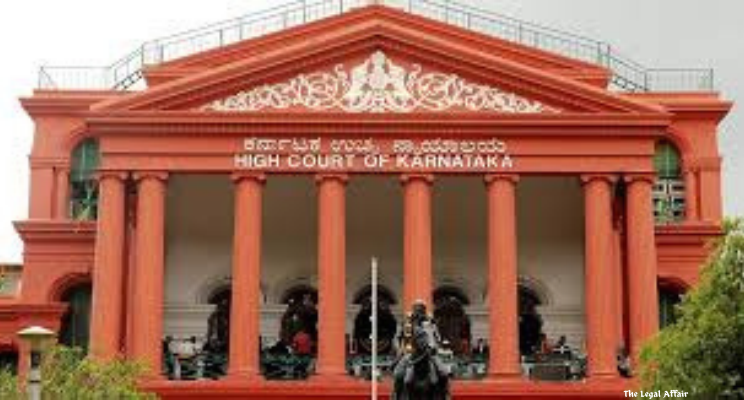
The Karnataka High Court has quashed a hate speech FIR registered against a social media user who had reposted a news clipping concerning remarks allegedly made by the then Karnataka Chief Minister Siddaramaiah about the distribution of the nation’s wealth to Muslims. The Court held that merely sharing a news report accompanied by comments expressing political dissent does not, by itself, constitute an offence under Section 153A of the Indian Penal Code (IPC), unless the content demonstrates the essential elements of promoting enmity, hatred or ill-will between distinct communities or groups.
Justice Rajesh Rai K allowed a petition filed by Vinith Narayan Naik and set aside the FIR registered against him under Section 153A IPC and Section 66C of the Information Technology Act, 2000. The Court found that even if the allegations in the complaint and FIR were accepted in their entirety, they did not disclose the commission of an offence. It consequently held that allowing the investigation and further proceedings to continue would amount to an abuse of the process of law.
The controversy originated from a complaint lodged on April 29, 2024, by J. Saravanan, described as a Congress party worker and president from the Gandhinagar constituency. The complaint alleged that objectionable content had been circulated on X, formerly known as Twitter, through an account identified as “BhikuMhatre (Modi’s Family) @MumbaichaDon”.
The posts in question included a photograph of a news item broadcast by Kannada television channel TV9. The news clipping carried the headline, “I will share the wealth of the nation to Muslims: CM Siddaramaiah.” The accompanying write-up criticised the Congress manifesto and referred to claims concerning its provisions relating to Muslims and members of the Scheduled Castes and Scheduled Tribes.
According to the complainant, the content was intended to generate hostility between Hindu and Muslim communities, disturb public peace and bring disrepute to the Congress Party. The complaint therefore resulted in the registration of an FIR invoking Section 153A IPC, which criminalised the promotion of enmity between different groups on grounds including religion, race, place of birth, residence, language and other specified grounds. Section 66C of the Information Technology Act, which deals with identity theft through fraudulent or dishonest use of another person’s electronic signature, password or other unique identification feature, was also invoked.
Naik approached the High Court seeking quashing of the criminal proceedings. His principal contention was that the post merely reproduced a publicly broadcast news item and expressed disagreement with the political position attributed to the ruling party. He maintained that there was no statement targeting a particular religious community, nor any attempt to provoke violence or hostility between communities.
The case therefore raised an important question concerning the boundary between constitutionally protected political expression and criminal speech. In particular, the Court had to consider whether a social media post criticising a political party and referring to a news report could attract Section 153A IPC when it did not specifically promote enmity between two distinct groups.
The judgment is significant because it reiterates that the criminal law relating to communal disharmony cannot be invoked merely because a political statement is controversial, critical or capable of attracting disagreement. The statutory ingredients of the alleged offence must be disclosed by the material on record.
Arguments of the Parties:
Appearing for the petitioner, Senior Advocate Aruna Shyam, instructed by advocate Suyog Herele E, argued that the complaint and FIR did not disclose the essential ingredients required to constitute an offence under Section 153A IPC.
It was submitted that Naik had merely reposted a photograph of a news item concerning remarks attributed to the then Chief Minister. The news clipping had already been broadcast by TV9, and the petitioner had shared it along with a write-up expressing his political disagreement.
According to the petitioner, the post did not contain any statement intended to humiliate a particular religious community, incite hatred against a group or encourage violence between communities. The criticism was directed towards the Congress Party and its political manifesto, rather than towards Muslims or any other religious group as such.
The petitioner’s counsel emphasised that political criticism, even when strongly worded, cannot automatically be equated with communal hate speech. For Section 153A IPC to apply, the prosecution must demonstrate that the expression in question promoted enmity, hatred or ill-will between distinct groups. Merely expressing dissent over a political statement or sharing a news report does not satisfy this requirement in the absence of the necessary communal element.
The petitioner also alleged that the complaint had been lodged with an ulterior political motive. It was contended that criminal proceedings had been initiated against him despite the absence of any material showing that his post was intended to create hostility between religious communities.
On these grounds, the petitioner sought quashing of the FIR, arguing that continuation of the criminal proceedings would constitute an abuse of the legal process.
Opposing the petition, State Public Prosecutor B.N. Jagadeesha submitted that the content shared by the petitioner had the potential to provoke communal hostility and disturb public peace.
The State referred to the remarks attributed to Siddaramaiah concerning the distribution of the nation’s wealth, arguing that the Chief Minister had stated that the wealth would be distributed even to the Muslim community. However, TV9 had presented the statement through a breaking-news headline suggesting that the nation’s wealth would be distributed to Muslims.
According to the prosecution, the petitioner had not simply reproduced the news clipping. The accompanying write-up allegedly suggested that the Congress Party intended to take away wealth belonging to Hindus and distribute it exclusively to Muslims. The State argued that such a presentation could create resentment among members of different religious communities and had the potential to provoke hatred or violence.
The prosecution therefore maintained that the post had to be considered in its entirety, including the accompanying commentary, rather than being viewed as an isolated reproduction of a news headline. It contended that the content was capable of attracting Section 153A IPC because of its alleged communal implications.
The State further argued that the investigation was still at a nascent stage and that the FIR should not be quashed before the investigating agency had an opportunity to examine the allegations. It was submitted that the question whether the post was intended to promote communal hatred required investigation and should not be conclusively determined at the preliminary stage.
The State was represented by State Public Prosecutor B.N. Jagadeesha, assisted by advocate Mahesha P.
Court’s Judgment:
The Karnataka High Court allowed the petition and quashed the FIR, holding that the allegations, even if accepted at face value, did not disclose the essential ingredients of an offence under Section 153A IPC. Justice Rajesh Rai K found that the petitioner’s act was essentially the reposting of a news item accompanied by commentary expressing political dissent. The material did not demonstrate that he had promoted enmity between two distinct communities or created a likelihood of disturbing public tranquillity.
The Court examined the contents of the complaint and the social media post to determine whether the allegations could legally constitute the offence invoked by the prosecution. It found two important aspects relevant to its assessment: the fact that the news item had admittedly been broadcast by TV9 and the absence of any specific statement in the petitioner’s accompanying write-up promoting hatred between identifiable communities.
Essential ingredients of Section 153A IPC
The Court relied upon the Supreme Court’s decision in Bilal Ahmed Kaloo v. State of Andhra Pradesh to examine the scope of Section 153A IPC.
The provision, as applicable to the alleged conduct in the present case, dealt with promoting enmity between different groups on grounds such as religion, race, place of birth, residence, language and other specified grounds. It was intended to address expressions and conduct that foster hostility between communities and threaten social harmony.
Referring to the Supreme Court’s interpretation in Bilal Ahmed Kaloo, the High Court noted that the offence requires the promotion of enmity, hatred or ill-will between two distinct groups or communities. The existence of a controversial statement or criticism, without the necessary element of inter-group hostility, is not sufficient to attract the provision.
This distinction was central to the Court’s decision. Section 153A cannot be invoked merely because a statement concerns religion or refers to a political issue having religious implications. The prosecution must establish that the expression falls within the conduct prohibited by the provision.
In the present case, the Court found that the petitioner’s accompanying write-up did not specifically refer to two distinct communities or contain a statement promoting enmity or hatred between them.
The Bench observed:
“In the present case, admittedly, the petitioner, in the write-up accompanying the photograph of the then Chief Minister of Karnataka, has not specifically referred to or made any statement promoting enmity or hatred between two distinct communities or groups.”
The Court therefore found that the fundamental requirement of Section 153A IPC was absent from the allegations.
Reposting a news item and expressing political dissent
Another important consideration was that the petitioner had shared a photograph of a news item that had already been disseminated by TV9. The Court noted that the news report had admittedly been published by the television channel and that no investigation had been conducted to establish its genuineness.
In these circumstances, the allegation against the petitioner was essentially confined to reposting the photograph of the news item along with an accompanying write-up.
The Court did not treat the act of reposting as automatically immune from criminal scrutiny. Rather, it examined the actual words and content attributed to the petitioner to determine whether they satisfied the statutory requirements of the offence.
The Bench found that the accompanying commentary expressed dissent but did not specifically target two distinct communities or encourage hostility between them. The material also did not disclose a tendency or likelihood of disturbing public tranquillity.
This distinction is particularly relevant in the context of political debate on social media. Individuals frequently share news reports, comment on political announcements and criticise the positions taken by political parties. Such expression may be strongly worded or controversial, but its criminality cannot be determined merely by considering whether someone finds it objectionable.
For Section 153A IPC to apply, the expression must cross the statutory threshold by promoting enmity or hatred between groups. Political criticism, without that element, cannot be converted into a communal offence simply because it refers to a subject involving religious communities.
The Court accordingly held that the petitioner’s act of reposting the TV9 news item with an expression of dissent did not, by itself, attract Section 153A IPC.
Absence of intention or tendency to incite communal hatred
The High Court also examined whether the contents of the social media post disclosed an intention or tendency to vilify, humiliate or incite hatred or violence against a targeted community.
It found no prima facie material demonstrating that the petitioner intended to promote hostility against Muslims or any other identifiable group. Nor did the allegations establish that the post was likely to disturb public tranquillity.
The distinction between criticism of a political party and hostility towards a religious community was important to the Court’s reasoning. The complainant had alleged that the post was intended to generate hatred between Hindus and Muslims and damage the reputation of the Congress Party. However, the Court found that the actual contents of the post did not disclose the necessary elements of communal hostility.
The judgment thus emphasises that the mere possibility of disagreement or public controversy surrounding a social media post is not equivalent to the likelihood of disturbing public peace contemplated by the criminal provision.
Freedom of speech and expression under Article 19(1)(a)
The Court also considered the constitutional protection afforded to freedom of speech and expression under Article 19(1)(a) of the Constitution.
Freedom of expression is fundamental to democratic functioning. It protects not only agreeable or popular opinions but also criticism, disagreement and dissent. Political speech, in particular, plays an important role in allowing citizens to question government policies, examine political promises and express disagreement with public representatives.
However, the right is not absolute. Article 19(2) permits the State to impose reasonable restrictions on freedom of speech and expression on specified grounds, including public order, subject to constitutional requirements.
Section 153A IPC operates within this broader framework by penalising the promotion of enmity between different groups. Its purpose is to address expressions that threaten communal harmony, not to criminalise every instance of political disagreement involving religious or social issues.
The High Court’s approach reflects the need to balance the protection of free expression with the legitimate objective of preventing communal hostility. Where the statutory ingredients of an offence are absent, criminal proceedings cannot be justified merely by invoking the possibility that a political statement might offend or provoke disagreement.
The Court also referred to Article 21 of the Constitution, which guarantees the right to life and personal liberty and has been interpreted to protect the right to live with dignity. The constitutional framework, therefore, requires criminal proceedings affecting an individual’s liberty and dignity to be supported by a legally sustainable basis.
The Bench observed:
“In the instant case, the petitioner had merely reposted a news item disseminated by TV9 media, along with the photograph of the then Chief Minister of Karnataka, expressing his dissent through the accompanying write-up. In the absence of any specific reference to two distinct groups or communities, such an act, by itself, would not attract the ingredients of Section 153A of IPC.”
This finding makes clear that the Court was concerned with the substance of the expression and the absence of the elements required by the criminal provision, rather than merely the fact that the post had generated a complaint.
Power to quash proceedings where no offence is disclosed
The High Court ultimately applied the principle that criminal proceedings may be quashed where, even after accepting the allegations in the complaint and FIR as true, no offence is made out against the accused.
The Court found that the allegations did not disclose the necessary elements of Section 153A IPC. The material attributed to the petitioner did not establish promotion of enmity between distinct communities, nor did it demonstrate an intention or tendency to incite communal hatred or violence.
It also took note of the fact that the complainant, despite service of notice, had not appeared before the Court. However, the decisive consideration was the legal insufficiency of the allegations themselves.
The Court held:
“I am of the considered view that, even if the entire allegations made in the complaint and FIR are taken at their face value and accepted in their entirety, no offence is made out against the petitioner. Therefore, the continuation of FIR and further proceedings against the petitioner would amount to abuse of process of court.”
The prosecution had argued that the investigation was at an early stage. However, the High Court found that further investigation could not cure the fundamental absence of the ingredients necessary to constitute the alleged offence on the facts presented.
The Court’s decision also extended to the FIR’s invocation of Section 66C of the Information Technology Act, 2000. That provision concerns identity theft through the fraudulent or dishonest use of another person’s electronic signature, password or other unique identification feature. The case summary does not indicate any separate finding concerning a distinct identity-theft allegation; the Court ultimately quashed the FIR and further proceedings against the petitioner.
The ruling should not be read as granting blanket immunity to social media users who share misleading or inflammatory content. Nor does it mean that reposting a news report can never attract criminal liability. The legal assessment must depend on the actual content, the surrounding circumstances and whether the statutory ingredients of the offence are disclosed.
What the judgment establishes is that criminal prosecution under Section 153A IPC requires more than an allegation that a social media post is objectionable or politically provocative. There must be material indicating the promotion of enmity, hatred or ill-will between distinct groups, as required by the provision.
Accordingly, Justice Rajesh Rai K allowed Vinith Narayan Naik’s petition and quashed the FIR registered under Section 153A IPC and Section 66C of the Information Technology Act. The Court concluded that continuation of the proceedings, in the absence of the essential ingredients of the alleged offence, would amount to an abuse of the process of law.