


Introduction:
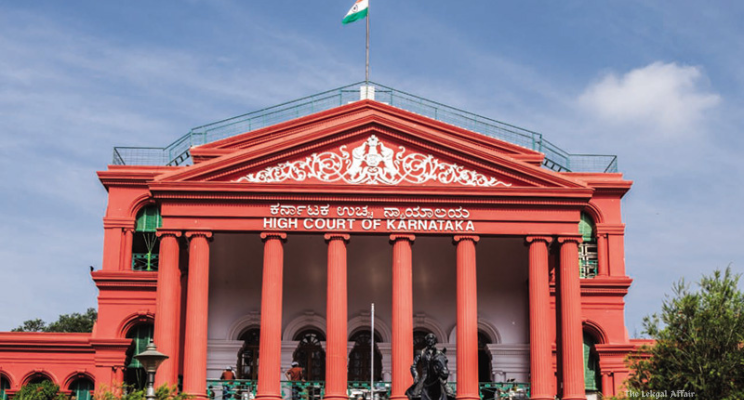
In the case of C.V. Rajanna & Others v. State of Karnataka & Others, the Karnataka High Court delivered a significant ruling, directing the State Government to grant cash awards to athletes with dwarfism who won medals at the 7th World Dwarf Games held in 2017. The petitioners, a group of physically challenged athletes, challenged the State’s refusal to provide cash awards, citing government orders that had granted similar prizes to athletes representing the State in various sporting events. Justice M. Nagaprasanna, who heard the matter, upheld the petitioners’ plea and ordered that the cash awards be disbursed in accordance with the Government Order dated 30-11-2013. The Court set a deadline of eight weeks for the government to comply with the directive.
Arguments:
Petitioners’ Argument:
The petitioners, all individuals suffering from dwarfism, argued that they had represented India at the World Dwarf Games and won medals in the 2017 edition of the event. They contended that under the provisions of Government Orders dated 30-11-2013 and 11-12-2015, athletes who win gold, silver, or bronze in international competitions are entitled to cash prizes. The petitioners had previously received similar awards for other sporting achievements based on these government guidelines. They emphasized that their participation, although not directly sponsored by the State, was in line with the spirit of the order, which aimed to honor athletes regardless of whether their participation was state-sponsored or not. They further argued that denying them the award undermined the purpose of encouraging physically challenged individuals to engage in international competitions.
Respondents’ Argument:
The State Government opposed the petitioners’ plea, arguing that the athletes had participated in the World Dwarf Games independently, without sponsorship from the State. The government asserted that cash awards could only be granted to athletes whose participation was supported or sponsored by the State. Since the petitioners had participated in the competition on their own initiative, the government argued that they were not entitled to the cash prizes under the applicable guidelines. Additionally, the government contended that it was not obliged to compensate athletes for events in which it had no official role.
Court’s Judgment:
Justice M. Nagaprasanna carefully examined the arguments presented by both sides. The Court noted that the relevant Government Order of 2013 clearly stated that athletes who win medals at the World Dwarf Games were entitled to cash awards, regardless of whether their participation was state-sponsored. The Court emphasized that the 2013 order provided for cash prizes of ₹10 lakhs for gold, ₹7 lakhs for silver, and ₹5 lakhs for bronze. This policy was reinforced by the Government Order dated 11-12-2015, which reiterated the terms of the 2013 order and applied to athletes who participated in international events like the World Dwarf Games.
The Court observed that the petitioners had participated in the World Dwarf Games, and won medals in the 2017 edition, in line with the provisions of the relevant government orders. The Court further pointed out that the refusal of cash awards in this case was inconsistent with the Division Bench’s earlier ruling in State of Karnataka v. Sri Niranjan Mukundan and connected cases (2022). The Division Bench had directed that claims for cash awards for competitions held prior to 09-10-2017 be considered based on the guidelines in place at the time. Therefore, the petitioners were entitled to the benefits outlined in the Government Orders of 2013 and 2015, irrespective of the fact that their participation was not state-sponsored.
The Court also rejected the government’s argument that the petitioners should not be entitled to the awards because their participation was not at the behest of the State. It noted that the purpose of the awards was to encourage and support physically challenged athletes, and the petitioners had already fulfilled the criteria by representing the nation and excelling at the international level. The Court further criticized the impugned order, which had denied the petitioners’ claims, as being unsustainable, as it ran counter to the Division Bench’s findings. As a result, the Court ordered the State Government to grant the cash awards to the petitioners in accordance with the 2013 order, and to comply with this directive within eight weeks.
Conclusion:
The Karnataka High Court’s decision serves as an important reminder of the need to support athletes, particularly those with physical challenges, by acknowledging their achievements and offering due recognition. The court’s order not only upheld the rights of physically challenged athletes but also reinforced the importance of ensuring that government guidelines are adhered to consistently. The judgment is a victory for the petitioners and sets a precedent for future cases involving similar demands for recognition and support for athletes with disabilities.