


Introduction:
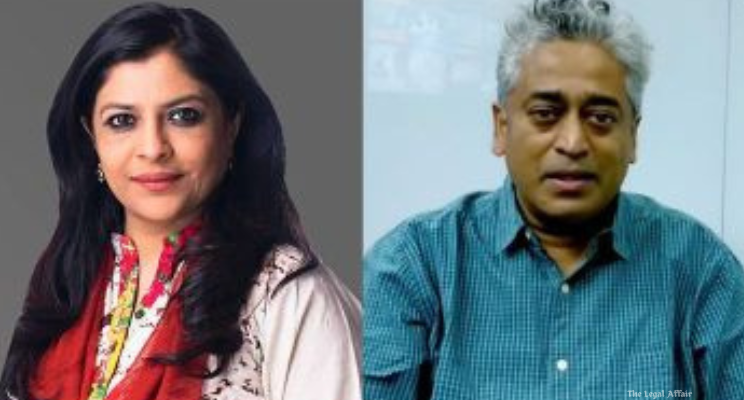
In a significant development, the Delhi High Court addressed a privacy violation case involving BJP leader Shazia Ilmi and journalist Rajdeep Sardesai. The issue arose after a video was posted on the social media platform X (formerly Twitter) showing Ilmi withdrawing from a live debate on India Today. The video, which was circulated online, showed Ilmi moving out of the shooting frame mid-debate, and Sardesai’s commentary on the incident led to a defamation suit filed by Ilmi. Ilmi had contended that the video violated her right to privacy, particularly the 18-second segment where she was seen exiting the debate. The Court, on April 9, 2025, directed X to remove the video and to provide basic subscriber information (BSI) of the users who uploaded the video, an order that X sought to modify on the grounds of user privacy concerns. The Court’s ruling also reflected on the broader issue of privacy in the digital age, especially as it pertains to social media platforms and the information they host.
The controversy began when Sardesai posted the video of Ilmi leaving the debate, with a caption suggesting that she had abused a video journalist from India Today. Sardesai’s tweet went viral, and the video received widespread attention, further fueling the ongoing defamation suit filed by Ilmi. Ilmi argued that her withdrawal from the debate was not done in a manner that deserved public mockery or condemnation, and the dissemination of such footage without her consent was a clear violation of her right to privacy. In the backdrop of this legal confrontation, the Delhi High Court’s intervention aimed to strike a balance between the freedom of expression and the right to privacy.
Arguments of Both Sides:
Petitioner’s Argument:
Shazia Ilmi, the petitioner, argued that the 18-second video segment that showed her leaving the live debate was a violation of her privacy rights. She contended that the video, which was published on social media without her consent, not only invaded her personal space but also damaged her reputation. According to her legal team, the recording and dissemination of the video portion were unlawful, as they depicted her withdrawing from the debate in a way that was taken out of context. Ilmi’s team emphasized that the video, especially the segment of her leaving the frame, was not essential to the public debate or journalistic duty, and its release could only be seen as an act of sensationalism rather than a legitimate form of media reporting.
Ilmi’s legal representatives further pointed out that the video was taken and shared without her express consent, and thus violated her right to privacy, which is protected under Article 21 of the Constitution of India. The fact that her action was captured in such a manner and posted online further compounded the damage to her personal and professional image. She sought the removal of the video from social media platforms, particularly X, and demanded that the users who had uploaded the video be identified through the disclosure of basic subscriber information (BSI). The Court had already passed an order directing the removal of the video, and Ilmi’s legal team requested that the order be enforced strictly, including the identification of the individuals responsible for uploading the video.
Respondent’s Argument:
On the other hand, X (formerly Twitter), represented by Senior Advocate Rajshekhar Rao, sought to modify the Court’s earlier order, particularly the direction to disclose basic subscriber information (BSI) of the users who uploaded the video. Rao argued that revealing such information would infringe on the privacy rights of the users who had posted the content. He further contended that the company’s stance on privacy was important and that disclosing the BSI of users would set a dangerous precedent for user data disclosure. X’s position was that while it had complied with the Court’s order to remove the posts, it was concerned about the broader implications of sharing sensitive user information with a third party, particularly in a case involving privacy concerns.
Rao argued that privacy is a fundamental right, and any action that compromises the anonymity of online users could lead to serious consequences for internet freedom and data security. X also pointed out that the platform had complied with the Court’s direction to remove the videos and was not in a position to divulge user details without clear legal grounds. Moreover, the platform suggested that any decision regarding the privacy of its users should be addressed in a separate legal proceeding rather than as part of this ongoing defamation suit.
In their application to modify the Court’s order, X’s legal team emphasized that the removal of the video was a significant step taken to comply with the Court’s privacy protection guidelines, and that further action involving the disclosure of user information was an overreach. X sought clarification on the Court’s earlier ruling and requested a review of the directive for the release of BSI.
Court’s Judgment:
Justice Manmeet Pritam Singh Arora, presiding over the matter, considered the arguments of both sides and delivered his judgment, addressing the legal intricacies surrounding privacy, defamation, and freedom of expression in the digital era. Initially, the Court took notice of X’s argument that it had complied with the order to remove the video and had taken appropriate action to prevent the spread of the video across its platform. However, the Court expressed its surprise at the drafting of X’s application, particularly the assertion that no opportunity had been given to X to present its case before the April 9 order was passed.
Justice Arora noted that while X had valid concerns regarding the privacy of its users, the issue at hand was the violation of Ilmi’s privacy, and the Court’s decision was rooted in protecting her personal rights over the potential privacy of the social media users. The Court remarked that while user privacy was an important issue, it was not the focus of the current proceedings, which were centered on the privacy violation caused by the publication of the video without consent.
The Court further clarified that the order directing the disclosure of BSI was consistent with legal procedures for identifying those responsible for the unlawful uploading of content that violates personal privacy. The Court emphasized that the right to privacy was not absolute and could be outweighed by the protection of other fundamental rights, including the right to reputation. In light of the fact that the video had been uploaded without consent and caused significant harm to Ilmi, the Court found that the direction to provide basic subscriber information was justified.
Justice Arora noted that X had withdrawn its contention regarding the lack of opportunity to present its case and assured the Court that it would comply with the order to provide the BSI within 36 hours. The Court also clarified that any concerns regarding the broader privacy implications for users could be addressed in separate proceedings, as this matter focused on the violation of Ilmi’s rights and the need for accountability in the dissemination of content. The matter was adjourned for further proceedings, with the next hearing scheduled for August 29, 2025.
Conclusion:
The Delhi High Court’s ruling marks an important step in the ongoing debate over privacy rights in the digital space. By upholding Shazia Ilmi’s privacy claim and directing the social media platform X to disclose user information, the Court reinforced the need to balance privacy protections with the interests of reputation and accountability. The judgment highlights the increasing role of social media platforms in shaping public discourse and underscores the responsibility of these platforms to ensure that their users respect the privacy and rights of individuals. As digital content continues to play a central role in the public sphere, the Court’s decision serves as a reminder of the growing need for clear legal frameworks that address the complexities of privacy, defamation, and freedom of expression online.