


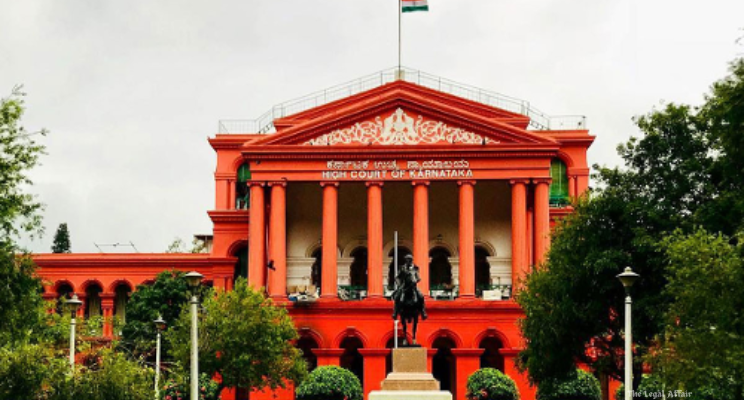
Introduction:
In a significant ruling, the Karnataka High Court has partly allowed the appeal filed by Ananda Reddy, the appellant, and modified the trial court’s order which had imposed a one-month civil imprisonment on him for willful disobedience of a court order. Justice H.P. Sandesh, hearing the appeal, took into consideration the appellant’s serious health condition—he has been battling throat cancer—and instead of enforcing imprisonment, the Court imposed a fine of Rs 3 lakh on him. The case originated when Radhamma, the respondent, filed a suit for partition and separate possession of property, accompanied by an application seeking an interim injunction under Order 39 Rules 1 and 2 of the Civil Procedure Code (CPC), restraining the defendants from alienating the suit schedule properties. The trial court had issued an order in January 2002 preventing the defendants from selling the property until objections to the interim application were filed. However, the appellant violated this order by executing a sale deed in 2002, leading to allegations of willful disobedience and contempt of court.
Arguments of Both Sides:
The appellant, Ananda Reddy, contended that he had no knowledge of the court’s order restricting the sale of the property and argued that there was no willful disobedience on his part. He further maintained that the imposition of civil imprisonment was unduly harsh, especially given his medical condition. Reddy revealed that he had been diagnosed with throat cancer more than two years ago and had undergone radiation and chemotherapy, with doctors recommending surgery for his third-stage cancer. He filed an affidavit expressing his remorse and seeking the court’s pardon on humanitarian grounds, asking for a modification of the trial court’s decision. Additionally, Reddy stated that he had sought an unconditional apology, denying any deliberate violation of the court’s orders.
On the other hand, Radhamma, the plaintiff, argued that despite the clear court order prohibiting the sale of the property, the appellant proceeded with the sale in 2002. She further claimed that the appellant had been deliberately obstructing the legal proceedings related to the partition and had caused considerable delay in the execution of the court’s decree. Radhamma also highlighted the hardship and mental agony endured by her and her daughter, as they had been fighting for their rightful share of the property for more than two decades. She emphasized that the appellant’s actions were not only in defiance of the court order but had also led to the prolonged legal struggle, which had caused significant emotional distress to the respondents.
Court’s Judgment:
The Karnataka High Court, while considering the appeal, noted that the trial court had passed an order in January 2002, restraining the defendants from alienating the suit properties until they filed objections to the interim application. The appellant, however, sold the property in October 2002, even before filing objections to the interim application in August 2003. The Court observed that the sale of the property was in direct violation of the court’s order and that the appellant had failed to comply with the court’s directive, causing considerable hardship to the respondents who were still awaiting the fruits of the partition suit.
The Court also pointed out that the appellant had failed to provide the respondents with their rightful share in the property for over two decades. This delay in the partition process was detrimental to the respondents’ rights, and the appellant’s actions had exacerbated the suffering caused by the prolonged legal battle. The Court further noted that the appellant had also been involved in an instance of impersonation in a 2010 partition deed, a matter that had been ruled on unfavorably for him in both the trial court and the High Court.
However, the Court recognized the appellant’s serious health condition, which had been substantiated by medical records indicating his diagnosis of throat cancer and ongoing treatment. Given the appellant’s health struggles and the mental anguish he was enduring, the Court decided to modify the trial court’s order of civil imprisonment. Instead of imprisonment, the Court imposed a fine of Rs 3 lakh on the appellant, with the objective of providing some relief to the respondents while also considering the humanitarian aspect of the appellant’s condition.
The Court emphasized that while the appellant’s health issues were a valid consideration, they could not be used to justify the violation of a court order. The Court’s primary concern was to ensure that the respondents, who had been fighting for their legal rights for more than two decades, received some measure of justice. The imposition of the fine was seen as a way to balance the need for accountability with a compassionate approach towards the appellant’s health.
The Court concluded that the appellant’s actions amounted to willful disobedience of the court order, and while the fine would not fully compensate the respondents for the prolonged delay, it would serve as a deterrent to others who might contemplate disregarding court orders.