


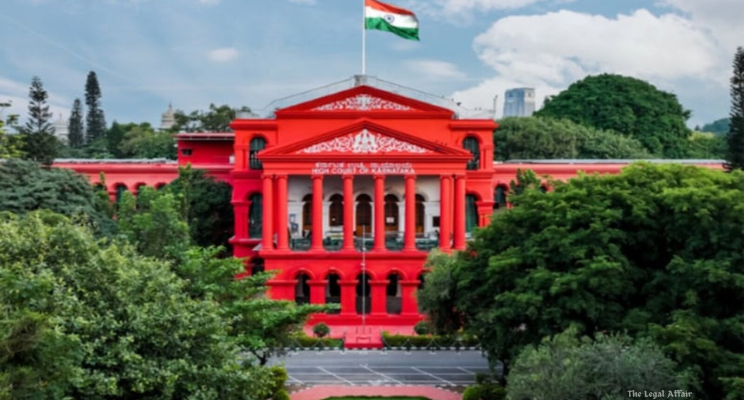
Introduction:
In M/s Sree Gururaja Enterprises Private Limited v. M/s CIMEC Enterprises Engineers and Contractors & Others (Writ Petition No. 36643 of 2018), the Karnataka High Court was called upon to examine the legality and propriety of an order passed by a trial court staying proceedings in a money recovery suit under Section 10 of the Code of Civil Procedure, 1908, despite having earlier rejected an identical plea seeking stay of proceedings. The matter was decided by Justice S. Vishwajith Shetty, who not only addressed the technical application of Section 10 CPC but also delivered a significant pronouncement on judicial discipline, consistency, and institutional credibility. The case arose out of two separate suits for recovery of money between the same set of commercial entities, where the trial court initially rejected a plea for stay, proceeded to frame issues, and even partly decreed the suit, only to later stay the same proceedings on a similar application filed by another defendant. This contradictory approach, according to the High Court, struck at the very foundation of judicial propriety and public confidence in the justice delivery system.
Arguments of the Petitioner:
The petitioner assailed the impugned order of the trial court primarily on the ground that it was ex facie inconsistent, legally untenable, and violative of settled principles governing judicial proceedings. It was contended that the trial court had earlier rejected an application filed under Section 151 CPC by defendant Nos.1 to 5 seeking stay of proceedings on the very same grounds that were subsequently accepted while allowing the application under Section 10 CPC filed by defendant No.6. The petitioner argued that the principle of res judicata is not confined merely to final judgments but also extends to interlocutory orders passed during the pendency of proceedings, particularly when the issue involved is identical and has attained finality at that stage. Once the trial court had consciously rejected the plea for stay and proceeded to frame additional issues and partly decree the suit, it could not, in law or logic, revisit the same issue and grant an identical relief merely because the application was filed by another defendant. It was further argued that Section 10 CPC applies only when the entire subject matter of the subsequent suit is directly and substantially the same as that of the previously instituted suit, which was clearly not the case here, as both suits arose from distinct causes of action. The petitioner emphasized that permitting such contradictory orders would lead to uncertainty, arbitrariness, and erosion of faith in the judicial process, and therefore the impugned order deserved to be quashed.
Arguments of the Respondents:
The respondents, on the other hand, sought to justify the impugned order by contending that the earlier application for stay had been filed by defendant Nos.1 to 5, whereas the subsequent application under Section 10 CPC was filed by defendant No.6, who was independently entitled to seek such relief. It was argued that the rejection of the earlier application could not operate as a bar against a fresh application by a different defendant, particularly when the legal provisions invoked were distinct. The respondents further contended that the issues involved in both suits were substantially similar and that allowing parallel proceedings to continue would result in conflicting findings and multiplicity of litigation. According to them, the trial court rightly exercised its discretion under Section 10 CPC to stay the proceedings in the later suit to avoid judicial inconsistency. They maintained that the order was passed in the interest of justice and did not warrant interference under writ jurisdiction.
Court’s Judgment:
The Karnataka High Court, after a meticulous examination of the records and rival submissions, decisively rejected the reasoning adopted by the trial court and the justification offered by the respondents. Justice S. Vishwajith Shetty held that while judicial officers are not infallible and may err in law, what is impermissible is passing inconsistent orders on the same issue in the same proceeding, as such conduct undermines judicial discipline and erodes public confidence in the institution. The Court emphasized that consistency is not merely a matter of convenience but a fundamental requirement of judicial propriety, aimed at preventing arbitrariness, discrimination, and allegations of bias. It categorically held that once an application seeking stay of proceedings on a particular ground had been rejected, the finding recorded therein would bind all parties to the suit, unless the relief sought was personal or exclusive to the applicant. In the present case, the relief sought was general in nature and affected the progress of the suit itself; hence, it could not be re-agitated by another defendant under a different provision. The Court further clarified that Section 10 CPC applies only when the entire subject matter in both suits is identical, which was admittedly not the situation here, as the causes of action in the two money recovery suits were different. Terming the approach of the trial court as “bad in law,” the High Court held that the impugned order staying the proceedings was wholly unjustified and unsustainable, and accordingly set it aside. In doing so, the Court delivered a strong reminder that judicial consistency is essential to preserve the sanctity, credibility, and legitimacy of the justice delivery system.