


Introduction
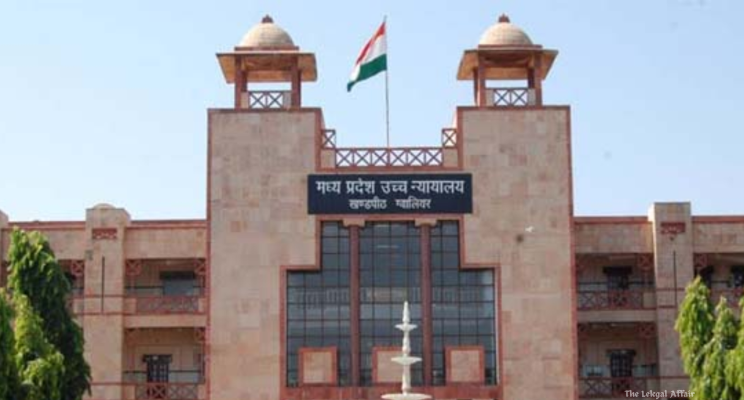
The Madhya Pradesh High Court, by its order dated December 16, dismissed the anticipatory bail application filed by Ankit Ranjan in connection with alleged large-scale financial irregularities in the ‘Windsor Hill’ township project. The case arises from a complaint lodged by Rajeev Shrivastava, Director of Esotech CP Infrastructure, alleging systematic fraud, forgery, diversion of funds, and criminal conspiracy by persons entrusted with the execution of the residential project. The allegations disclose a complex web of undervalued property sales, creation of shell companies, misuse of bank accounts—including those belonging to deceased persons—and misappropriation of sale proceeds amounting to nearly ₹60 crores. Justice Milind Ramesh Phadke, while rejecting the plea, held that the material on record prima facie demonstrated a deliberate design to defraud the complainant company and siphon off huge public money, making the case unsuitable for grant of anticipatory bail.
Arguments on Behalf of the Applicant:
The counsel appearing for the applicant, Advocate Raj Kumar Shrivastava, urged the Court to grant protection from arrest by projecting the applicant as an outsider to the management and affairs of the complainant company. It was emphatically contended that the applicant was neither a director nor an office bearer of Esotech CP Infrastructure and had no role in the management, sales, execution, or financial transactions of the Windsor Hill township project. According to the defence, the applicant was being unnecessarily dragged into the criminal proceedings only to give a colour of seriousness to what was essentially a commercial dispute.
It was further argued that the applicant’s name did not figure in the original complaint, and his subsequent implication was based on vague, omnibus, and generalized allegations without any specific attribution of criminal acts. The counsel submitted that mere association or acquaintance with the co-accused could not justify his custodial interrogation, especially in the absence of direct evidence showing his involvement in sale transactions or diversion of funds. The defence sought to highlight that anticipatory bail is a safeguard against arbitrary arrest and should be granted where accusations appear exaggerated or motivated.
The applicant’s counsel also stressed that the dispute, at its core, related to contractual obligations arising out of a real estate project, and any alleged financial discrepancies ought to be resolved through civil remedies rather than criminal prosecution. It was contended that arresting the applicant at this stage would amount to a pre-trial punishment, violating his personal liberty under Article 21 of the Constitution. The defence thus prayed that the applicant be granted anticipatory bail, subject to appropriate conditions, to enable him to cooperate with the investigation without being subjected to custodial humiliation.
Arguments on Behalf of the State:
Opposing the bail plea, the Public Prosecutor Mohit Shivhare, appearing for the State, painted a starkly different picture of the applicant’s role, asserting that he was a key participant in a well-planned and premeditated economic offence. The State contended that the applicant actively acted in concert with the principal accused, namely Manoj Shrivastava and P.K. Shrivastava, who were entrusted with the execution of the Windsor Hill township project. Instead of safeguarding the financial interests of the parent company, the accused allegedly devised a mechanism to siphon off sale proceeds through fraudulent means.
The prosecution submitted that the applicant was instrumental in floating multiple fake and shell companies with the sole intention of diverting funds. Firms such as Ecotech Developers, Vistar Developers, Chiranjivi Developers, Gayatri Developers, Infinity-Tech Developers, Shivam Developers, Sidharth Developers, Sundaram Developers, Suryavanshi Developers, and Surya-Tech Developers were allegedly created, with relatives shown as partners, to camouflage the illicit flow of money. Through these entities, flats were sold at grossly undervalued prices, mostly in favour of relatives or associated firms, and were thereafter promptly resold at much higher market rates.
The State further highlighted that a total of 36 flats were sold either in the names of relatives or these shell entities, and all sale registries were executed within an unusually short span of three to four days, raising serious suspicion. Crucially, the sale consideration from these transactions was never deposited in the account of the complainant company, thereby causing massive financial loss. The prosecution asserted that the surplus generated from the resale of these properties was deliberately withheld and misappropriated.
One of the most disturbing allegations brought to the Court’s notice was that bank accounts were opened and operated in the names of deceased relatives, including the father and father-in-law of the co-accused, who had died in 2008 and 2012 respectively. The prosecution alleged that these accounts were actively operated by the applicant and other accused persons by forging signatures, thereby committing serious offences of impersonation, forgery, and cheating.
The State strongly opposed anticipatory bail, arguing that custodial interrogation was necessary to unearth the money trail, identify benami transactions, trace diverted funds, and recover misappropriated amounts. It was submitted that granting bail at this stage would give the applicant an opportunity to influence witnesses, tamper with documentary evidence, and obstruct the investigation, especially given the complexity and magnitude of the financial fraud.
Court’s Judgment:
After hearing the rival submissions and perusing the case diary and material collected during investigation, the Madhya Pradesh High Court declined to grant anticipatory bail to the applicant. Justice Milind Ramesh Phadke observed that the allegations against the applicant were not superficial or speculative, but pointed towards serious and grave economic offences involving systematic misappropriation of huge public money to the tune of ₹60 crores.
The Court found substance in the prosecution’s submission that the applicant, acting in concert with the co-accused, facilitated undervalued sale of flats in favour of relatives, shell entities, and associated firms, followed by their prompt resale at escalated prices. The surplus consideration generated from these transactions was allegedly siphoned off and deliberately withheld from the account of the complainant company. The Court noted that the manner, frequency, and timing of these transactions were not coincidental, but indicated a deliberate and premeditated design to defraud.
A significant factor that weighed with the Court was the allegation regarding the creation of multiple shell companies and the operation of bank accounts in the names of deceased relatives. The Court observed that such acts, if proved, would strike at the very root of financial integrity and reveal a calculated attempt to camouflage illicit funds through layering and diversion.
The Court placed considerable reliance on the bank statements seized during investigation, which prima facie disclosed a consistent and unexplained pattern of large-scale financial transactions routed through the applicant’s accounts and those of the co-accused. These transactions were found to be wholly disproportionate to their admitted sources of income, thereby strengthening the prosecution’s case at the prima facie stage. The Court observed that repeated deposits of substantial amounts followed by their immediate transfer to connected entities clearly indicated a well-orchestrated mechanism of fund diversion and siphoning, which could not be brushed aside as innocuous or accidental.
Justice Phadke further held that the nature of allegations went far beyond a mere contractual or commercial dispute. The Court observed that the case involved criminal intent, premeditated conspiracy, forgery, impersonation, and systematic siphoning of funds, making it a fit case for thorough custodial investigation. The Court expressed apprehension that granting anticipatory bail would impede the fair and effective completion of investigation, provide an opportunity to influence witnesses, tamper with documentary evidence, and obstruct the tracing of diverted funds.
In light of the gravity of the offence, the magnitude of the alleged financial fraud, and the prima facie material suggesting deliberate criminal design, the Court concluded that the applicant did not deserve the extraordinary protection of anticipatory bail. Consequently, the bail application was dismissed.