


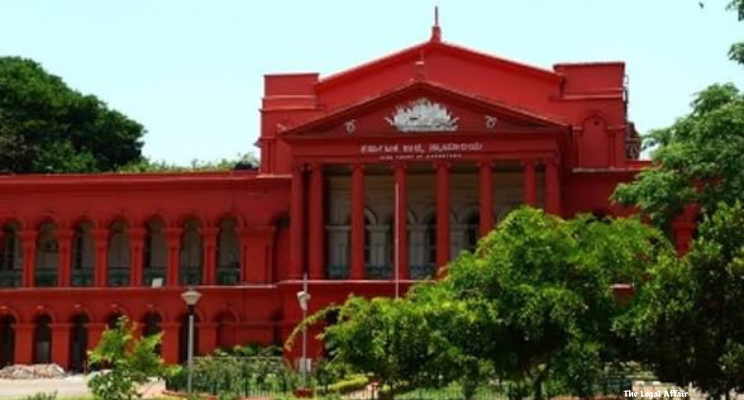
Introduction:
The Karnataka High Court is presently examining a public interest litigation raising serious allegations of systemic failures in the investigation of several unnatural deaths reported in and around the temple town of Dharmasthala. The petition, Smt. Kusumavathy v. The Special Investigation Team & Another (WP No. 33799 of 2025), has been filed by the mother of a young woman who was allegedly raped and murdered in the region. The matter is being heard by a Division Bench comprising the Chief Justice and Justice K.S. Hemalekha.
The petition arises in the backdrop of allegations made by a sanitation worker, who claimed that between 1995 and 2014 he had been instructed to bury the bodies of women and children at different locations in and around Dharmasthala. Based on these allegations, an FIR was registered and the Government of Karnataka constituted a Special Investigation Team (SIT) in July 2025 to investigate the alleged mass burial sites and connected incidents.
The petitioner has approached the High Court seeking wide-ranging directions aimed at ensuring a comprehensive and transparent investigation. Among the principal prayers are directions to identify the alleged burial sites, exhume human remains wherever possible, conduct DNA profiling for identification of victims, undertake forensic pathological examinations to ascertain the cause of death, register separate First Information Reports in respect of each documented case, and require the SIT to periodically submit status reports before the High Court regarding the progress of the investigation.
The petition further alleges that a large number of unnatural deaths in the region were handled in violation of mandatory statutory procedures prescribed under Section 174 of the Code of Criminal Procedure, 1973, as well as the Karnataka (Investigation of Unnatural Deaths and Conduct of Inquests) Rules, 2004. According to the petitioner, these alleged procedural lapses have resulted in the destruction of crucial evidence and have prevented effective investigation into suspicious deaths.
The proceedings before the High Court are still pending. At the present stage, the Court has not adjudicated upon the merits of the allegations but has heard detailed submissions from the petitioner and granted time to the State to respond.
Arguments of the Parties:
Appearing on behalf of the petitioner, Senior Advocate Vrinda Grover submitted that the material collected by the petitioner disclosed a disturbing pattern of unexplained deaths and disappearances in and around Dharmasthala spanning nearly two decades. It was argued that at least seventy-four cases of unnatural deaths had been identified and tabulated, revealing recurring procedural irregularities in the manner in which the authorities dealt with such cases.
The petitioner contended that several dead bodies were buried or cremated almost immediately after recovery without complying with the mandatory safeguards prescribed under Section 174 of the Code of Criminal Procedure. It was submitted that the statutory procedure requiring police to conduct inquests into unnatural deaths, prepare detailed reports, ascertain the identity of the deceased wherever possible, and undertake post-mortem examinations had allegedly been ignored in numerous cases.
The petitioner further argued that many unidentified bodies were simply recorded as “unknown persons” without even mentioning basic particulars such as age, gender or identifying features. According to the petitioner, even where bodies were recovered from hotels, lodges or guest houses—places where visitor details are ordinarily maintained—no meaningful effort was allegedly made to identify the deceased. It was submitted that such omissions reflected a serious failure to investigate suspicious deaths in accordance with law.
The petitioner also highlighted instances where the cause of death was allegedly recorded in a mechanical manner without adequate investigation. In several cases, deaths were merely classified as “suicide” without recording whether the death occurred by hanging or any other method. In some cases, even the Unnatural Death Report (UDR) number was allegedly omitted, while in another instance, it was claimed that the UDR itself had disappeared from official records.
To demonstrate the alleged pattern, the petitioner referred to specific cases. One such instance involved the recovery of an unidentified woman’s body from a lodge. According to the petitioner, although the police initially treated the matter as murder and communicated with the local authorities, the body was cremated shortly thereafter without completing the mandatory legal formalities. In another case, the petitioner referred to the body of a young woman allegedly found hanging in a nearby forest. It was argued that the death was immediately treated as suicide and the body buried the very next day without any proper inquest or post-mortem examination, thereby permanently eliminating the possibility of determining whether the death was homicidal or suicidal.
The petitioner further referred to the case of a thirty-five-year-old man found dead in a guest house allegedly managed by the Dharmasthala Trust. It was argued that no meaningful attempt had been made to ascertain his identity or investigate the circumstances surrounding his death.
On the basis of these alleged irregularities, the petitioner submitted that there had been repeated violations of the statutory obligations imposed upon investigating authorities under Section 174 CrPC and the Karnataka Rules governing investigation of unnatural deaths. It was argued that these failures necessitated judicial intervention to ensure an independent, scientific and comprehensive investigation.
The petitioner also drew the Court’s attention to the Government notification constituting the Special Investigation Team on 19 July 2025. It was submitted that the notification conferred upon the SIT all powers of a police station under the Bharatiya Nagarik Suraksha Sanhita and authorised it to investigate all related offences and submit final reports. The petitioner therefore sought directions requiring the SIT to register separate FIRs in relation to each of the seventy-four documented cases and to periodically place status reports before the High Court to ensure transparency and accountability.
On behalf of the State, it was submitted that the learned Advocate General was unavailable as he was engaged before another Bench. The State therefore requested additional time to present its response, indicating that the Advocate General would address the Court on the next date of hearing with the assistance of the State Public Prosecutor.
Court’s Judgment:
The Karnataka High Court has not yet rendered any final findings on the allegations raised in the public interest litigation. The proceedings remain at the stage of preliminary consideration, and the Court has not expressed any opinion regarding the correctness or otherwise of the petitioner’s allegations concerning the seventy-four reported cases.
During the hearing, the Division Bench took note of the extensive submissions advanced on behalf of the petitioner regarding the alleged procedural lapses in investigating unnatural deaths. The Court was informed that the petitioner sought judicial oversight of the investigation and directions to ensure compliance with the statutory safeguards governing inquests, post-mortem examinations, preservation of evidence and identification of deceased persons.
The petitioner also pressed for directions requiring identification of alleged burial sites, exhumation of human remains wherever feasible, DNA profiling for identification of victims and forensic examination to ascertain the actual causes of death. In addition, the petitioner requested that witnesses connected with the alleged incidents be identified and examined, and that action be initiated against public officials who had allegedly failed to comply with mandatory statutory duties while registering and investigating Unnatural Death Reports.
The Court was also informed about the constitution of the Special Investigation Team by the State Government in July 2025. According to the petitioner, the notification establishing the SIT specifically empowered it to investigate the allegations comprehensively and submit appropriate reports under the applicable criminal law. The petitioner therefore sought continuous judicial monitoring through monthly status reports to ensure that the investigation proceeds effectively and without delay.
At this stage, however, the State requested an adjournment on the ground that the learned Advocate General, who was to address the Court, was occupied before another Bench. Accepting the request, the Division Bench granted time to the State to place its response on record.
Accordingly, the matter has been listed for further hearing on 24 August, when the State is expected to present its detailed submissions regarding the allegations made in the petition and the progress of the investigation being conducted by the Special Investigation Team.
The proceedings also assume significance in light of an earlier oral observation made by the High Court in a connected matter. On that occasion, the Court had remarked that indiscriminate excavation of alleged burial sites could potentially open a “Pandora’s box”, leading to numerous claims seeking similar investigations. However, those observations were only oral in nature and did not constitute any final adjudication on the issues presently raised.
As matters presently stand, no substantive directions have yet been issued by the High Court regarding exhumation, registration of additional FIRs, DNA testing or forensic investigation. The Court is expected to consider these issues after hearing the State and examining the material placed on record.
The case raises important questions concerning the statutory obligations of investigating agencies under Section 174 of the Code of Criminal Procedure, the preservation of forensic evidence in cases of unnatural deaths, the accountability of public authorities in conducting inquests, and the role of judicial oversight in ensuring fair and effective criminal investigations. The outcome of the proceedings may have significant implications for the manner in which historical cases involving alleged procedural irregularities are investigated and reviewed, particularly where allegations suggest systemic failures over an extended period.