


Introduction:
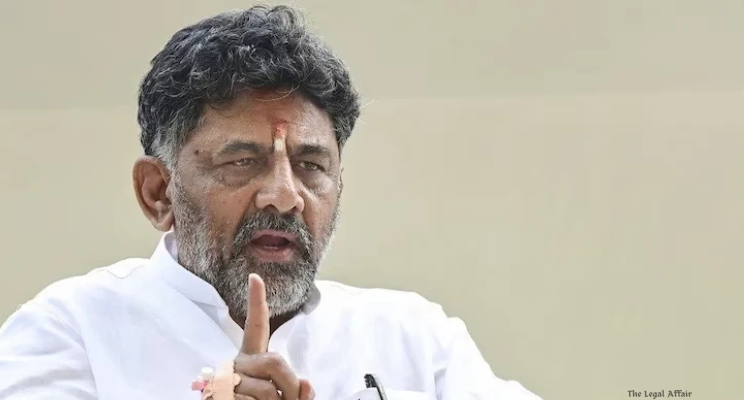
In the matter involving senior political leaders and allegations of defamatory campaigning during the 2023 Karnataka state assembly elections, the Karnataka High Court, through a bench of Justice SR Krishna Kumar, passed an interim order staying proceedings before the trial court in a criminal defamation case filed by the State BJP unit against the current State Deputy Chief Minister DK Shivakumar and the Karnataka Pradesh Congress Committee (KPCC). The Court also extended the benefit of this stay to the KPCC as an organization. The order was issued after hearing arguments from Senior Advocate K Shashi Kiran Shetty and Advocate Surya Mukundaraj representing Shivakumar, and Advocates S A Ahamed and Sanjay B Yadav appearing for the KPCC. Notice was issued to the respondent State BJP Unit, returnable on July 29. It is notable that the High Court had previously granted a similar stay of trial in the same case to Congress leader Rahul Gandhi back in January, reflecting the significance and high-profile nature of the dispute stemming from intense electoral rivalries in Karnataka.
Arguments of Both Sides:
On behalf of DK Shivakumar and KPCC, the petitioners argued that the criminal proceedings initiated by the BJP were politically motivated, aimed at stifling legitimate criticism and fair comment in the course of election campaigning, which is a protected activity under Article 19(1)(a) of the Constitution guaranteeing freedom of speech and expression. They submitted that the alleged “Corruption Rate Card” advertisements represented the Congress Party’s political opinion on the BJP government’s record, formed part of electoral rhetoric, and were based on issues of public interest regarding allegations of corruption in government functioning. Counsel contended that these statements, even if strongly worded, fell squarely within the ambit of fair comment, particularly in the heat of electioneering, and could not constitute the offence of defamation. Further, the petitioners argued that the allegations made in the advertisements were general criticisms directed at the policies and practices of the ruling party rather than targeted personal attacks against specific individuals, and hence failed to attract the necessary ingredients of Sections 499 and 500 of the IPC for criminal defamation. Additionally, the defense raised serious concerns regarding the chilling effect on free political discourse if politicians and parties were prosecuted for robust criticism during campaigns. The defense further argued that the complaint lacked clear and specific averments regarding how the personal reputations of BJP leaders were individually harmed, which is a sine qua non for sustaining a criminal defamation case. On the maintainability of the complaint, it was pointed out that the State BJP unit as a political party could not claim to possess a separate legal personality whose reputation is protected under the defamation statute, given that defamation is recognized only in favor of persons, natural or juristic, and not for political groups per se.
On the other hand, the respondent State BJP Unit, through its counsel, forcefully argued that the “Corruption Rate Card” advertisements issued by the KPCC were neither general criticisms nor fair comment, but deliberate, malicious fabrications intended to tarnish the image of the BJP by alleging that it charged “commissions” or “rates” for transfers and appointments in government posts. It was contended that such false and baseless allegations, published widely in local newspapers and circulated on social media platforms, were designed to lower the moral and political standing of the BJP in the eyes of voters, especially with the use of provocative phrases such as “trouble engine Sarkar” instead of “double engine Sarkar.” Counsel for the BJP submitted that these allegations went beyond mere political hyperbole and crossed the line into imputations that could directly harm the electoral prospects of the BJP and damage its organizational reputation. They argued that under Explanation 2 to Section 499 IPC, defamation of a company or an association of persons is recognized when statements are made intending to harm its reputation, and the BJP, as a registered political party, qualifies as an association entitled to protection of its reputation under the law. Counsel further asserted that DK Shivakumar, as KPCC President, along with other leaders including Siddaramaiah and Rahul Gandhi, were instrumental in the conceptualization and dissemination of the defamatory content, which was shared on social media accounts with massive reach, thus amplifying the harm. The BJP insisted that the trial must proceed so that the truth behind the allegations can be examined in court, as the accused cannot shield themselves behind political speech when the statements are patently false and malicious. The respondents also emphasized the seriousness of the accusations in the electoral context, arguing that elections demand a fair playing field, and spreading deliberate falsehoods about systemic corruption undermines public confidence in democratic processes.
Court’s Judgment:
After hearing both sides, Justice SR Krishna Kumar observed that the complaint raised complex questions of law concerning the scope of free speech in electoral campaigns, the permissible limits of political criticism, and whether a political party could sustain a defamation complaint when its collective reputation is allegedly harmed. The Court noted that given the previous interim stay granted to Rahul Gandhi in the same proceedings, it was imperative to ensure uniformity in the treatment of co-accused who face substantially identical allegations, to prevent a situation where trials against some accused are stayed while continuing against others, which would cause judicial inconsistency and prejudice. The bench further acknowledged the fundamental right to free speech, particularly in the context of political debates, observing that courts must tread cautiously before allowing criminal defamation proceedings to advance in disputes arising from election-related statements. The Court also highlighted that the issues involved merit detailed consideration, including the extent to which Explanation 2 to Section 499 IPC applies to political parties as associations, and whether the statements complained of constitute fair comment or actionable defamation. In light of these observations, the bench found a prima facie case for interim relief and stayed the proceedings pending before the trial court against DK Shivakumar and the KPCC until further orders, while issuing notice to the BJP to respond by the next hearing on July 29, 2025. The Court clarified that this interim order did not express any opinion on the merits of the case and that all contentions of the parties remain open for adjudication. By granting the stay, the High Court effectively put the brakes on a high-stakes criminal defamation trial that has drawn intense political attention in the state.