


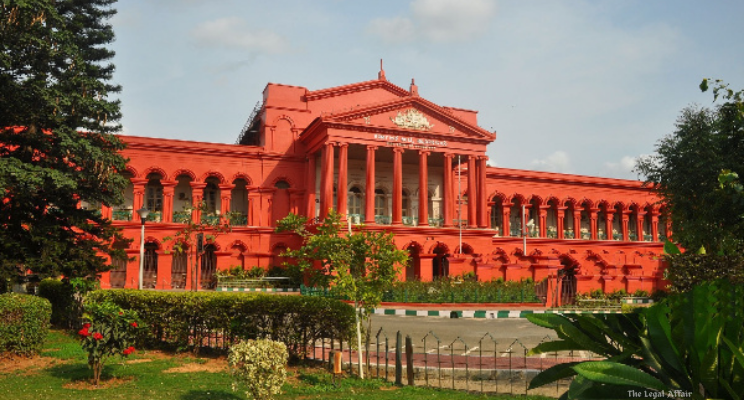
Introduction:
In a significant legal confrontation, Bharatiya Janata Party (BJP) legislator C.T. Ravi has petitioned the Karnataka High Court to quash criminal proceedings initiated against him for allegedly making derogatory remarks about Congress legislator Laxmi Hebbalkar during a session of the State Legislative Council in Belagavi. Ravi’s defense hinges on the assertion that Article 194(2) of the Indian Constitution provides legislators with absolute immunity for statements made within the legislative chambers.
Background of the Case:
The controversy arose on December 19, 2024, when C.T. Ravi allegedly directed offensive language towards Laxmi Hebbalkar during a heated exchange in the Legislative Council. The incident led to Ravi’s arrest under Sections 75 and 79 of the Karnataka Police Act, which pertain to using obscene language in public places. Following his arrest, Ravi sought relief from the Karnataka High Court, challenging the legality of the proceedings against him.
For the Petitioner (C.T. Ravi):
Senior Advocate Prabhuling K. Navadgi, representing Ravi, contended that Article 194(2) grants legislators complete immunity from any legal action concerning statements made within the legislative assembly or its committees. He emphasized that this constitutional provision ensures that members can speak freely without fear of external repercussions. Navadgi argued that any grievances regarding a member’s conduct within the House should be addressed internally by the legislative body itself, not through external legal mechanisms. He stated, “Even if something slanderous is spoken, which otherwise is a criminal offense, if it is said within the House, it will be the House which will take its cognizance and not the police.”
For the Respondent (State and Laxmi Hebbalkar):
Special Public Prosecutor Belliappa, representing the state, countered that the immunity provided under Article 194(2) is not absolute. He cited various Supreme Court judgments to assert that legislative privileges do not extend to actions that have no nexus to legislative functions or debates. Belliappa argued that derogatory remarks, especially those unrelated to any legislative discourse, could fall outside the protective ambit of Article 194(2). He emphasized that the judiciary has the authority to examine such matters when they pertain to criminal conduct.
Court’s Observations and Interim Order:
Justice M. Nagaprasanna, presiding over the case, acknowledged the complexity and potential ramifications of interpreting Article 194(2). The court noted that while the provision offers certain protections to legislators, it is essential to determine whether these protections are all-encompassing or subject to limitations, especially concerning statements unrelated to legislative proceedings. The judge remarked, “The issue is, can anything be spoken or done in the legislature which has no nexus to the issue that is discussed in the legislature; can it also attract immunity?”
Given the significance of the constitutional questions involved, the court issued a notice to Laxmi Hebbalkar, seeking her response to Ravi’s petition. The court also extended its interim order, directing the state to refrain from taking any coercive action against Ravi until the next hearing. The matter has been scheduled for further proceedings on February 20, 2025.
Legal Implications and Broader Context:
This case brings to the forefront the delicate balance between legislative privileges and accountability. Article 194(2) of the Indian Constitution states: “No member of the Legislature of a State shall be liable to any proceedings in any court in respect of anything said or any vote given by him in the Legislature or any committee thereof.” This provision aims to ensure that legislators can perform their duties without undue interference. However, the extent of this immunity has been a subject of judicial scrutiny.
In previous judgments, courts have deliberated on the scope of legislative privileges, especially when actions within the House potentially violate criminal laws or infringe upon the rights of others. The current case presents an opportunity for the judiciary to delineate the boundaries of such privileges, particularly concerning statements that may be deemed defamatory or offensive but are made within the legislative context.