


Introduction:
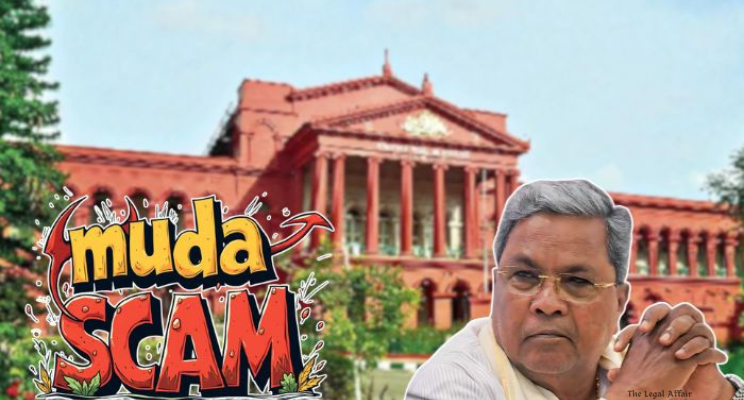
In a significant ruling, the Karnataka High Court upheld the Governor’s sanction for the investigation and prosecution of Karnataka Chief Minister Siddaramaiah under Section 17A of the Prevention of Corruption Act and Section 218 of the Bharatiya Nagarik Suraksha Sanhita. The case concerns an alleged land scam involving the Mysore Urban Development Authority (MUDA), in which Siddaramaiah’s family reportedly benefitted to the tune of ₹56 crores. The High Court’s decision enables a detailed inquiry into how Siddaramaiah’s wife and son allegedly gained disproportionately from the compensation for land acquired by MUDA.
The writ petition, filed by Siddaramaiah, sought to challenge the Governor’s decision to grant permission for an inquiry into the matter, asserting that the Chief Minister had no direct involvement. However, the Court, in its observation, found it difficult to believe that the Chief Minister was not “behind the curtain” during the entire transaction, given the timing of rule changes and the involvement of his family members.
Arguments of the Parties:
Petitioner (Siddaramaiah):
Siddaramaiah, through his counsel, argued that the Governor’s sanction for investigation was unwarranted and that he had no role in the land transactions that allegedly benefitted his wife and son. The Chief Minister contended that he neither recommended the allotment of compensatory sites to his wife nor was involved in MUDA’s decision-making process. He maintained that the allegations were politically motivated, and the timing of the 2015 rule changes, which modified the compensatory site allocation ratio from 60:40 to 50:50, was merely coincidental. He further argued that the land transactions followed legal processes and that he had not signed any documents directly linked to the deals in question.
Siddaramaiah also claimed that as a public servant, he had no knowledge of his wife’s property dealings, and the escalation in compensation from ₹3.56 lakhs in 1997 to ₹56 crores in 2021 was purely market-driven. He asserted that MUDA’s actions were autonomous, and his family was merely a beneficiary of compensation, not active participants in any illegality.
Respondent (State of Karnataka and Others):
In contrast, the prosecution pointed to serious discrepancies and anomalies in how the rules for compensatory sites were modified, which benefitted the Chief Minister’s wife and son. They argued that the change in compensation ratios in 2015, directly benefitted Siddaramaiah’s wife, whose representation to MUDA had been pending since 2001. The prosecution highlighted that Siddaramaiah’s son participated in the MUDA meeting where this resolution was passed, raising concerns about undue influence over decision-making.
The prosecution emphasized that while Siddaramaiah may not have signed any documents, his role as Chief Minister during key events suggested he controlled the situation. They further argued that the benefits received by the family were “windfall gains” and that an investigation was necessary to uncover the extent of Siddaramaiah’s involvement in bending the rules in favor of his family.
Court’s Judgment:
The single-judge bench of Justice M Nagaprasanna upheld the Governor’s sanction for the investigation, remarking that it was “difficult to accept” that the Chief Minister had no involvement, given the involvement of his family in key decisions. The Court noted the dramatic escalation in compensation from ₹3.56 lakhs in 1997 to ₹56 crores in 2021, dismissing it as a mere coincidence. Justice Nagaprasanna further noted that had Siddaramaiah not been at the “helm of affairs,” such large benefits would likely not have flowed to his family.
The Court also highlighted the suspicious timing of the rule change, which reduced the compensatory site ratio from 60:40 to 50:50, directly benefitting Siddaramaiah’s wife. The Judge underscored that while Siddaramaiah argued he was not directly involved, the evidence suggested otherwise, indicating he played a role behind the scenes.
The Judge concluded that the magnitude of the benefits received by Siddaramaiah’s family and the rule-bending warranted a thorough investigation. The Court dismissed Siddaramaiah’s defense that he made no recommendations or signed any documents as “too bleak a contention,” affirming the Governor’s sanction for prosecution.
Conclusion:
This landmark ruling by the Karnataka High Court paves the way for an investigation into a high-profile case involving alleged corruption and misuse of power by Chief Minister Siddaramaiah’s family. The Court’s observations underscore the need to scrutinize transactions that led to significant financial gains for the family. This decision reinforces the judiciary’s role in ensuring accountability and serves as a reminder that even high-ranking public officials are not beyond the reach of the law.