


Introduction:
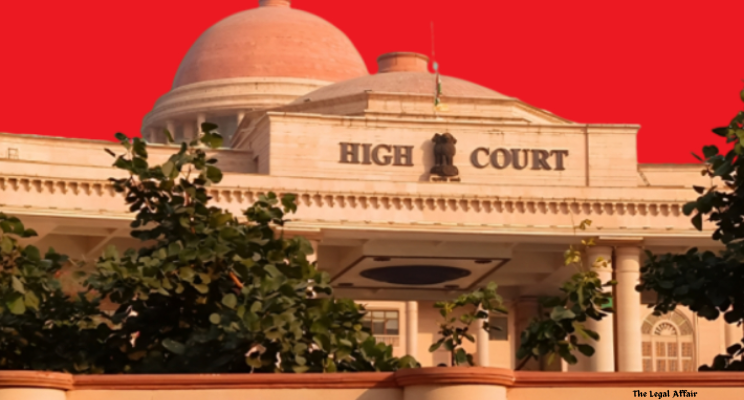
In a recent ruling, the Allahabad High Court quashed criminal proceedings against a doctor couple who own a hospital in Rajepur, Ghazipur district. The couple had been accused of involvement in the death of a man who was allegedly removed from their hospital and later died in a road accident. The case reached the High Court after both the magisterial court and sessions court had issued summoning orders against the doctors, rejecting the couple’s appeals. The couple approached the High Court after their revision pleas were dismissed.
The High Court’s ruling brings to light the importance of detailed investigation procedures and judicial discretion. The couple’s case revolved around an alleged altercation that occurred in the hospital, following which the victim was removed and subsequently died in a road accident. The Special Investigation Team (SIT) tasked with the investigation had submitted a final report ruling out culpable homicide, but the lower courts dismissed it and summoned the doctors. In a crucial judgment, Justice Saurabh Shyam Shamshery of the Allahabad High Court quashed these proceedings, emphasizing the lack of proper reasoning in rejecting the SIT’s findings and questioning the legitimacy of the summoning order.
Arguments of the Parties:
Petitioners (Doctor Couple):
The doctor couple, through their counsel, argued that the criminal proceedings initiated against them were based on unfounded accusations. They maintained that they had no role in the alleged death of the deceased, who had come to the hospital to accompany his mother for surgery. According to the couple, the deceased had an altercation with other patients’ attendants, after which the hospital staff intervened and asked him to leave. They claimed that after he was removed from the hospital premises, he unfortunately died in a road accident.
The petitioners also stressed that a thorough investigation had been conducted by the Special Investigation Team (SIT), which included witness statements, lie detector tests, and narco-analysis tests. All of these investigative methods ruled out their involvement in the incident. The final report concluded that the death was due to a road accident, and the doctors were not culpable for homicide.
They further argued that the lower courts, including the Chief Judicial Magistrate (CJM), had failed to provide sufficient reasoning for rejecting the SIT’s final report and for issuing summons against them. The petitioners contended that the judicial process should rely on concrete evidence rather than speculation or pressure from protest petitions. They questioned the credibility of the complainant’s eyewitness claims, particularly since the complainant’s daughter, one of the key witnesses, had denied recognizing the doctors during her narco-analysis test.
Respondent (State of U.P. and Complainant):
The complainant, the father of the deceased, filed a First Information Report (FIR) against the doctor couple under multiple sections of the Indian Penal Code (IPC), including 302 (murder) and 147 (rioting). He alleged that his son was beaten to death by the doctors and their staff at the hospital. The complainant claimed that the deceased had gone to call the doctor couple regarding his mother’s surgery and was brutally assaulted by the couple and three hospital staff members. According to the complainant, the assault was so severe that his son died on the spot. The complainant, his daughter, and his nephew claimed to be eyewitnesses to the incident.
The respondents argued that the deceased did not die in a road accident but was, in fact, murdered by the hospital staff on the night of September 18-19, 2015. They contended that the final report submitted by the SIT was flawed and failed to take into account the eyewitness testimonies of the complainant, his daughter, and nephew. The protest petition filed by the complainant highlighted these alleged discrepancies and pushed for the summoning of the accused doctors.
The respondents maintained that the initial altercation between the deceased and the hospital attendants escalated into an intentional act of violence, leading to his death. They questioned the validity of the scientific tests (lie detector and narco-analysis) used in the investigation, suggesting that the tests were not conclusive enough to dismiss the possibility of homicide.
Court’s Judgment:
Justice Saurabh Shyam Shamshery of the Allahabad High Court, after a detailed review of the case, quashed the criminal proceedings against the doctor couple. The Court focused on the significance of issuing summons based on solid evidence and emphasized that summoning a person to court is a serious matter that cannot be done arbitrarily or without sufficient cause.
The Judge pointed out that the SIT had conducted a comprehensive investigation, including examining several witnesses and performing scientific tests such as lie detector and narco-analysis tests on key witnesses, including the complainant’s daughter and nephew. The final report concluded that the deceased had died in a road accident and that there was no evidence of culpable homicide. Despite this, the Chief Judicial Magistrate (CJM) had rejected the final report and issued summons to the couple without providing clear reasons for dismissing the findings of the investigation.
Justice Shamshery criticized the CJM for failing to give adequate justification for rejecting the SIT’s conclusions. He noted that while the complainant and his daughter had initially claimed to be eyewitnesses to the alleged assault, the daughter had later testified during her scientific tests that she did not recognize the doctors and had not seen them at the time of the incident. This key piece of evidence, according to the High Court, should have been considered by the lower courts before issuing summons against the doctors.
Furthermore, the High Court highlighted the testimony of the complainant’s nephew, who had provided a version of events different from that of the complainant and his daughter. The nephew stated that a dispute had initially arisen between the deceased and the hospital staff, but the deceased was removed from the hospital premises and left outside. He later died due to a road accident. This testimony, supported by the findings of the SIT, further weakened the case against the doctors.
The Court emphasized that the scientific tests conducted on the witnesses, including the narco and lie detector tests, should not have been disregarded by the lower courts. Justice Shamshery noted that the tests provided significant insight into the case and supported the conclusion that the death was accidental and not the result of any deliberate act by the doctors or hospital staff.
The Court also observed that the CJM had relied heavily on the statements of the complainant and his daughter, both of whom had failed to provide consistent and credible testimony. In particular, the daughter had denied recognizing the doctors during her narco-analysis test, which should have been a crucial factor in determining whether to summon the accused.
Justice Shamshery further remarked that in cases where an investigation is found to be lacking or incomplete, the proper course of action would have been to order a further investigation or treat the protest petition as a complaint case. However, in this instance, the CJM had rejected the final report without sufficient cause and had issued summons without considering the full weight of the evidence presented.
In conclusion, the High Court ruled that the summoning order could not legally survive based on the available evidence. The testimonies of the complainant and his daughter, which were inconsistent and contradicted by scientific tests, could not form a solid foundation for criminal proceedings. The Court quashed the proceedings against the doctor couple and other accused, bringing an end to the case.
Conclusion:
The Allahabad High Court’s decision to quash the criminal proceedings against the doctor couple in this alleged homicide case underscores the importance of a thorough and fair investigation. The Court highlighted that the issuance of summons is a serious matter that must be based on concrete evidence and justified reasoning. In this case, the Special Investigation Team (SIT) had conducted a detailed investigation, including scientific tests, which ruled out culpable homicide. The High Court found that the lower courts had erred in dismissing the final report without providing sufficient reasons and that the summoning order could not stand on the basis of inconsistent witness statements. This ruling reaffirms the importance of judicial discretion and the need for clear justification when rejecting the findings of a detailed investigation.